
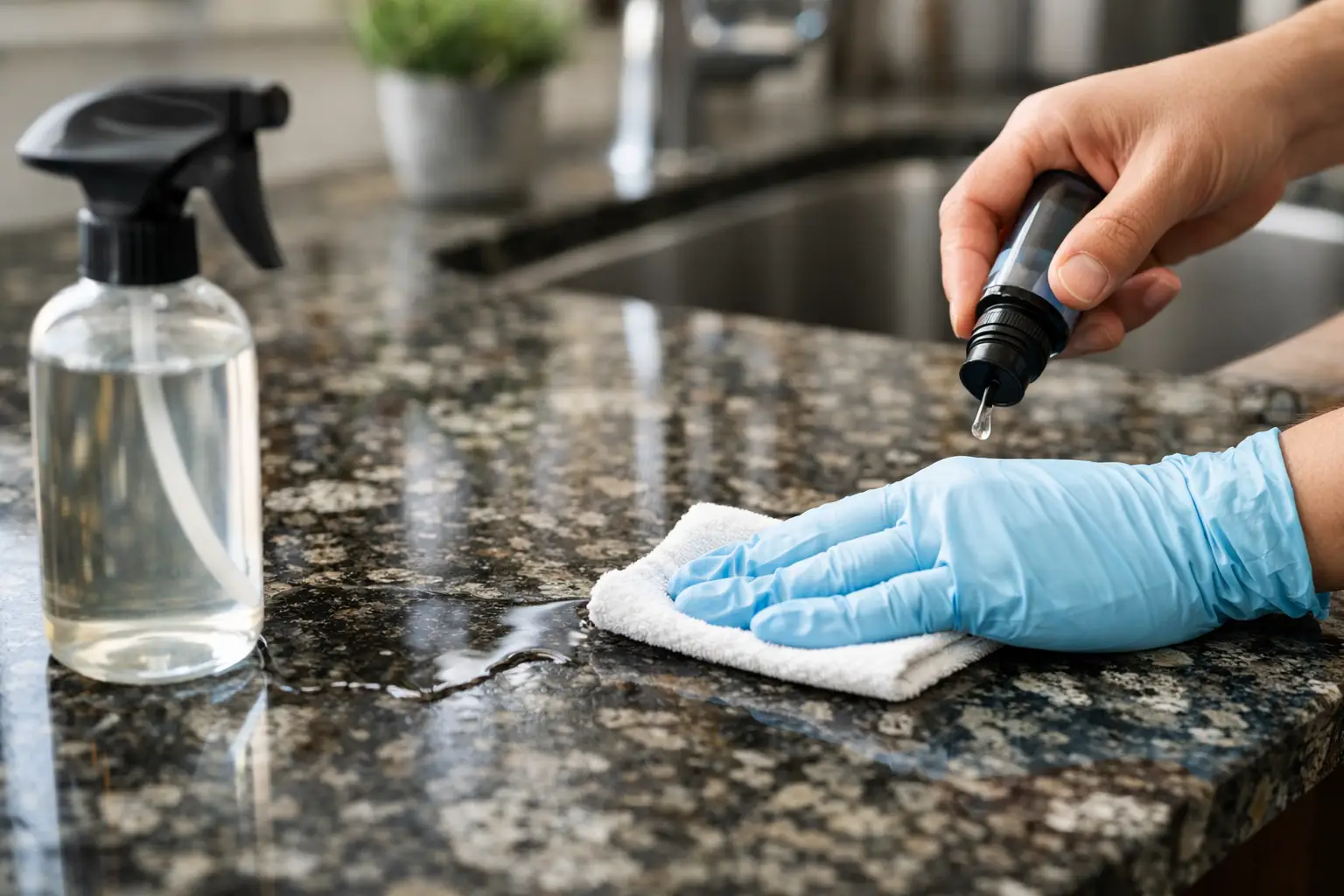
A granite benchtop can look almost indestructible right up until oil darkens the surface near the cooktop, water marks linger around the sink, or a once-crisp polish starts to lose its depth. Choosing the best granite sealer for benchtops is less about finding one miracle product and more about matching the right protection to the stone, the finish, and the way the surface is actually used.
That distinction matters. Granite is dense, but it is not completely impervious. Some slabs are tighter and less absorbent than others, while certain finishes and colours show residue, patchiness, or wear more readily. A poor sealer choice can leave a benchtop underprotected, overly glossy, or streaky. A well-chosen sealer preserves the natural character of the stone while giving spills less chance to become a permanent problem.
What makes the best granite sealer for benchtops?
For most granite benchtops, the best option is a high-quality penetrating sealer designed for natural stone. Penetrating sealers, sometimes called impregnating sealers, move below the surface and line the pores rather than forming a coating on top. That matters in kitchens because surface coatings can alter the appearance, wear unevenly, and create maintenance issues over time.
A good penetrating sealer should do three things well. It should slow down the absorption of water and oil-based spills, maintain the stone’s natural finish, and cure without leaving haze or tackiness. In a premium kitchen or commercial food preparation area, appearance is only half the equation. The sealer also needs to support practical, low-fuss maintenance.
The strongest products are usually fluoropolymer or advanced solvent or water-based formulations made specifically for dense stone. But even here, there is no universal winner. The best sealer for a honed black granite benchtop may not be the best choice for a highly polished lighter stone with minimal porosity.
Not all granite benchtops need the same sealer
Granite varies far more than most property owners expect. Some slabs absorb sealer quickly and need multiple applications. Others are so dense that excess product can simply sit on the surface if it is not applied with care. That is one reason online product rankings can be misleading. They often assume all granite behaves the same way.
Finish also changes the equation. Polished granite is usually less absorbent at the surface and tends to repel moisture better than honed or leathered finishes. Honed granite, by contrast, may mark more readily because the flatter finish can show oils, fingerprints, and residue with greater ease. In that case, the best result often depends as much on correct application and residue removal as on the product itself.
Usage matters too. A decorative island bench that sees occasional serving is different from a hard-working kitchen benchtop exposed to cooking oils, acidic foods, cleaning chemicals, and constant wiping. In commercial settings, the demand is higher again, especially where presentation and hygiene are equally important.
Penetrating vs topical sealers
If you are comparing products, this is the first distinction to get right.
Penetrating sealers are generally the preferred choice for granite benchtops. They protect from within the stone and keep the finish looking natural. They are better suited to premium interiors where the beauty of the material should remain the focus.
Topical sealers sit on the surface more like a film. While they can increase sheen or provide short-term barrier protection, they are rarely the ideal answer for granite benchtops. They can scratch, peel, trap residue, and create an artificial look that diminishes the stone rather than enhancing it.
There are exceptions. Some specialty treatments are used in specific restoration contexts, especially where additional surface protection is required. But for standard granite benchtop sealing, a penetrating system is usually the more sophisticated and durable solution.
Water-based or solvent-based?
This is where many buyers get stuck, and the answer depends on the stone and the result you want.
Water-based sealers are often lower in odour and easier to work with indoors. Many modern formulations perform very well and are suitable for residential kitchens, especially when applied by someone who understands dwell time and buff-off technique. They can be an excellent choice for households wanting effective protection without a heavy chemical smell.
Solvent-based sealers tend to penetrate very dense stone more readily and can offer strong oil and water repellence. On some granites, they produce a more consistent result. However, they usually require more care during application and ventilation is essential.
Neither category is automatically superior. What matters is the chemistry, the stone’s porosity, and whether the product is being used correctly. A premium-grade water-based sealer can outperform a mediocre solvent-based one, and vice versa.
Signs a granite benchtop actually needs sealing
A surprising number of benchtops are resealed too often, while others are left exposed long after their protection has worn away. The most reliable indicator is absorbency.
A simple water drop test can help. Place a few drops of water on a clean, dry area of the benchtop and leave them for several minutes. If the water beads and remains on the surface without darkening the stone, the sealer may still be doing its job. If the stone darkens quickly, the surface is likely absorbing moisture and due for resealing.
Oil testing can be even more revealing in kitchen areas, because granite is often more vulnerable to oil-based staining than plain water. If cooking oil darkens the stone and is slow to lift, the protective barrier is probably inadequate.
That said, testing should be interpreted carefully. Some granites naturally darken slightly when wet and return to normal as they dry. Others may have patchy previous applications that make results inconsistent across the slab.
The best granite sealer for benchtops is only as good as the application
This is the part that gets overlooked. Even an excellent sealer can underperform if the stone is not prepared properly first.
A benchtop must be thoroughly cleaned before sealing. Any grease, soap film, food residue, mineral build-up, or previous product left on the surface can interfere with penetration and cause a cloudy finish. In some cases, what looks like a stone problem is actually residue trapped by poor cleaning or repeated DIY product use.
Application needs control. Too little product may leave the stone unevenly protected. Too much can cure on the surface and create haze, smears, or sticky patches. Buffing off all excess within the correct window is essential, particularly on polished granite where residue is more visible.
This is why professional sealing often delivers a noticeably better result than a retail DIY approach. It is not just about access to better materials. It is about understanding absorption rate, finish sensitivity, and the correct method for that specific slab.
When DIY sealing makes sense, and when it doesn’t
If the granite is in good condition, the finish is even, and the stone has no embedded staining or old residue, DIY sealing can be reasonable. The owner still needs to choose a quality penetrating sealer, test a small section first, and follow the instructions closely.
But there are limits. If the benchtop is already dull, stained, etched-looking, patchy, or carrying a build-up of cleaning products, sealing over the top usually will not solve the real issue. In fact, it can lock in the problem and make correction more difficult.
That is where a specialist approach becomes worthwhile. Professional assessment can determine whether the stone needs deep cleaning, stain treatment, honing, polishing, or repair before any sealer is applied. For premium kitchens and high-visibility commercial spaces, that sequence protects both the appearance and the investment.
How long should a granite benchtop sealer last?
There is no single timetable that suits every surface. Some benchtops hold protection for several years. Others need attention sooner because of heavy use, aggressive cleaners, or frequent exposure to oils around cooking areas.
Marketing claims can be optimistic. A product labelled for long-term performance may still wear faster in a busy family kitchen than in a lightly used butler’s pantry. Maintenance habits make a real difference. pH-neutral stone cleaners, prompt spill removal, and avoiding harsh supermarket chemicals will help preserve both the sealer and the finish underneath.
For clients who want a refined, long-lasting result, the better question is not how long the label says it should last. It is how the benchtop is performing in real conditions.
Choosing the right protection for a high-value surface
The best granite sealer for benchtops is the one that suits the stone you have, the finish you want to preserve, and the level of use the surface receives. In most cases, that means a premium penetrating sealer applied to a properly prepared surface with care and precision.
For straightforward maintenance, that may be enough. For benchtops that are already showing wear, staining, haze, or uneven finish, sealing should come after the underlying issue is addressed. At that point, the value of specialist stone care becomes clear. The right treatment does more than add protection – it restores clarity, depth, and the elegant finish that made granite worth choosing in the first place.
If your benchtop still looks tired after cleaning, the answer may not be another bottle of sealer but a more informed treatment plan that gives the stone its presence back.