
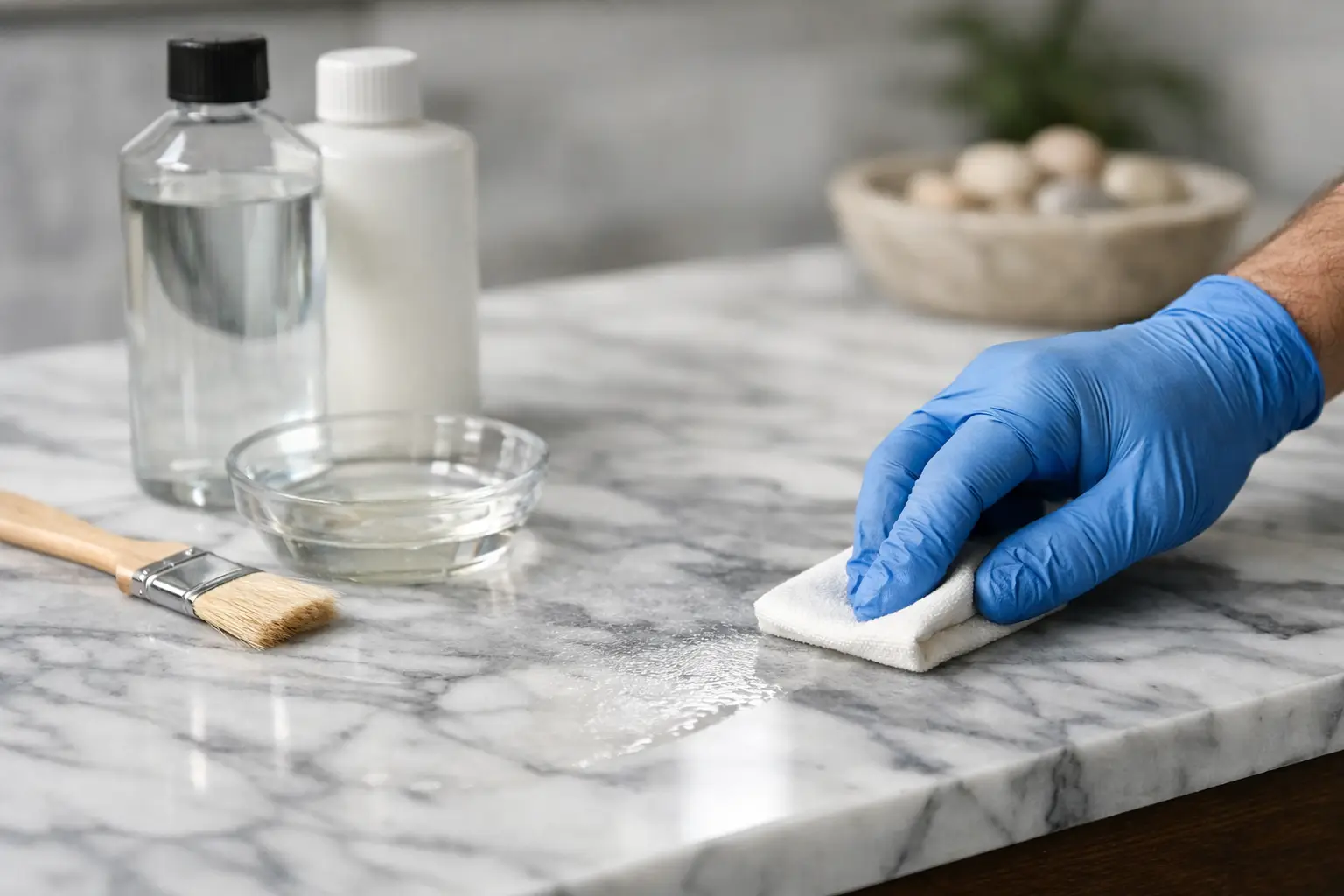
A marble benchtop can look flawless the day it is installed, then start showing dull patches, water marks and staining far sooner than expected. That is usually where the search for the best sealer for marble begins. The catch is that marble sealing is not a one-size-fits-all decision. The right product depends on the type of marble, the finish, how the surface is used, and what kind of protection you are actually expecting.
What the best sealer for marble really does
A quality marble sealer is designed to reduce the stone’s absorbency. That matters because marble is porous, and unsealed stone can draw in liquids that leave behind stains and discolouration. A good sealer helps buy time. It slows penetration so spills can be cleaned before they become permanent.
What it does not do is make marble bulletproof. This is where many property owners are disappointed. Sealing does not stop etching from acidic substances like lemon juice, vinegar, wine or some bathroom products. Etching is a chemical reaction that affects the calcium in the stone itself. Even the best impregnating sealer will not prevent that.
So when people ask for the best sealer for marble, the better question is usually this: best for what outcome? Stain resistance, easier maintenance and longer-lasting presentation are realistic goals. Full immunity to damage is not.
The main types of marble sealer
Most marble surfaces are protected with penetrating or impregnating sealers. These are absorbed into the stone below the surface and are generally the preferred option for natural marble. They help resist water and oil-based staining without leaving a thick topical film, which means the marble can still look and feel like marble.
Enhancing sealers are another category. These deepen colour and enrich the natural variation of the stone while also offering stain resistance. They can be effective on some darker marbles or where a richer appearance is wanted, but they are not suitable for every setting. On a light marble floor or a refined bathroom vanity, the visual change may be unwelcome.
Topical sealers sit on the surface rather than inside the stone. In some situations they can create gloss or an added barrier, but they also come with trade-offs. They may scratch, wear unevenly, trap moisture, or alter the slip resistance of the floor. On premium marble, they are often the wrong choice unless there is a very specific reason for using them and the stone has been assessed properly.
How to choose the best sealer for marble in your space
The best sealer is not chosen in isolation. It should match the marble, the area and the level of use.
A polished marble benchtop in a residential kitchen needs strong resistance to oils, food spills and regular wiping. A honed marble bathroom floor has different demands. It is exposed to water, body products and cleaning chemicals, and it may need a sealer that performs well without changing the finish or creating a patchy appearance.
Commercial settings are another step again. A marble foyer or retail entrance sees foot traffic, moisture, grit and repeated cleaning. In these spaces, product quality matters, but so does preparation. A premium sealer applied over ingrained soiling, soap residue or old coatings will not perform as it should.
Stone finish also matters. Honed marble can sometimes absorb more readily than highly polished marble, and textured stone behaves differently again. Even within the same property, the right sealer for a marble splashback may not be the right sealer for a shower wall or floor.
Why premium impregnating sealers are usually the best choice
For most interior marble applications, a high-quality impregnating sealer is the strongest all-round option. It protects without leaving the stone looking coated, it preserves the elegance of the natural finish, and it is suitable for many benchtops, vanities, floors and wall surfaces.
The better products tend to offer a balance of oil and water repellency rather than focusing on one alone. That is important in real-world conditions. In a kitchen, oils are a risk. In bathrooms, moisture and toiletry residue are constant. In an apartment lobby or office reception, tracked-in grime and repeated mopping come into play.
Premium sealers also tend to cure more consistently, last longer under normal use and produce a cleaner, more even result. Cheap retail products can be tempting, but they often underperform, especially when applied without the right cleaning and preparation. In some cases they leave hazing, streaking or inconsistent absorption that is difficult to correct later.
Common mistakes when sealing marble
The first mistake is assuming any stone sealer is suitable for marble. Marble is calcium-based and comparatively sensitive. Products suited to dense granite or exterior pavers may not be the right fit for a refined indoor marble surface.
The second is sealing damaged stone without addressing the damage first. If the marble is etched, scratched, dulled or stained, sealing it will not restore the finish. It may actually lock in a poor appearance. Marble should be properly cleaned and, where needed, honed or polished before sealing.
The third mistake is over-applying product. More is not better. Excess sealer left on the surface can dry unevenly and create smears or blotchiness. Proper application is controlled and methodical, with the stone allowed to absorb what it needs and the remainder removed correctly.
Another common problem is trusting water beading as the only sign of performance. Some sealed surfaces may not bead dramatically yet still resist staining well. Others may bead at first and fail prematurely under actual use. Performance should be judged over time, with the stone type and environment in mind.
Professional sealing versus DIY
There are situations where DIY sealing can be reasonable, particularly on small, straightforward surfaces that are in good condition and have been correctly identified. But marble is expensive, visually unforgiving and often misunderstood. The margin for error is small.
Professional sealing brings more than the product itself. It includes assessment of the stone, testing for absorbency, identification of prior coatings or contamination, and selection of a sealer that suits the finish and use pattern. Just as importantly, it ensures the marble is prepared properly before any protective treatment is applied.
This is especially valuable when the surface is already showing etching, dullness, scratches or staining. In those cases, restoration and sealing should be treated as part of the same process rather than separate tasks. For many Sydney homes and commercial interiors, that approach protects both appearance and asset value far better than a quick off-the-shelf application.
How long marble sealer lasts
There is no single timeframe that applies to every marble surface. Longevity depends on traffic, cleaning methods, exposure to oils and water, the porosity of the stone and the quality of the original application.
A lightly used marble wall may hold protection for years. A busy kitchen island or hotel bathroom vanity may need attention much sooner. Harsh cleaners can also shorten sealer life, particularly if they strip residue aggressively or contribute to surface degradation.
Rather than relying on fixed timelines, it is better to look at performance. If spills are darkening the stone quickly, if staining is becoming easier, or if the surface has lost its resistance in heavy-use areas, reassessment is worthwhile.
Sealing is only part of marble protection
Even the best sealer for marble works within limits. Marble still benefits from considered day-to-day care. pH-neutral cleaners, quick spill response, soft cleaning tools and sensible use of mats or trays all help preserve the finish.
Where etching is a recurring issue, especially on bathroom vanities, kitchen benchtops or hospitality surfaces, a more advanced protective solution may be the better answer. In some high-value settings, protective films or specialist surface treatments can provide a level of defence that sealer alone cannot.
That is why marble protection should always be approached as a system rather than a single product decision. The stone needs the right restoration method, the right finish, the right sealer and the right maintenance plan.
The right answer is specific to the stone
If you want the best sealer for marble, start by setting aside the idea of a universal winner. The right choice depends on whether the marble is polished or honed, lightly used or heavily trafficked, pristine or already worn. In most cases, a premium penetrating sealer is the best foundation, but only when it is paired with proper preparation and realistic expectations.
Well-protected marble should still look elegant, natural and refined – not coated, plastic-like or artificially glossy. When the treatment is chosen well, the result is not just protection. It is a surface that keeps its brilliance longer, cleans more easily and continues to reflect the calibre of the space around it.
If your marble is already showing signs of wear, the best next step is not guessing at products. It is understanding what the stone needs before anything is applied to it.