
A newly sealed marble vanity or limestone floor should look refined, not coated in a visible layer of shine. Yet the question of how long does stone sealing last is rarely answered by a single number. The lifespan depends on the stone itself, its location, the sealer selected and, most importantly, what the surface is exposed to each day.
A quality sealer is a protective measure, not a permanent cure for stains, scratches, etching or wear. When correctly matched to the material and applied to a properly prepared surface, it helps preserve the elegance, colour and finish of valuable stone. When it is overdue for renewal, even an otherwise beautiful surface can begin to absorb moisture, oils and contaminants that are far more difficult to remove.
How long does stone sealing last?
For most interior natural stone surfaces, professional sealing can last between one and five years. That range is broad because a lightly used granite benchtop has very different demands from a limestone entry floor in a busy commercial building.
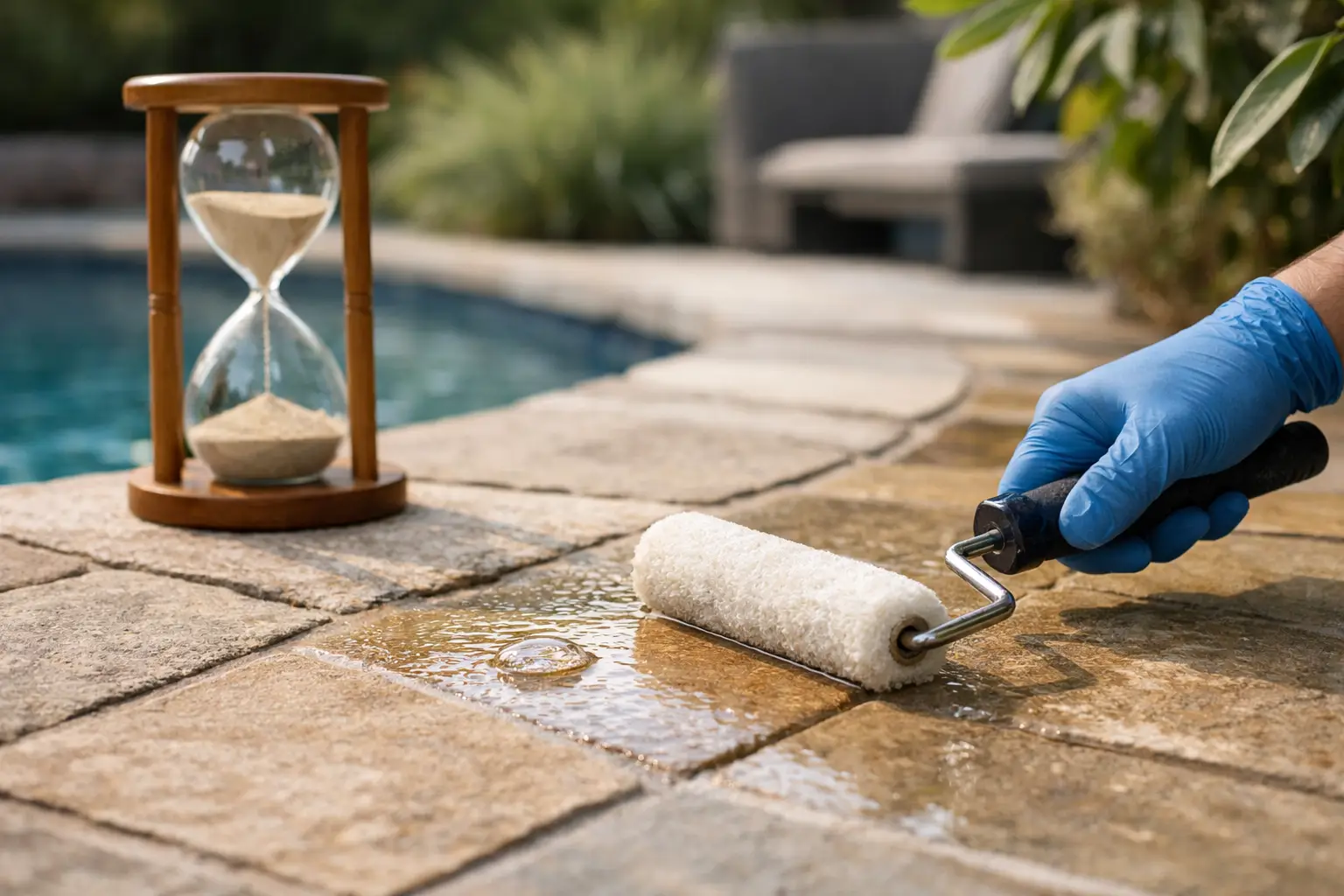
As a practical guide, marble, limestone and travertine in bathrooms, kitchens and living areas often benefit from assessment and possible resealing every one to three years. Dense granite may retain protection for three to five years in a low-use setting. Porous outdoor stones, including sandstone and travertine around pools or entertaining areas, may need attention every one to two years due to sun, rain, organic matter and regular washing.
High-traffic stone floors can require more frequent maintenance. In foyers, retail spaces, hospitality venues and apartment common areas, the combination of foot traffic, grit, wet weather and commercial cleaning products can reduce a sealer’s performance in as little as six to 18 months.
These are useful planning ranges, not expiry dates. The right time to reseal is determined by the stone’s condition and absorbency, rather than the calendar alone.
What determines how long stone sealing lasts?
Stone sealing is highly material-specific. Natural stone has varying levels of porosity, mineral composition and surface finish. A tailored approach protects the material without compromising its natural character.
The stone type and finish
Marble, limestone and travertine are generally more absorbent and chemically sensitive than granite. Honed surfaces can also take in moisture differently from highly polished stone, while textured external pavers present more surface area for dirt and contaminants to settle.
Dense natural stone may need less frequent sealing, but density does not mean it is maintenance-free. Joints, edges, cut-outs and areas affected by repeated use can become vulnerable before the centre of a surface does.
Engineered stone is different again. Products such as Caesarstone and Silestone are typically manufactured with a resin-based structure and do not usually require the same penetrating sealers used on natural stone. Applying an unsuitable product can leave residue or alter the appearance. A specialist should identify the surface before recommending any treatment.
The environment around the stone
A marble floor in a quiet bedroom and a marble floor at a building entrance may be the same material, but their sealing requirements are not comparable. Sand tracked in from outside acts like fine abrasive paper underfoot. Rainwater, pool water, cooking oils, cosmetics, coffee and wine all test the sealer in different ways.
Sydney’s outdoor conditions add another consideration. Strong UV exposure, heavy rain events, leaf tannins and moisture around pools can place substantial pressure on exterior stone protection. An exterior sealer must be selected for the stone and setting, with care taken not to create a slippery or unnatural-looking finish.
Cleaning habits and products
Harsh alkaline cleaners, acidic bathroom products, bleach-based chemicals and steam cleaning can all reduce sealer performance or damage sensitive stone. Marble and limestone are especially susceptible to etching from acidic substances. Sealer can reduce liquid absorption, but it cannot stop acid from reacting with the calcium within the stone.
This distinction matters. A sealed marble benchtop can still etch if lemon juice, vinegar or wine is left on the surface. The mark may look like a stain, but it is often a change to the stone’s finish and requires professional honing or polishing to restore clarity.
Preparation and application quality
A sealer performs only as well as the surface preparation beneath it. If stone is sealed over embedded grime, soap residue, previous coatings or moisture, the result may be uneven and short-lived. Some products can also leave a hazy appearance when over-applied, particularly on polished surfaces.
Professional stone restoration begins with an assessment of the material, existing damage and desired finish. Cleaning, stain treatment, honing, polishing, grout work or repairs may be needed before sealing. This creates a clean, stable surface that can accept protection properly and retain its original brilliance.
Signs your stone needs resealing
The most reliable indication is a change in how the stone responds to water. Place a few drops of clean water in an inconspicuous area and observe them for several minutes. If they bead on the surface, the sealer is still providing a degree of protection. If the stone darkens quickly as it absorbs the water, it may be time for a professional assessment.
Other warning signs include dark patches around a sink or cooktop, oil marks that are slow to lift, grout that soils rapidly, or stone that appears dull despite regular cleaning. Exterior pavers may begin to show stubborn water marks, uneven colour or increased organic staining.
Do not interpret every mark as sealer failure. Etching, scratches, wear patterns and ingrained dirt each require a different solution. Adding more sealer over a damaged or contaminated surface can trap the problem rather than resolve it.
Sealing protects stone, but it does not replace care
The purpose of sealing is to give you valuable time to wipe up spills before they penetrate. It reduces staining risk and makes routine cleaning easier, but it does not make natural stone indestructible.
For daily care, use a pH-neutral cleaner formulated for stone and a soft microfibre cloth or mop. Wipe spills promptly, particularly oils, sauces, alcohol, cosmetics and acidic foods. Use mats at external entrances to reduce grit, and avoid dragging furniture or appliances across stone floors. On benchtops, use chopping boards and trivets rather than relying on the sealer as a barrier against knives, heat or acid.
In commercial settings, maintenance programs should account for cleaning frequency, traffic levels and seasonal conditions. A premium foyer finish is not preserved by one treatment alone. It is maintained through the right cleaning practices, scheduled inspections and timely restoration before surface damage becomes widespread.
When professional resealing is worth it
Professional resealing is particularly valuable when the stone is expensive, highly visible or difficult to replace. Marble bathrooms, limestone floors, natural stone facades, hotel lobbies and large-format tiled areas all benefit from a treatment plan based on the actual material rather than a generic product from a hardware aisle.
The benefit is not simply a fresh protective layer. A specialist can identify whether the surface needs cleaning, stain removal, honing, polishing, grout restoration, repairs or a protective coating before sealing. This avoids the common mistake of treating a cosmetic issue as though it were only an absorbency issue.
Grand Stone Restoration applies tailored treatments to restore and protect natural stone across Sydney, helping property owners retain the luxurious finish that made the material worth choosing in the first place. For a surface that has lost its resistance, developed dull patches or begun to stain, an expert assessment offers a clearer answer than resealing by routine alone.
A well-maintained stone surface should continue to feel considered and enduring. Check its water resistance periodically, respond early to visible changes, and let the condition of the stone guide the next stage of care.