
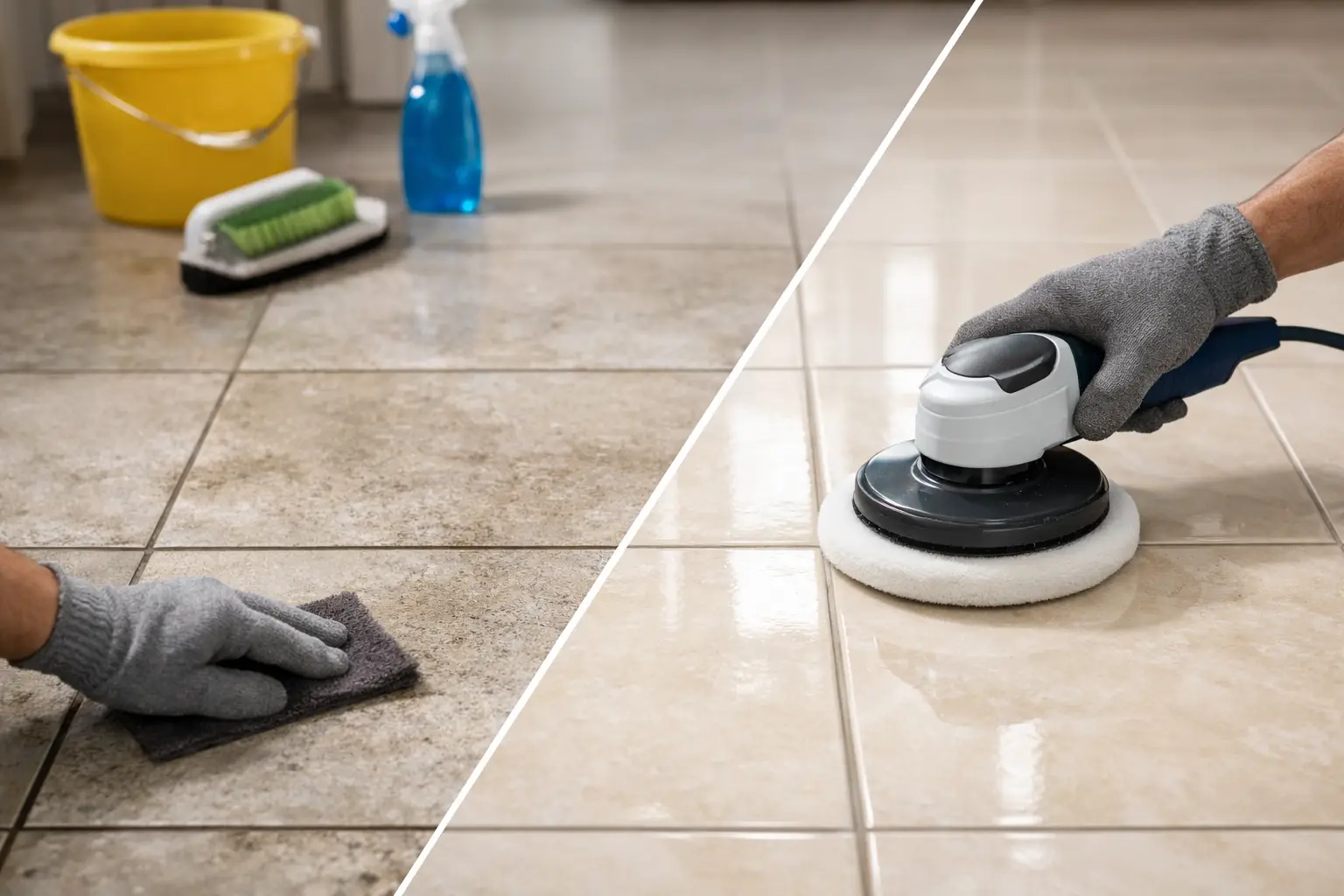
When tiles lose their finish, the whole room feels flatter. A bathroom that once looked crisp starts to feel tired, and a kitchen floor can appear worn even when it is clean. If you are wondering how to restore dull tiles, the right approach depends less on scrubbing harder and more on understanding why the surface has lost its clarity in the first place.
Dullness can come from soap scum, mineral build-up, ingrained grime, old sealers, fine scratching, grout haze or surface wear. In some cases, the tile itself is still in excellent condition and simply needs a deep professional clean. In others, the finish has been physically worn down and requires polishing, honing or sealing to bring back a more refined appearance. That distinction matters, because the wrong treatment can leave tiles looking patchy, slippery or permanently damaged.
Why tiles go dull in the first place
Tiles do not all fade for the same reason. Porcelain, ceramic, terrazzo and natural stone each respond differently to foot traffic, cleaning chemicals and moisture exposure. A glossy ceramic wall tile in a bathroom may look dull because of soap residue and calcium deposits. A high-traffic porcelain floor may be suffering from micro-abrasion caused by grit underfoot. Natural stone tiles such as marble or limestone often lose their brilliance through etching, light scratching and acidic damage.
Many property owners also make the problem worse with supermarket cleaners marketed as shine boosters. These products often leave behind a film that temporarily masks the issue, then attracts more residue and leaves the surface flatter over time. Steam cleaning can be useful in some settings, but on certain surfaces it can also push contamination into grout lines or interfere with older sealers.
That is why restoring a dull tiled surface should start with diagnosis, not guesswork.
How to restore dull tiles without damaging them
The safest way to approach restoration is to work from the least aggressive solution to the more specialised one. In practical terms, that means identifying whether the problem sits on the surface, within the pores of the tile, or in the finish itself.
If the dullness is caused by residue, a professional-grade clean may be enough. This usually involves removing embedded grime, detergent build-up, body oils, soap scum and mineral deposits using products matched to the tile material. On tiled floors, agitation with the right equipment is often needed to lift grime from texture and grout joints rather than simply moving it around.
If the tile still looks flat after a thorough clean, the finish may be worn. That is where restoration moves beyond cleaning and into surface correction. Polishing can refine the look of certain tile types and restore light reflectivity. Honing can even out minor wear and prepare a stone or terrazzo surface for a more consistent finish. Sealing then helps preserve the result by reducing staining, moisture penetration and future build-up.
The key point is simple. Shine is not always created by a topical product. Often, the best finish comes from removing what should not be there and refining what remains.
The biggest mistake with dull tiled surfaces
One of the most common mistakes is treating all tiles the same. A ceramic tile can tolerate methods that would damage marble. A dense porcelain tile may need one cleaning approach, while unglazed or textured tiles may need another. Grout adds another layer of complexity, because even when the tile face improves, stained grout can keep the whole area looking aged.
Acidic cleaners are a particular risk. They are often used in an attempt to cut through grime or hard water marks, but on calcium-based stone they can cause etching and permanent loss of finish. Abrasive pads create similar problems, especially on polished surfaces where fine scratching catches the light and makes the tile appear cloudy.
This is why material-specific restoration matters. Premium results come from using the correct process for the surface in front of you, not a generic cleaning routine.
When cleaning is enough and when polishing is needed
A lot depends on what the tiles are made from and how they are used. Bathroom wall tiles often respond well to decontamination and detail cleaning because the dullness sits on the surface. Entry floors, commercial foyers and kitchen tiles usually experience more abrasive wear, so cleaning alone may not fully restore their appearance.
Natural stone tiles are the clearest example of this. If marble tiles have lost their reflective finish, no amount of standard cleaning will restore that polished look. The stone surface itself needs to be mechanically refinished, then sealed for protection. Terrazzo can be brought back beautifully with professional polishing, but it requires the right machinery and diamond system to achieve an even result.
Porcelain and ceramic are slightly different. They cannot always be polished in the same way as natural stone, but they can often be revived through deep cleaning, residue removal, grout restoration and, where suitable, protective treatment. If the factory glaze has been physically worn through, replacement may be the only option. That is the trade-off many owners do not hear early enough.
How grout affects the overall finish
Tiles rarely look fresh if the grout is dark, uneven or deteriorating. Even when the tile surface is restored, discoloured grout can make the entire area feel neglected. In bathrooms and wet areas, mould and soap build-up are common. In kitchens and commercial spaces, grease and tracked-in dirt tend to settle into grout lines and resist ordinary mopping.
Professional grout cleaning can dramatically sharpen the appearance of the room. In more advanced cases, regrouting or colour sealing may be worth considering. This is especially effective where the tile itself still presents well but the joints have become the visual weak point.
For clients focused on presentation, grout restoration is often what takes a floor or wall from merely cleaner to properly rejuvenated.
How to restore dull tiles in high-end homes and commercial spaces
In premium interiors, expectations are higher. A restored floor should not just be clean. It should look balanced, refined and appropriate to the material. That means avoiding quick-fix coatings that create an artificial shine or leave the surface inconsistent from one section to the next.
A better result comes from a staged process. First, the tiles and grout are assessed for contamination, wear, previous coatings and damage. Then the surface is cleaned or corrected using methods suited to the tile type. Any problem areas such as etched stone, scratched sections, chipped edges or failing grout are addressed as part of the broader finish. Finally, the surface is sealed or protected where needed to maintain appearance and simplify future maintenance.
This is where specialist restoration offers real value over replacement. If the substrate is sound and the tile is salvageable, restoration can deliver a striking improvement without the demolition, downtime and cost of ripping everything out. For Sydney homeowners, strata properties and presentation-critical commercial environments, that is often the smarter investment.
Protecting restored tiles so the dullness does not return
Once tiles have been brought back, maintenance becomes much more important than most people realise. Harsh cleaners, dirty mop water and acidic products can undo good work surprisingly quickly. So can neglecting spills, especially on porous stone or grout.
The best maintenance plan is usually the simplest one. Use pH-neutral cleaning products, remove abrasive grit before mopping, and avoid anything marketed as a shine restorer unless it is specifically recommended for the material. Stone surfaces should be resealed at appropriate intervals, depending on traffic levels and exposure. Commercial areas may also benefit from scheduled maintenance to keep finishes consistent rather than waiting until the floor looks tired again.
For many clients, expert aftercare advice is just as valuable as the restoration itself. It protects the investment and helps preserve that clean, elegant finish for longer.
When to call a tile and stone restoration specialist
If your tiles still look dull after ordinary cleaning, or if you can see etching, scratching, haze, staining or worn traffic paths, it is time for a more informed assessment. The same applies if you are dealing with natural stone, luxury finishes or a large commercial area where patch testing and the right equipment make a real difference.
A specialist can tell you whether the issue is contamination, surface wear, failed sealer, grout deterioration or permanent damage. That saves time, prevents costly trial and error, and gives you a clear path to the best achievable result. For high-value surfaces, that level of precision matters.
At Grand Stone Restoration, this is exactly where expertise makes the difference – not just in making tiles look better, but in restoring the surface with the care, finish and long-term protection it deserves.
Dull tiles rarely need more effort. They need the right treatment, applied with a clear understanding of the material, the wear pattern and the finish you want to achieve.