
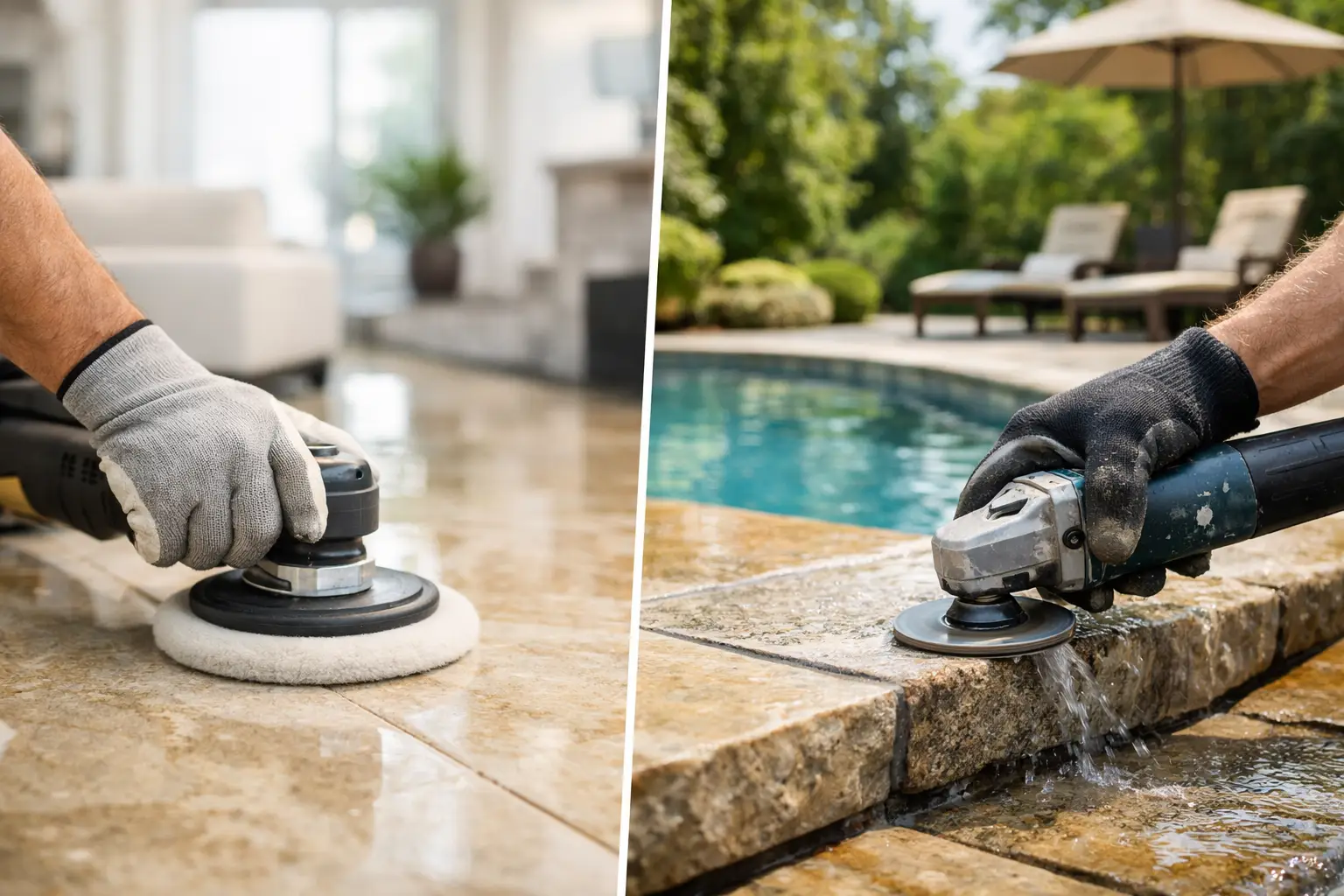
A marble entry that has lost its clarity, a sandstone patio marked by weathering, a travertine bathroom floor that never looks quite clean – these are not replacement problems. In most cases, they are restoration problems. Indoor outdoor stone restoration is about reading the condition of each surface correctly, then applying the right combination of cleaning, honing, polishing, repairs and protection to bring back depth, elegance and long-term performance.
For Sydney properties, that distinction matters. Stone indoors and stone outdoors age in very different ways, even when they are part of the same home or commercial site. Interior marble might suffer etching from acidic spills, traffic wear and dull patches under furniture lines. Exterior stone is exposed to moisture, UV, organic staining, salt, grime and harsher temperature shifts. Treating both with the same method is where mediocre results begin.
What indoor outdoor stone restoration really involves
Professional indoor outdoor stone restoration is not a single service. It is a restoration process tailored to the material, the finish and the type of damage present.
Natural stone and engineered surfaces all respond differently to treatment. Marble is softer and highly prone to etching. Granite is denser, but can still lose lustre and develop wear patterns. Limestone and travertine are porous and often show ingrained soiling, edge damage and surface erosion. Terrazzo requires a different approach again, particularly when restoring clarity and consistency across larger floor areas. Engineered stone and solid surfaces also need material-specific attention to avoid overworking the finish.
That is why proper restoration starts with assessment. The restorer needs to identify whether the issue is surface contamination, deep staining, scratches, loss of polish, chipped edges, grout deterioration, weather exposure or a combination of several. The finish also matters. A honed floor should not be treated as though it were meant to have a mirror polish, and an outdoor stone area often needs slip-conscious restoration rather than a glossy result.
Why indoor stone loses its finish
Indoor spaces usually show wear more gradually, but the damage becomes obvious once the surface no longer reflects light evenly. In kitchens and bathrooms, common issues include etching around vanities and benchtops, soap residue, moisture exposure, and fine scratching from daily use. In foyers, hallways and living zones, foot traffic slowly abrades the finish, leaving a tired, flat appearance.
Polished marble is one of the clearest examples. Many owners assume the stone is stained when it has actually been etched. Etching changes the surface texture itself, which means standard cleaning will never restore the shine. The stone needs mechanical refinement through honing and polishing to remove that damaged top layer and re-establish a uniform finish.
Grout and adjoining tiled areas also affect the final result. A beautifully restored stone floor will still look unfinished if the grout lines remain discoloured, uneven or damaged. The best restoration outcomes treat the surface as a whole, not just the most visible slab or tile.
Outdoor stone faces a different set of pressures
Exterior stone has to contend with far more than surface wear. Patios, pool surrounds, pathways, courtyards and outdoor entertaining areas are exposed to rain, dirt, leaf tannins, algae, mould, mineral deposits and UV degradation. Some stones also absorb contaminants deeply, especially if sealing has broken down or was never applied correctly in the first place.
Outdoor restoration has to balance appearance with safety and durability. A poolside stone surface, for example, should look clean and refined, but it also needs the right texture underfoot. Chasing a high-sheen finish outdoors can be the wrong decision if it compromises practicality.
This is where experience matters. The correct treatment for external sandstone is not the same as the treatment for external granite or travertine. Pressure, chemistry, abrasive systems and sealing methods all need to suit the stone rather than the other way around. Done well, restoration can lift years of weathering without stripping the material of its natural character.
Indoor outdoor stone restoration is not just cleaning
One of the biggest misconceptions in the market is that stone restoration is simply an intensive clean. Cleaning is part of the process, but it is rarely the full answer when a surface is scratched, etched, uneven or structurally tired.
Restoration may include stain reduction, surface honing, diamond polishing, lippage correction, crack or chip repairs, grout renewal, sealing and protective coating systems. In higher-exposure interiors, anti-etch protection may also be worth considering, especially on vulnerable surfaces such as marble benchtops and vanity tops.
The key is choosing the treatment sequence properly. If a floor is sealed before contaminants are fully removed, the result can lock problems in. If a polished surface is worked too aggressively, it may lose definition or become uneven. If an outdoor area is coated with the wrong product, it can age poorly and create maintenance issues later. Premium restoration is not about doing more. It is about doing what the material actually needs.
When restoration is better than replacement
Stone replacement sounds straightforward until the real costs become clear. Matching existing stone can be difficult, especially in older properties or imported materials. Removal creates disruption, surrounding finishes can be affected, and labour costs rise quickly once demolition, disposal and installation are factored in.
Restoration is often the more economical and far less disruptive option, particularly when the stone is fundamentally sound but cosmetically compromised. For residential clients, that means preserving premium bathrooms, kitchens and floors without turning the home into a building site. For commercial properties, it means improving presentation with less downtime and less impact on tenants, guests or customers.
There are limits, of course. Some stone is too deeply fractured, too poorly installed or too deteriorated for restoration to deliver a worthwhile result. A reputable specialist will say so. But many surfaces that appear beyond saving can be revived impressively with the right methods.
What to expect from a specialist finish
A proper result should look refined, not overworked. On polished stone, that means clarity, depth and consistent light reflection rather than a patchy shine. On honed stone, it means a smooth, elegant matte finish with improved uniformity. On outdoor stone, it means a cleaner, fresher appearance with protection suited to exposure and use.
Consistency is what separates specialist restoration from basic surface work. Edges should blend with the field of the surface. Repairs should not draw attention. Transitional areas should feel deliberate. In commercial settings, large expanses need to present evenly under changing light throughout the day. That level of finish comes from technical control and craftsmanship, not quick cosmetic treatment.
For many clients, the visual change is immediate, but the longer-term value is just as important. Restoration paired with the right protection can extend the life of expensive surfaces and improve how easily they maintain their appearance between professional services.
Choosing the right approach for your property
Not every surface needs the same level of intervention. A lightly dulled foyer may only require honing and polishing. A weathered courtyard may need deeper cleaning, stain treatment and resealing. A luxury bathroom might benefit from restoration plus a protective film or coating strategy to reduce future etching.
This is where tailored advice matters. The right outcome depends on the stone type, current finish, traffic levels, location and expectations for the final look. A premium residence and a busy hospitality venue may both have marble, but they do not have the same restoration brief.
That material-specific approach is what allows a specialist company such as Grand Stone Restoration to deliver better results across both indoor and outdoor spaces. Stone is not a generic surface category. Each material has its own behaviour, limits and ideal finish, and it should be restored with that level of respect.
If your stone has become dull, marked, scratched or weathered, the question is not whether it can ever look right again. The better question is what the surface needs to return to its proper standard. With the right restoration strategy, tired stone can regain the brilliance, elegance and presence that made it worth choosing in the first place.