
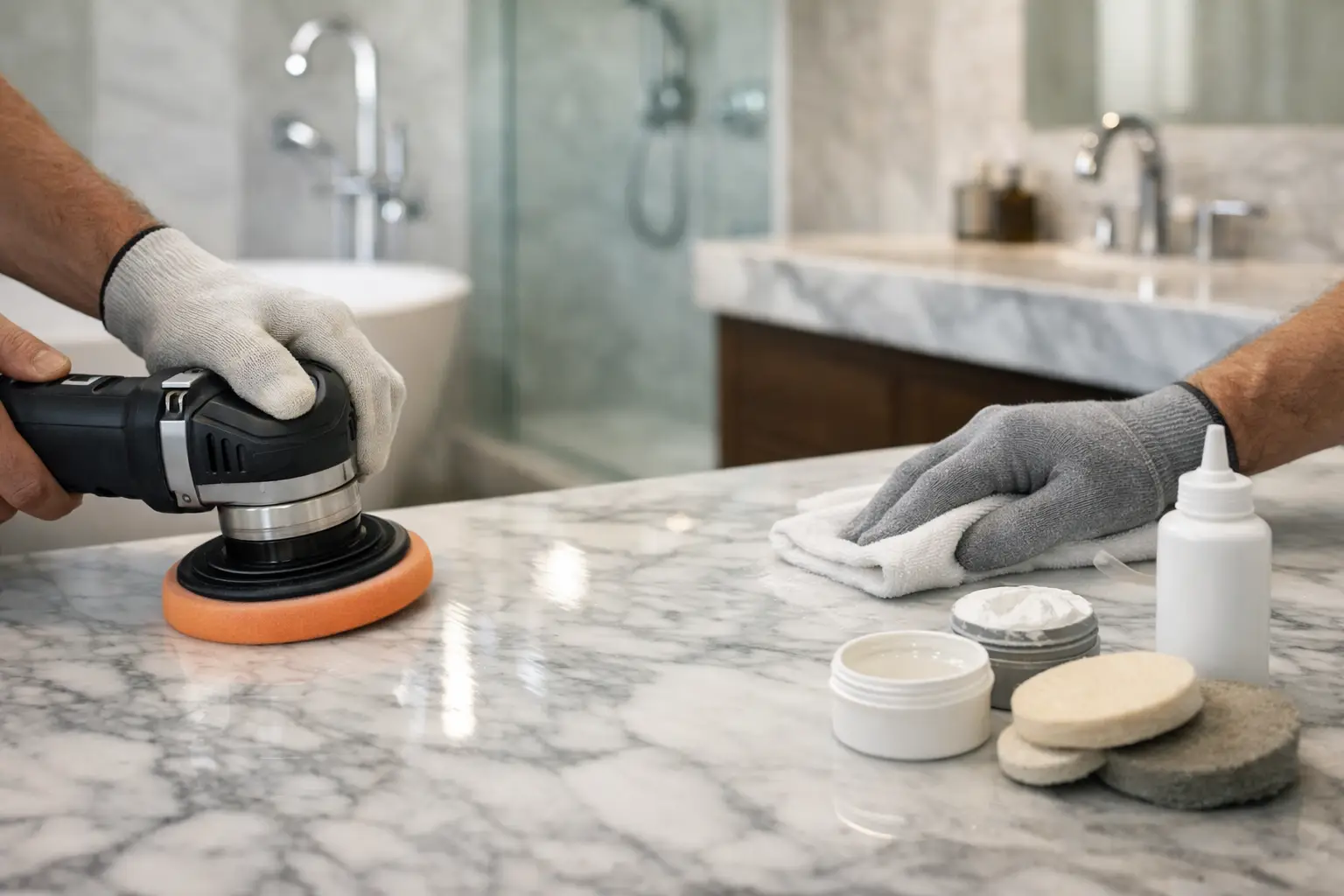
A marble bathroom rarely fails all at once. It slips gradually – a dull patch near the vanity, etching around the basin, soap build-up in the shower, a floor that no longer reflects light the way it once did. Marble bathroom restoration addresses that slow decline with the right combination of surface correction, refinement and protection, bringing back the clean, elegant finish that makes marble such a prized material in the first place.
For Sydney property owners, the question is usually not whether marble can be improved. It can. The real question is how far the damage has gone, what finish you want to restore, and whether a proper restoration will deliver a better result than living with the wear or replacing the stone entirely. In most cases, restoration is the smarter investment.
What marble bathroom restoration actually involves
Marble is a calcium-based natural stone, which means it reacts to acidic products, absorbs contaminants more readily than many people expect, and shows wear in ways that porcelain or engineered surfaces do not. In bathrooms, that usually means etching from toiletries and cleaners, fine scratches from grit underfoot, staining from cosmetics or rust, and a tired finish caused by moisture, residue and daily use.
Professional marble bathroom restoration is not a single treatment. It is a staged process built around the condition of the stone. The surface may need deep cleaning to remove ingrained residue before any corrective work begins. From there, the stone can be honed to remove etching, wear patterns and shallow scratches, then polished to restore clarity and sheen where a polished finish is required. Chips, cracks and open joints may also need repair, while grout lines often need separate attention to lift the overall presentation of the space.
The final stage is protection. Sealing helps reduce the stone’s vulnerability to moisture and staining, but it does not make marble maintenance-free. In some settings, a more advanced protective option may be appropriate, particularly where recurring etching is a problem.
Why bathrooms are especially hard on marble
A marble foyer or benchtop has its own challenges, but bathrooms are uniquely demanding. Water sits on surfaces longer. Personal care products are harsher than many people realise. Toothpaste, shaving foam, perfumes, hair products and common bathroom cleaners can all leave marks on marble, especially if they are acidic or heavily chemical-based.
Then there is the issue of constant residue. Soap scum, mineral deposits and body oils can create a film that flattens the appearance of the stone. Even when the marble is not structurally damaged, it can look lifeless simply because the finish is obscured. That is why a bathroom often needs both restoration and a maintenance reset. Correcting the stone without addressing product build-up and future care habits only shortens the life of the result.
Humidity also matters. In enclosed bathrooms with limited ventilation, moisture lingers in grout joints, around silicone edges and in porous stone. Over time, this can contribute to discolouration, mould staining and a generally aged appearance, even in premium interiors.
Signs your marble bathroom needs restoration
Some damage is obvious. Other issues are easier to miss until the room starts feeling older than it is. Dull traffic paths on the floor, cloudy benchtops, ring marks around tapware, surface unevenness, minor chips on edges and patchy reflectivity are all common indicators that restoration is due.
Etching is one of the most misunderstood problems. Many owners assume the stone is dirty when it is actually chemically marked. Etched marble often looks like water spotting or a faded patch, but no amount of scrubbing will bring the shine back. The surface needs to be mechanically refined.
Staining is different again. If the marble has darkened or developed yellow, brown or cosmetic-related marks, the treatment depends on what has penetrated the stone and how long it has been there. Some stains can be drawn out or reduced significantly. Others improve only partially. An experienced assessment matters because marble responds differently depending on its density, finish and previous treatment history.
Marble bathroom restoration versus replacement
Replacement sounds straightforward until the real costs begin to show. Removing marble in a bathroom often involves demolition risks, waterproofing concerns, plumbing disconnection, matching issues and extended disruption. If the stone is on walls, floors, vanities and shower niches, the scope escalates quickly.
Restoration is typically far more economical and far less intrusive. It works with the existing material, corrects visible damage and preserves the original fit-out. For high-end bathrooms, that matters. Marble selected years ago may be difficult to source again, and even when similar stone is available, a new batch can vary noticeably in veining and tone.
That said, restoration is not identical to replacement. Deep structural cracks, severe spalling, long-term water damage beneath the stone or extensive installation defects may limit what can be achieved. A specialist should be clear about those limits. Good restoration is about delivering the best technical and visual outcome, not promising perfection where the substrate or stone condition will not allow it.
Choosing the right finish for your bathroom
Not every marble bathroom should be brought back to a high-gloss polish. It depends on the look of the space, the type of marble and how the room is used. A polished finish gives strong reflection, depth and a luxurious sense of brightness. It suits formal ensuites, statement vanities and bathrooms where elegance is a design priority.
A honed finish is softer and more understated. It can be an excellent choice for floors or family bathrooms because it disguises minor wear more effectively and offers a more contemporary matte appearance. The trade-off is that honed marble still etches – the marks are simply less reflective and often less noticeable.
The important point is consistency. If some areas are glossy, some are dull and others are etched, the bathroom looks tired even if the stone itself is still sound. Restoration brings the finish back into balance so the room reads as intentional and refined again.
Why specialist treatment matters
Marble should never be treated like a generic hard surface. The wrong pads, harsh chemicals or aggressive methods can create more damage than the original wear. Bathrooms are also detail-heavy spaces. Curves around basins, edges near tapware, shower recesses, vertical faces and confined corners all require precision. A broad-brush approach rarely produces a premium finish.
Material-specific expertise matters because no two stones respond in exactly the same way. Carrara behaves differently from Crema Marfil. A soft marble wall tile requires a different touch than a dense marble vanity top. Existing sealers, previous polishing attempts and the age of the installation all influence the treatment plan.
This is where a dedicated restoration specialist brings real value. Grand Stone Restoration, for example, works across the full restoration lifecycle – from cleaning, honing and polishing through to repairs, sealing and protective options – which allows the treatment to be tailored rather than improvised.
Protecting the result after restoration
A beautifully restored marble bathroom still needs sensible care. Protection starts with using pH-neutral stone-safe cleaners and avoiding acidic or abrasive products. It also helps to remove water and product residue before it dries on the surface, especially around vanities and in shower areas.
Sealing is part of the equation, but it should be understood properly. A quality impregnating sealer helps reduce absorption and buys time against staining. It does not stop etching from acidic products, and it does not eliminate maintenance. In high-use bathrooms, especially where owners want to minimise recurring chemical damage, additional protective solutions may be worth considering.
Maintenance intervals depend on use. A guest ensuite may hold its finish for much longer than a busy apartment bathroom used several times a day. Commercial bathrooms, wellness spaces and hospitality settings usually require a more proactive program to preserve presentation standards.
The value of restoring marble before it gets worse
There is a point where marble wear is mostly cosmetic and relatively straightforward to correct. Leave it too long, and the work becomes more involved. Etching deepens, stains set further, chips widen and the overall finish becomes harder to unify. Early intervention usually means a more efficient restoration and a better-looking result.
That matters not only for appearance, but for asset value. In a premium bathroom, tired marble undermines the whole room. Fresh fixtures and expensive fittings cannot compensate for stone that looks neglected. Restored properly, marble brings back the sense of quality people notice immediately – light, clarity, smoothness and that unmistakable feeling of a well-finished space.
If your bathroom still has good stone beneath the wear, restoration is often the most practical way to recover its original elegance without the cost, mess and compromise of replacement. The best time to act is usually just before the damage starts to feel permanent.