
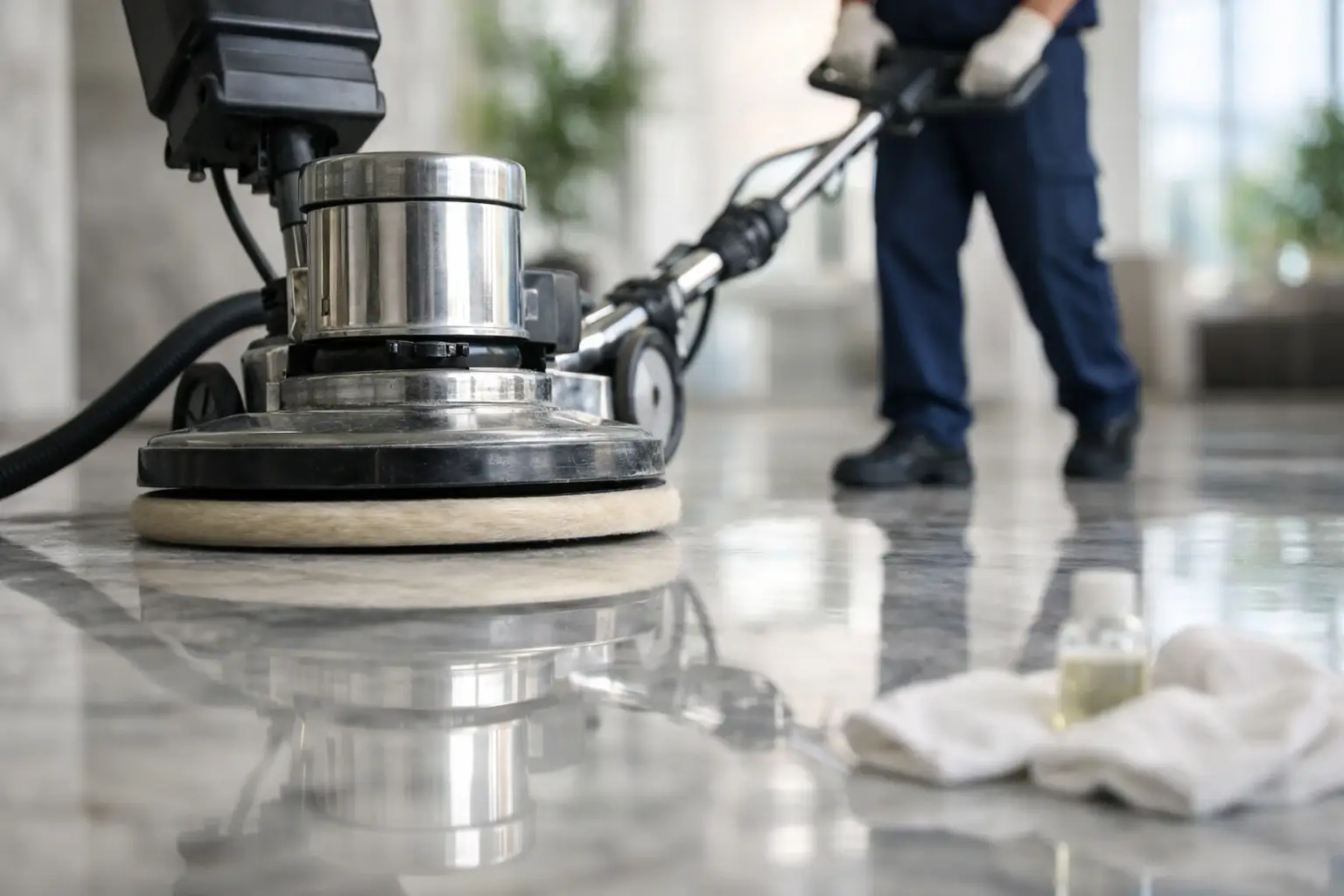
A marble floor rarely loses its appeal all at once. The change is gradual. The shine softens, foot traffic creates dull lanes, light scratches catch the sun, and acidic spills leave pale etch marks that make an otherwise elegant surface look tired. That is where marble floor polishing becomes less about appearance alone and more about restoring the standard your space was designed to hold.
In premium homes and presentation-focused commercial interiors, marble is never just another flooring material. It reflects light, defines the feel of a room, and signals quality immediately. When it becomes worn, the whole space can appear older than it is. Professional restoration addresses that decline without the cost, mess, and downtime of replacement.
What marble floor polishing actually does
Marble floor polishing is a specialist process that refines the surface of natural stone to improve clarity, smoothness, and reflectivity. Depending on the condition of the floor, the work may also involve honing, stain treatment, scratch reduction, lippage correction, repairs, and sealing. Polishing is not simply adding a topical shine. It is about mechanically and chemically restoring the stone itself.
That distinction matters. Many general cleaning services can wash a marble floor, and some may apply products that create temporary gloss, but that is not the same as true restoration. Marble is a calcium-based stone, which means it is sensitive to acids and prone to etching. It also varies in density and finish, so the right treatment depends on the specific marble, the level of damage, and the result you want.
A high-polish finish can look exceptional in an entry, hallway, or formal living area. In other settings, a honed finish may be the better choice because it offers a softer, more natural appearance and can show less visible wear between maintenance cycles. The right result is not always the shiniest one. It is the finish that suits the stone, the setting, and the level of daily use.
When marble floors need polishing
Some signs are obvious. Deep scratches, widespread dullness, etching around dining areas or kitchens, and patchy reflective loss all indicate that the floor needs professional attention. Other signs are more subtle. If the floor looks clean but still lacks life, if sections appear cloudy under natural light, or if the sheen varies from one area to another, the surface has usually worn unevenly.
In commercial spaces, this often happens in traffic corridors, foyers, and lift lobbies where constant footfall gradually breaks down the finish. In homes, the common trouble spots are kitchens, hallways, ensuites, and open-plan living zones where marble is exposed to spills, grit, furniture movement, and everyday wear.
Waiting too long can make the restoration more involved. Light etching and surface dullness are typically straightforward to correct. Once damage becomes deeper, the process may need more aggressive honing stages before polishing can begin. That does not mean the floor is beyond saving, but early intervention usually delivers a more efficient and economical outcome.
Why marble loses its shine
Marble wears differently from ceramic tile or engineered flooring. It is more refined, but also more responsive to its environment. Fine grit carried in on shoes acts like sandpaper. Acidic liquids such as wine, juice, vinegar, and some bathroom products can etch the surface within minutes. Incorrect cleaning products can leave residue or react with the stone. Even routine mopping, if done with the wrong chemicals, can slowly dull the finish.
There is also a difference between a dirty floor and a damaged one. Dirt can be cleaned away. Etching, scratching, and wear are changes to the stone surface itself. Once that happens, no household product will restore the original brilliance. The floor needs to be professionally reprocessed.
The marble floor polishing process
Every quality result starts with assessment. The stone type, finish, porosity, existing damage, and previous treatments all influence the method. Some marble floors have isolated etching but retain strong overall condition. Others show widespread wear, uneven gloss, staining, and movement-related damage around grout lines or edges.
The first restoration stage is often honing. This removes a very fine layer of stone to level out surface imperfections, reduce scratches, and eliminate etching. Honing can be light or more intensive depending on the condition of the floor. If tiles are uneven, additional correction may be required to reduce lippage and create a more consistent plane.
Once the stone has been properly refined, polishing stages are used to build the desired finish. On quality marble, this is where depth, reflectivity, and clarity return. Repairs can also be carried out where chips or cracks affect the overall appearance. Finally, sealing helps reduce the stone’s vulnerability to staining, though it is important to understand that sealers do not make marble etch-proof.
That last point is one of the most common misunderstandings. Sealing is valuable, but it is not invincibility. Marble still needs correct care after restoration, especially in areas exposed to food acids, cosmetics, and cleaning chemicals.
Professional polishing versus DIY products
For valuable marble flooring, DIY polishing rarely delivers a result worth the risk. Store-bought products often mask the problem instead of correcting it. Some leave a coating that looks acceptable for a short period, then wears unevenly or traps residue. Others are simply unsuitable for calcium-based stone and can worsen the finish.
The challenge with marble is that damage is not always visible until the light hits it from the right angle. A floor can appear acceptable when viewed head-on, yet show swirl marks, haze, or patchiness across the room. Professional restoration equipment, correct abrasives, and material-specific knowledge are what produce a finish that looks refined from every perspective.
This is especially important in luxury homes, apartment common areas, hotels, offices, and retail settings where presentation carries real value. A poorly treated marble floor can cheapen a high-end interior very quickly. A properly restored one lifts the entire space.
Marble floor polishing for homes and commercial spaces
Residential and commercial projects share the same technical foundations, but the priorities are often different. In a home, clients usually want elegance restored without unnecessary disruption. The focus is on preserving the character of the stone while bringing back a clean, sophisticated finish that complements the interior.
In commercial settings, there is often more emphasis on durability, maintenance planning, and visual consistency across larger areas. Building managers and operators need a result that presents well under heavy lighting and regular foot traffic, while also making practical sense over the long term.
That is why restoration is often a smarter investment than replacement. Replacing marble flooring can involve demolition, material matching issues, major downtime, and substantial cost. Polishing and restoration preserve the existing asset, improve its appearance, and extend its service life with far less disruption.
How to keep polished marble looking its best
After restoration, maintenance becomes the difference between a finish that lasts and one that degrades prematurely. The essentials are straightforward. Use pH-neutral stone-safe cleaners, remove spills quickly, keep grit off the floor, and avoid acidic or abrasive products. Entry matting in commercial spaces and high-traffic homes also helps reduce surface wear.
Maintenance should be realistic, not idealised. A busy family kitchen with marble flooring will not wear the same way as a formal sitting room. A hotel foyer will need a different care plan from a private apartment. The goal is not to stop all wear. It is to slow it down, protect the finish, and schedule professional attention before damage becomes severe.
For some properties, periodic touch-up polishing is enough. For others, especially those with constant traffic, a broader maintenance program makes more sense. The right advice should always reflect the actual use of the space.
Choosing the right marble polishing specialist
Marble rewards expertise and exposes shortcuts. The right specialist understands stone composition, finish selection, repair methods, and long-term protection – not just how to operate a machine. They should be able to explain what your floor needs, what result is realistic, and where the trade-offs sit between gloss, maintenance, slip profile, and wear visibility.
That level of precision is what separates specialist restoration from standard cleaning or general floor care. For Sydney property owners who want marble surfaces treated with that standard of craftsmanship, Grand Stone Restoration approaches the work with the technical care and premium finish these materials demand.
A well-restored marble floor does more than shine. It brings back confidence in the space, restores visual value, and reminds you why marble was chosen in the first place.