
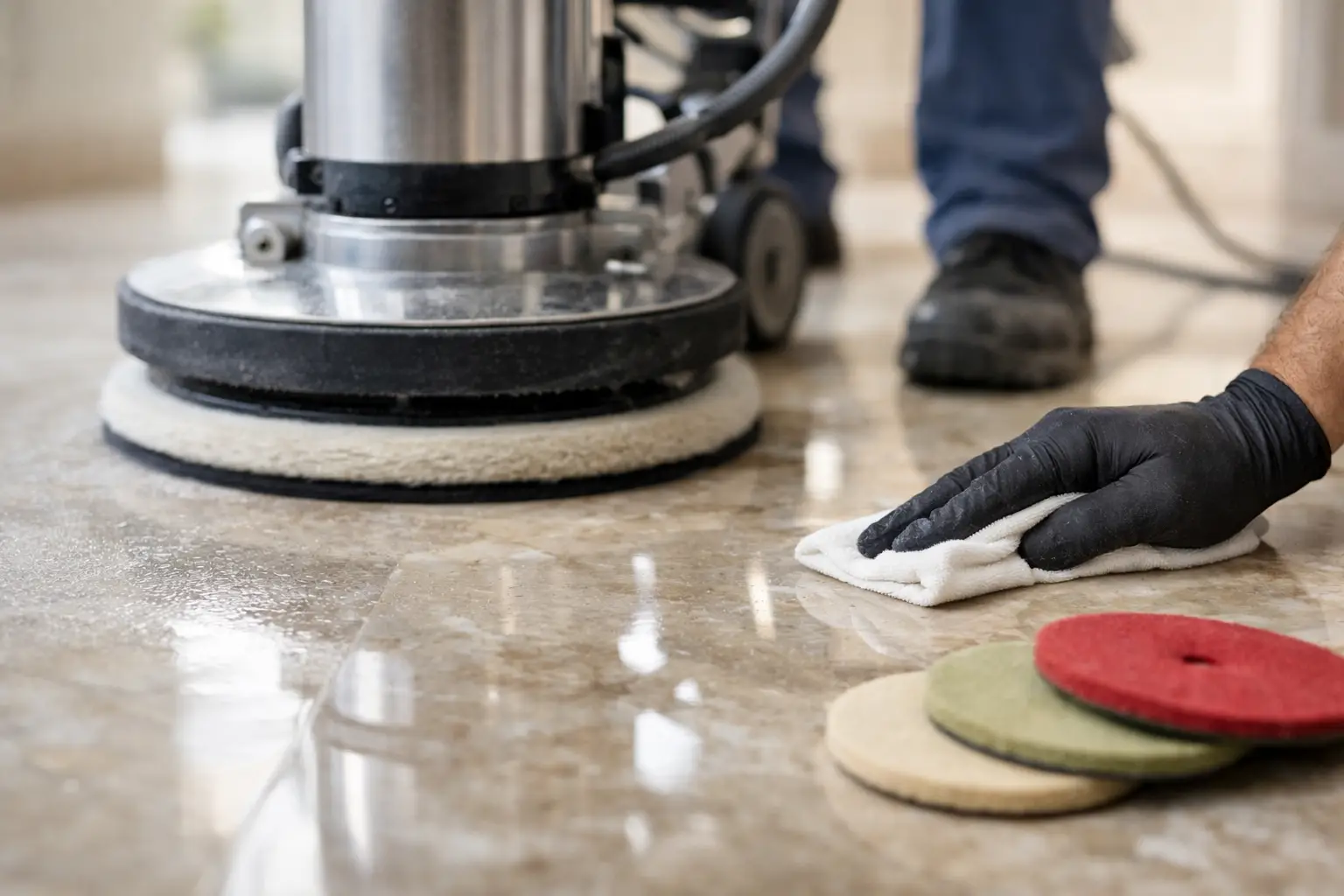
A stone floor rarely goes dull all at once. It happens in traffic lanes first, around vanities, beside kitchen islands, near entry points where grit is tracked in day after day. What starts as a soft loss of clarity gradually becomes a tired, flat finish that makes the whole room feel older than it is. Natural stone polishing is the process that brings that surface back to life, but the result depends entirely on how well the treatment matches the stone.
Premium stone is not a generic surface, and it should never be treated like one. Marble responds differently to polishing than granite. Limestone has different limits again. Even within the same material family, density, porosity, finish and previous maintenance all affect what can be achieved. That is why high-end results come from material-specific restoration, not a one-size-fits-all approach.
What natural stone polishing actually does
At its best, natural stone polishing refines the stone surface to improve light reflection, clarity and smoothness. It can reduce the appearance of fine scratching, remove dull wear patterns and restore the rich, elegant finish that gives stone its premium character. In many cases, polishing is also the step that turns a surface from clean to impressive.
That said, polishing is not simply about making stone shiny. On some surfaces, a honed finish is the better outcome. Honing creates a smooth, matte or low-sheen appearance that suits certain interiors and can be more practical in wet areas or high-traffic zones. The right finish depends on the stone, the setting and how the surface is used.
For marble and other calcium-based stones, polishing can also address etching from acidic spills. This is one of the most common issues on benchtops, bathroom vanities and dining surfaces. Wiping up the spill quickly helps, but once the stone has been chemically marked, routine cleaning will not restore the finish. The surface needs corrective treatment.
Why polished stone loses its finish
Stone does not fail without a reason. Most dullness comes from wear, chemical damage or poor maintenance methods. In residential properties, that often means acidic cleaners, supermarket sprays that are too harsh, and grit underfoot acting like sandpaper. In commercial settings, traffic volume and inconsistent maintenance usually do the damage faster.
Moisture can play a role too, especially in bathrooms, pool surrounds and outdoor entertaining areas. Mineral build-up, soap residue and embedded grime can mask the finish and leave stone looking lifeless even when it is technically clean. Sometimes the issue is not just on the surface. Older stone may have uneven wear, shallow scratches, minor lipping between tiles or patchy sealing that affects the final appearance.
This is where professional assessment matters. A polished finish only looks refined when the surface beneath it is properly prepared. If scratches, etching or ingrained contamination are left behind, the shine can end up uneven or short-lived.
Natural stone polishing is never one process for every stone
The biggest mistake in stone care is assuming all natural stone can be restored the same way. It cannot. Marble is softer and more reactive than granite. Limestone can be beautifully restored, but it requires a more controlled approach. Travertine often needs repairs or filling before the finish is refined. Terrazzo responds well to polishing, though the process depends on its binder and condition.
Granite, by contrast, is denser and harder, so polishing it effectively requires different abrasives, techniques and expectations. It can achieve a striking gloss, but it generally does not etch the way marble does. That distinction matters when diagnosing surface damage. A dull patch on marble may be etching. A dull patch on granite may be residue, abrasion or wear to a coating rather than damage to the stone itself.
This is why craftsmanship matters more than machinery. The equipment is only part of the job. The real skill is knowing what the surface is made from, what has caused the damage and what treatment will restore the finish without creating new problems.
The role of honing before polishing
Many stone surfaces need honing before they can be polished. Honing removes a fine layer of stone to level out wear, reduce scratches and create a uniform base. Without this step, polishing may only highlight imperfections rather than resolve them.
On heavily etched marble floors, for example, going straight to a high-gloss finish often leaves visible inconsistencies. Proper honing first gives the stone a clean, even canvas. From there, the finish can be refined to the desired sheen, whether that is soft satin or mirror-like brilliance.
Repairs and protection matter as much as shine
A premium result is not just about appearance on the day of service. Chips, cracks, open grout lines and porous areas can all compromise the final finish if left untreated. The same applies after polishing. If the stone is not sealed where appropriate, or if the client is not guided on suitable maintenance, the restored surface may lose its appeal sooner than it should.
For areas prone to acidic attack, protective options can make a significant difference. In high-value kitchens, bathrooms and hospitality settings, added protection can be the difference between a finish that lasts and one that quickly returns to the same problems.
Where professional stone polishing makes the biggest difference
The most dramatic transformations are often on surfaces people see every day but stop noticing until they become obviously worn. Entrance floors, marble bathrooms, lift lobbies, kitchen benchtops and hotel-style living areas all benefit from expert restoration because these are presentation-critical zones.
In homes, polished stone changes how light moves through a space. It lifts the perceived quality of the room and restores the clean, luxurious character that made the material attractive in the first place. In commercial properties, it supports the broader impression of care, quality and professionalism. A dull foyer floor sends a message, whether intended or not.
Outdoor stone can also benefit, although the finish must suit the environment. Highly polished surfaces are not always ideal in exposed or wet areas. In those settings, restoration may focus more on cleaning, honing, stain treatment and sealing than on creating gloss. The right result is the one that balances appearance with safety and performance.
Why replacement is often the expensive mistake
When stone looks tired, many property owners assume replacement is the only serious option. In most cases, it is not. If the stone is structurally sound, restoration is usually the more economical path and far less disruptive. Removing and replacing stone means demolition, disposal, supply delays, installation costs and the risk of not matching surrounding materials.
Professional polishing and restoration can deliver a remarkable visual improvement without that upheaval. More importantly, it preserves original materials that may be difficult or costly to replicate. This is especially relevant in established apartments, prestige homes and commercial interiors where continuity of finish matters.
The trade-off is that restoration has to be done properly. A quick buff or surface-level treatment may create temporary shine, but it will not correct underlying damage. Lasting results come from a complete approach that considers cleaning, repair, honing, polishing and protection as part of the same restoration cycle.
Choosing the right specialist for natural stone polishing
If you are comparing providers, look beyond the word polishing. Ask what stone types they work on, how they assess etching versus scratching, whether they repair before refining, and what finish they recommend for your specific surface. A true specialist will talk about the stone first, not just the machine.
Experience also matters when the surface is valuable, heavily used or architecturally prominent. Stone care is full of variables, and premium results come from judgement as much as process. A marble ensuite, a granite island bench and a limestone lobby floor may all need polishing, but they should not be approached in the same way.
For Sydney properties where presentation, longevity and asset value all matter, that level of care is not excessive. It is simply the standard the surface deserves. Grand Stone Restoration works with that principle in mind, restoring stone with the precision and finish quality expected of a specialist trade.
Natural stone should not be allowed to fade into the background just because wear has crept in over time. When the treatment is right, the surface regains its depth, elegance and presence – and the whole space feels sharper for it.