
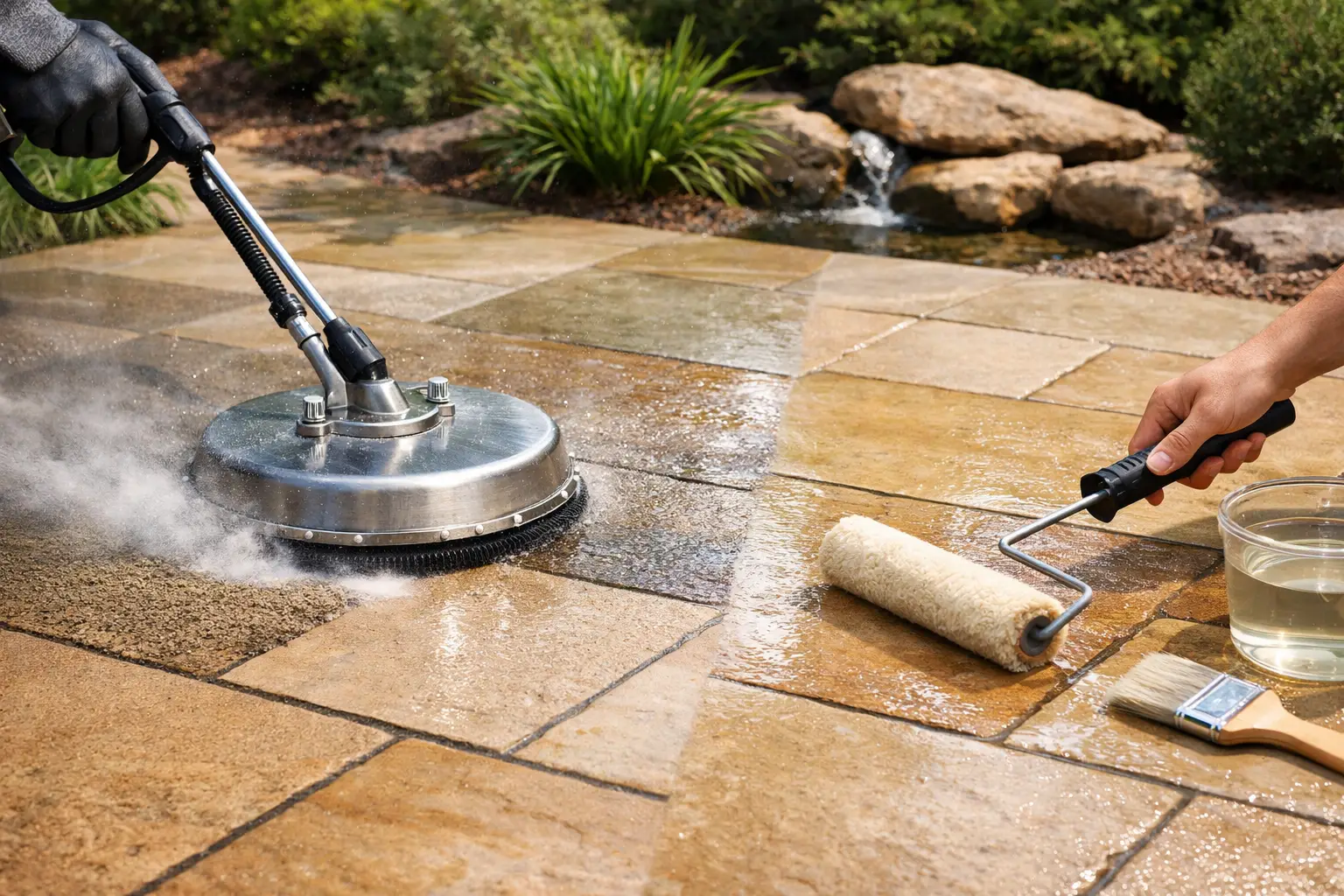
Sandstone can look magnificent when it is first laid – warm in colour, naturally textured and full of character. But once it starts holding dirt, darkening with moisture or showing patchy staining, the whole surface can feel tired far sooner than it should. Proper sandstone cleaning and sealing is what keeps that decline from becoming permanent.
Sandstone is often chosen because it feels substantial and refined, whether it is installed around a pool, across an entry, on a terrace or in a commercial outdoor space. The challenge is that its beauty comes with vulnerability. It is a porous natural stone, which means it absorbs water, grime, oils and organic matter more readily than many property owners expect. Cleaning it like concrete or sealing it with a one-size-fits-all product usually creates more problems than it solves.
Why sandstone needs a specialised approach
Not all stone responds well to the same treatment, and sandstone is a clear example. Its surface can range from relatively smooth and dense to soft, open and friable. Some varieties cope well outdoors, while others weather more quickly under harsh sun, heavy rain and foot traffic. The wrong pressure, the wrong chemical, or an unsuitable sealer can strip away the natural finish or leave the stone looking blotchy.
This is why sandstone cleaning and sealing should always start with the stone itself. A quality result depends on understanding porosity, existing contamination, prior sealers and the intended use of the area. A pool surround has different demands from a shaded courtyard. A residential patio has different wear patterns from a hospitality venue entrance.
There is also a visual consideration. Many owners want sandstone to keep its natural, understated elegance. Others prefer a richer, slightly enhanced appearance. The treatment plan needs to match that expectation, because the sealing stage can subtly change how the stone presents once dry.
What causes sandstone to lose its finish
In most cases, sandstone does not deteriorate all at once. It declines gradually, and the early signs are easy to overlook. Surface soiling builds first. Then moisture retention becomes more noticeable. After that, staining, biological growth or uneven colour can take hold.
Outdoor sandstone in particular is exposed to a demanding mix of contaminants. Wind-blown dirt settles into the pores. Rain can carry mineral residue. Organic matter from leaves and surrounding gardens encourages mould and algae. Pool areas may be affected by salt and chemical splash. Entertaining spaces often pick up food oils, drink spills and barbecue grease.
When those contaminants remain in the stone, they do more than spoil the appearance. They can make the surface harder to clean, promote slippery growth and contribute to ongoing discolouration. In some cases, failed sealers add another layer of trouble, trapping grime or creating a patchy finish that makes the stone look older than it is.
How professional sandstone cleaning works
Good cleaning is not about making the stone look dramatically wet for a few minutes. It is about removing contaminants thoroughly without damaging the surface. That balance matters.
The process usually begins with inspection and testing. This helps identify whether the stone has efflorescence, deep-set organic staining, residual sealers, grease contamination or general weathering. It also reveals how aggressive or restrained the cleaning method needs to be.
From there, treatment is selected to suit the surface. Some sandstone responds well to controlled pressure cleaning, while softer material may require gentler methods and specialist stone-safe solutions. Stains may need targeted treatment rather than broad washing alone. If old sealers are breaking down unevenly, they may need to be removed before the stone can be properly restored.
Drying time is another factor many people underestimate. Sandstone needs to be genuinely dry before sealing. If moisture is trapped inside, the sealer may not bond correctly and the finish can become inconsistent. Rushing this stage is one of the most common reasons for poor long-term results.
Sandstone cleaning and sealing for outdoor areas
Outdoor sandstone looks effortless when it is well maintained, but it works hard. Sun exposure, moisture cycling and traffic all place stress on the stone. In Sydney conditions, where UV, rain and coastal influences can all be part of the picture, protection is not optional if you want the surface to stay attractive.
Patios, pathways, pool surrounds and courtyards benefit most from a treatment plan that addresses both appearance and durability. Cleaning removes the accumulated grime and biological growth that make the stone look dull or unsafe. Sealing then reduces the stone’s ability to absorb water and staining agents, helping it resist future damage.
That said, sealing is not a magic shield. It reduces vulnerability, but it does not make sandstone maintenance-free. Oil can still mark if left too long. Organic matter can still stain if it sits in place. The difference is that a properly sealed surface gives you more response time, easier maintenance and a far better chance of preserving a clean, even finish.
Choosing the right sealer for sandstone
This is where experience makes a visible difference. Not every sealer is right for every sandstone surface, and the cheapest product is rarely the best value over time.
Penetrating sealers are commonly used where a natural look is preferred. They soak into the stone rather than forming a thick surface film, helping to protect against moisture and staining while allowing the sandstone to retain its original character. These are often ideal when clients want a refined, low-sheen result.
Enhancing sealers are used when the goal is to deepen the colour and bring out more variation in the stone. They can create a richer appearance, which suits some architectural styles beautifully. The trade-off is that the finish is more intentionally altered, so the choice should be made with care.
Surface coatings may have a place in certain situations, but they are not universally suitable for sandstone. If incorrectly selected, they can peel, whiten, trap moisture or create an artificial look. On exterior sandstone especially, breathability matters. A stone that cannot release moisture properly is more likely to develop problems later.
Common mistakes property owners make
The most frequent issue is over-cleaning. High-pressure washing at excessive force can erode softer sandstone, roughen the face and open the pores further. It may look brighter immediately, but the stone often becomes more vulnerable afterwards.
Another mistake is using harsh acidic or off-the-shelf cleaning products designed for general hard surfaces. Sandstone is not a generic paving material. Products that seem harmless on tile or concrete can damage natural stone or leave behind residues that interfere with sealing.
Poor sealer choice is equally common. Applying a glossy topical product to achieve a quick visual lift may seem appealing, but it can leave sandstone looking unnatural and can fail unevenly in exposed conditions. Once that happens, remediation is more complex than proper treatment would have been in the first place.
There is also the temptation to spot-treat visible marks while ignoring the whole surface condition. If one area is noticeably stained, the surrounding sandstone often has embedded contamination too. A patch fix can make variation more obvious rather than less.
When restoration is better than replacement
Many sandstone surfaces look beyond help when they are merely overdue for professional treatment. Years of grime, algae, sealer failure and weather exposure can make quality stone appear exhausted. In reality, restoration is often the more economical and less disruptive path.
Cleaning and sealing can dramatically improve presentation without the cost of lifting and replacing the stone. That matters for homeowners protecting a premium outdoor area, and it matters just as much for commercial properties where presentation affects how the space is perceived. Entrances, terraces and shared outdoor zones all benefit from a surface that looks cared for and performs properly.
For clients who value craftsmanship and long-term asset care, restoration offers a more intelligent return. You preserve the original material, avoid unnecessary replacement costs and achieve a finish that is tailored to the stone rather than imposed on it.
How often should sandstone be cleaned and sealed?
It depends on exposure, traffic and how the area is used. A covered courtyard may need far less frequent treatment than an exposed pool area or a commercial entry that sees constant foot traffic. Some surfaces require routine professional cleaning to stay on top of environmental build-up, while sealing intervals vary depending on the stone and sealer type.
What matters most is not chasing a generic schedule. It is assessing the actual condition of the sandstone. If water is soaking in quickly, stains are becoming harder to remove or the finish is looking flat and uneven, it is usually time to review the surface.
A well-treated sandstone area should still look natural. It should be easier to maintain, more resistant to wear and better equipped to handle everyday use. That is the standard a specialist aims for. Grand Stone Restoration approaches sandstone with that level of precision, because premium stone deserves a treatment method as considered as the surface itself.
If your sandstone has started to look dull, patchy or prematurely aged, the right response is not a harsher clean. It is a smarter one – followed by sealing that protects the stone without compromising its character.