
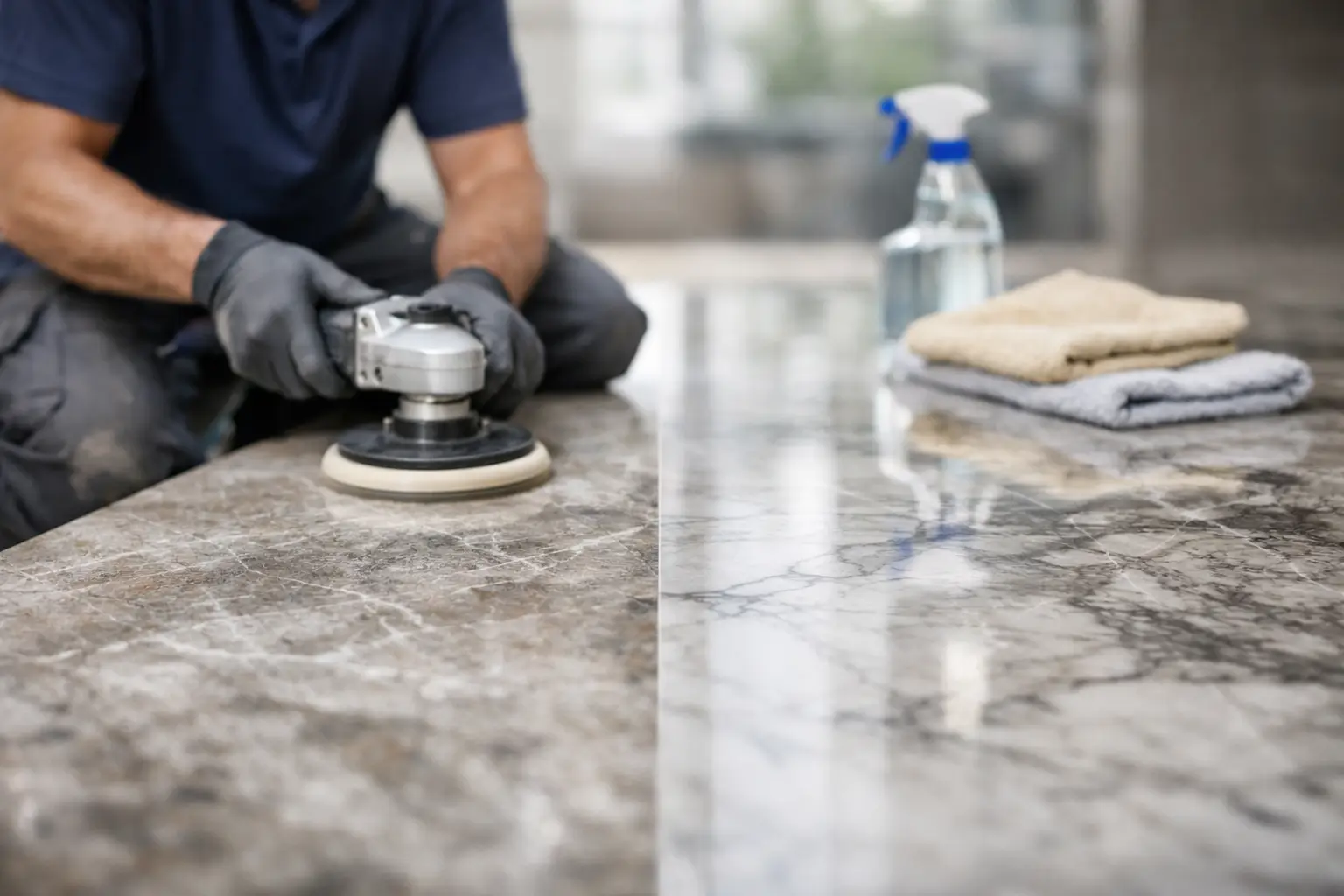
A marble vanity that looked flawless at handover can lose its finish faster than most owners expect. Acidic splashes, foot traffic, harsh cleaners and everyday wear slowly strip away clarity, leaving stone dull, etched, scratched or uneven. That is where stone restoration Sydney property owners rely on becomes less of a cosmetic extra and more of a practical investment in protecting high-value surfaces.
Replacement is often the first idea people consider when stone starts to look tired. In many cases, it is also the most expensive and disruptive option. Quality restoration can revive the surface you already have, correct visible damage, improve consistency and restore a refined finish without the mess, delays and cost of ripping everything out.
What stone restoration Sydney services actually involve
Stone restoration is not a single treatment. It is a tailored process based on the material, the condition of the surface and the finish you want to achieve. Marble, limestone, terrazzo, granite, engineered stone and sandstone all behave differently, which is why a one-size-fits-all approach rarely delivers a premium result.
A proper restoration program may include deep cleaning, stain treatment, honing, polishing, scratch removal, chip repairs, grout renewal, sealing and protective coatings. In some spaces, anti-etch film can also be the right long-term solution, especially on vulnerable benchtops and vanity tops where appearance matters and daily use is unavoidable.
The goal is not simply to make stone look shiny. It is to return balance, smoothness and visual depth to the surface while extending its life. Sometimes that means a high-polish finish. Other times, a honed or matte finish is more appropriate because it better suits the material, the design scheme or the level of traffic.
Why natural and engineered stone lose their finish
Stone is durable, but it is not indestructible. Many premium surfaces are porous to some degree, and several are chemically sensitive. Marble and limestone, for example, etch when exposed to acidic substances. Granite is generally harder, but it can still become dull, stained or scratched. Engineered stone has its own vulnerabilities, particularly around finish degradation and surface marking.
In residential settings, the common culprits are kitchen spills, bathroom products, abrasive pads and incorrect cleaning products. In commercial environments, wear is usually compounded by heavier traffic, inconsistent maintenance and the visual impact of large open areas where every patch of dullness stands out.
Sydney conditions can also play a part. Outdoor stone around pools, entryways and entertaining areas may contend with moisture, grime, UV exposure and organic staining. Indoors, polished stone in apartments and commercial foyers often suffers from grit abrasion carried in from outside. Over time, even a high-end installation can lose the crisp, elegant appearance it once had.
The value of restoration over replacement
For most property owners, the question is not whether a damaged surface looks worse than it should. It is whether restoration will genuinely deliver a worthwhile result. In many situations, the answer is yes.
Restoration is usually more cost-effective than replacement because the existing substrate remains in place. There is no demolition, no need to source matching materials, and far less interruption to the home or business. That matters in occupied apartments, busy households, hotel lobbies, office buildings and retail spaces where downtime carries a real cost.
There is also a finish advantage. New stone installed beside older areas can create inconsistencies in tone, pattern and sheen. Restoring the original surface often produces a more cohesive result, particularly across large floors, bathrooms and open-plan spaces where continuity is part of the luxury feel.
That said, restoration is not identical in every case. Deep cracks, structural movement or severe material failure may require partial replacement before the restoration process begins. An experienced specialist will say so plainly. Premium work is not about overselling a treatment. It is about recommending the right one.
Which surfaces benefit most from professional stone restoration
The most obvious candidates are marble floors, benchtops, vanity tops, shower walls and feature stone in bathrooms. These surfaces tend to show etching and dullness quickly because they are both decorative and heavily used. A well-executed hone and polish can transform them from flat and tired to crisp and light-reflective again.
Commercial foyers, lift surrounds, hotel reception areas and retail interiors are also strong candidates. In these settings, presentation carries weight. Scratched stone and patchy grout can undermine the quality of an otherwise premium environment. Restoration helps align the finish of the surfaces with the standard of the property itself.
Outdoor stone can benefit as well, especially sandstone, tiles and paved areas affected by weathering, grime and discolouration. Here, the work often leans more heavily on cleaning, repair and sealing than mirror-like polishing. The right finish depends on the location, slip considerations and the natural character of the material.
Why material-specific expertise matters
This is where many restoration outcomes are won or lost. Marble does not respond like granite. Limestone is not treated the same way as terrazzo. Engineered stone requires a different understanding again. Using the wrong abrasives, over-polishing the surface or applying the wrong chemical treatment can reduce clarity rather than improve it.
A specialist approach starts with identifying the exact material and assessing the damage properly. Is the dullness actually etching? Are the marks surface scratches or deeper gouges? Has previous sealing failed, or is the issue residue build-up from cleaning products? These distinctions matter because they determine the treatment sequence.
Craftsmanship also matters in the finishing stage. A premium result depends on consistency across the whole surface, not a small restored patch that looks different in certain light. Skilled honing and polishing create even reflection, refined texture and a finish appropriate to the room. That is especially important in luxury interiors, where inconsistency is immediately noticeable.
Stone restoration Sydney property owners should ask for
When assessing stone restoration Sydney services, look past generic promises of cleaning or polishing. The real value lies in diagnosis, process and protection. You want to know what is causing the damage, what treatment will be used, and what finish is realistically achievable on your specific surface.
It is also worth asking how the restored surface will be protected afterwards. Sealing can reduce staining risk on suitable stones, but it does not make every surface immune to etching or scratching. In some applications, especially high-use bathroom vanities and kitchen benchtops, protective film can be the better solution because it creates a sacrificial barrier without sacrificing the appearance of the stone beneath.
For commercial spaces, timing and staging are just as important as technical skill. The best restoration plan may need to be carried out in sections or after hours to minimise disruption. For homes, dust control, care around surrounding finishes and respect for the space are equally part of a premium service.
What results can you realistically expect?
In most cases, a dramatic improvement. Etching can often be removed or substantially reduced. Scratches can be refined out depending on their depth. Dull stone can regain clarity and elegance. Stained grout can be cleaned or renewed, and chipped edges may be repaired to a far more discreet finish than many clients expect.
Still, realism matters. Some stones have natural variation that remains visible after restoration, and some damage may be too deep to erase completely without more extensive work. A trustworthy specialist sets expectations honestly and focuses on the best overall finish rather than making promises that ignore the condition of the material.
The strongest outcomes come from matching treatment to use. A family kitchen may need a practical satin finish rather than a highly reflective polish. A commercial lobby may need maximum visual impact paired with a maintenance plan that preserves the result. Stone care is never just about the day the job is completed. It is about how the surface performs over time.
A beautifully restored surface changes the way a space feels. Light reflects properly again, the room looks cleaner and more considered, and the quality of the material is visible rather than hidden under wear. If your stone has lost its finish, the smartest move is often not replacement at all, but precise restoration carried out with the level of craftsmanship the surface deserves.