
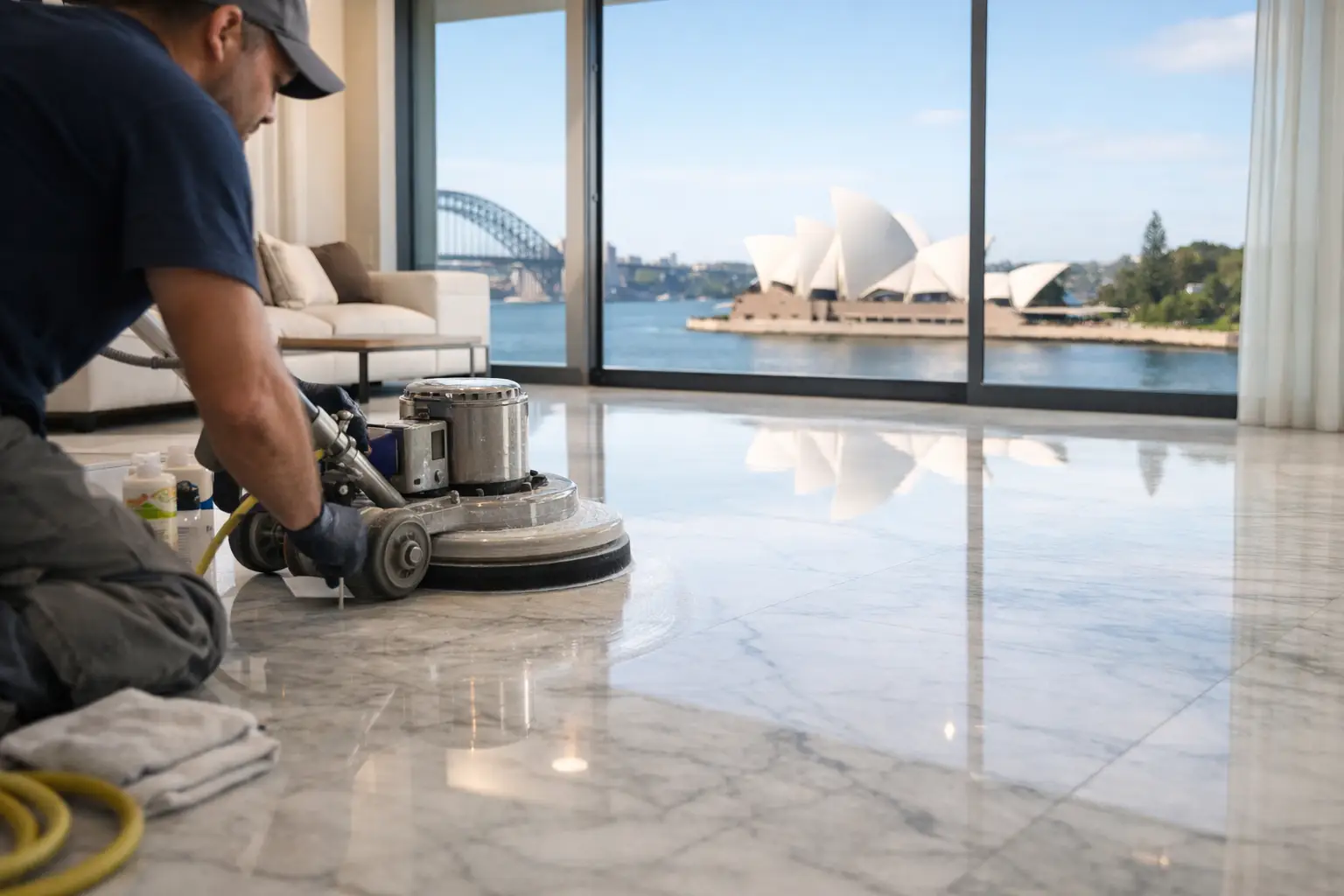
A marble floor can make a room feel exceptional – until etching, dull patches and scratches start catching the light for all the wrong reasons. Sydney marble surfaces, whether in a private residence or a busy commercial foyer, take more punishment than many owners expect. Between foot traffic, acidic spills, moisture, cleaning mistakes and everyday wear, even premium stone can lose the crisp, elegant finish that made it so appealing in the first place.
That decline is rarely a sign that the stone needs replacing. More often, it means the surface needs the right restoration method, applied by a specialist who understands marble as a material rather than treating it like generic tile. The difference matters, because marble responds best to precise, material-specific care.
Why Sydney marble loses its finish
Marble is a calcium-based stone, which means it is naturally vulnerable to acids. A splash of lemon juice on a benchtop, the wrong bathroom cleaner on a vanity, or harsh chemicals used by a general cleaner can leave marks that look like water spots but are actually etching. This is one of the most common issues seen on marble in both homes and commercial spaces.
Scratching is another frequent problem. Grit brought in from outside, furniture movement, trolley traffic in commercial settings and abrasive pads can all wear down the surface. Over time, the polish becomes uneven. Some areas stay glossy while traffic lanes turn flat and tired.
In Sydney properties, climate and lifestyle also play a part. Moisture around bathrooms, pool areas and balconies can affect stone over time. In commercial environments, presentation pressure is high, but so is usage. That combination often leaves marble looking older than the rest of the fitout, even when the underlying stone is still structurally sound.
Restoration is not the same as cleaning
This is where many property owners lose time and money. If marble looks dull, stained or marked, standard cleaning will not reverse the damage. In some cases, frequent cleaning with the wrong products makes the finish worse.
Professional restoration works by correcting the surface itself. That may involve honing to remove shallow scratches and etching, polishing to refine the finish, filling chips, regrouting surrounding areas or sealing the stone to slow future staining. Each step has a purpose, and not every marble surface needs the same treatment.
A bathroom vanity with light etching may only need targeted honing and polishing. A hotel lobby floor with years of wear may require a more intensive restoration program to create a consistent finish across a large area. The right approach depends on the stone type, the current condition and the finish you want to achieve.
What proper Sydney marble restoration involves
High-quality marble restoration is a process of correction and refinement. It begins with identifying what the surface is actually dealing with. Dullness can come from wear, residue build-up, etching or a poor previous polish. Stains may sit on the surface or penetrate deeper. Fine scratches can often be removed, while deeper damage may need repair before the stone is reworked.
Honing for etched and worn marble
Honing removes a very fine layer from the stone to correct surface damage. It is often the most effective treatment for etching, light scratches and uneven wear. A honed finish can also be the preferred final look in its own right, especially in contemporary interiors where a softer, more understated appearance suits the space.
There is a trade-off, though. Honed marble is less reflective than polished marble, so if the goal is high-gloss luxury, honing is usually a preparatory stage rather than the final result.
Polishing for brilliance and clarity
Polishing refines the marble to restore shine, depth and light reflection. Done properly, it brings back the richness and elegance that owners expect from premium stone. This is particularly valuable in entrance areas, kitchens, bathrooms and hospitality settings where presentation has a direct impact.
Polishing is not just about making the surface shiny. It is about creating a clean, even finish that looks intentional and high-end. A patchy gloss, or a surface polished without first addressing etching and scratches, will still look compromised.
Repairs, sealing and protection
If marble has chips, cracks or edge damage, these can often be repaired without replacing slabs or tiles. This is one of the strongest financial arguments for restoration. Replacing marble is expensive, disruptive and often difficult to match. Targeted repair allows you to preserve the original installation while improving its appearance.
Sealing is also important, but it should be understood properly. A quality sealer helps reduce the stone’s absorption of liquids and slows staining. It does not make marble stain-proof or etch-proof. That distinction matters, especially in kitchens and bathrooms where owners sometimes expect sealing to solve every problem.
For areas with recurring acid exposure, additional protection may be worth considering. In some applications, anti-etch film provides a practical solution where aesthetics and durability both matter.
When restoration makes more sense than replacement
In most cases, restoration is the more intelligent investment. Marble replacement comes with demolition, disposal, sourcing, fabrication, installation and downtime. In occupied homes or active commercial premises, that disruption can be substantial.
Restoration preserves what is already there. If the marble is fundamentally sound, surface correction can deliver a dramatic transformation at a fraction of the cost of replacement. That is especially true for large floor areas, vanities, wall cladding and custom stonework that would be difficult or expensive to recreate.
It does depend on the extent of the damage. Severely broken sections or failed substrates may require partial replacement. But many surfaces that appear beyond saving are actually strong candidates for restoration once assessed by an experienced specialist.
The difference between residential and commercial marble care
The principles are the same, but the priorities are often different.
In residential settings, owners usually focus on beauty, comfort and preserving high-value finishes. They want bathroom vanities free of etch marks, kitchen benchtops that present beautifully, and marble floors that elevate the space rather than dating it. The work needs to be careful, controlled and suited to premium interiors.
Commercial clients tend to have an additional layer of concern – image. A scratched lobby floor or stained bathroom vanity reflects poorly on the property as a whole. Facilities managers, strata representatives and venue operators are often balancing presentation, durability, scheduling and budget at the same time. They need a result that looks refined, but they also need practical recommendations that reduce repeat issues.
That is why tailored treatment matters. A luxury apartment bathroom and a retail entry floor may both be marble, but they do not need the same finish, maintenance strategy or protective approach.
Choosing a marble specialist matters
Marble is not forgiving of guesswork. Incorrect pads, unsuitable chemicals, rushed polishing or one-size-fits-all methods can leave swirl marks, uneven gloss, further etching or a finish that fails prematurely. The surface may look better for a short time, then quickly reveal the same problems again.
A specialist approaches marble with technical discipline. That means understanding stone composition, matching the restoration method to the damage, and working toward a finish that suits both the material and the setting. It also means being clear about limitations. Some deep staining may lighten rather than disappear entirely. Some heavily trafficked floors may benefit from a lower-sheen finish that holds its appearance better over time.
That kind of honesty is part of quality workmanship. Premium restoration is not about overpromising. It is about delivering the best possible result with precision and care.
Keeping marble looking its best after restoration
Once marble has been restored, maintenance becomes far more straightforward. Use pH-neutral products made for natural stone, avoid acidic cleaners, and clean spills promptly rather than letting them sit. Entry mats, furniture protection and routine professional maintenance can all extend the life of the finish.
For commercial spaces, periodic maintenance is often the smartest way to protect presentation without waiting for the stone to deteriorate badly again. For homes, a simple care routine and timely attention to minor damage can preserve that restored finish for years.
When marble starts looking tired, the real question is not whether it can be saved, but whether it is being assessed by someone who knows how to bring it back properly. In the right hands, worn marble does not need to be written off – it can return to the level of elegance it was chosen for in the first place.