
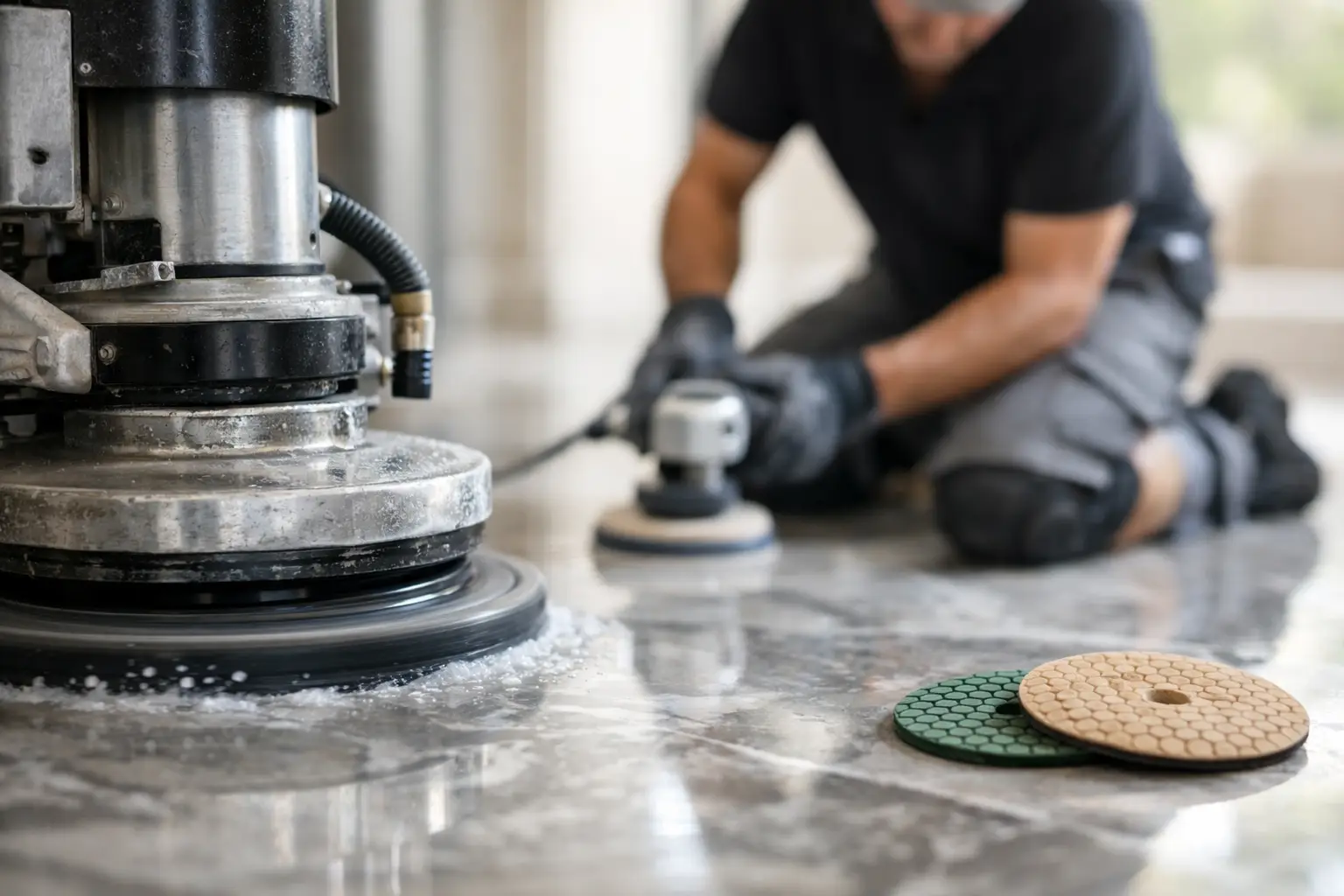
A stone surface rarely looks tired all at once. It happens in stages – a marble floor loses its clarity near the entry, a benchtop shows dull patches around the sink, or a foyer starts reflecting light unevenly. That is usually the point where people start asking what professional stone polishing does, and whether it is simply a cosmetic shine-up or a genuine form of restoration. The answer matters, because the right polishing process can bring back depth, smoothness and refinement without the cost and disruption of replacement.
What professional stone polishing does in practical terms
Professional stone polishing is a controlled restoration process that refines the surface of natural or engineered stone to improve its finish, remove wear and recover visual clarity. It is not the same as wiping on a glossy product or using a supermarket polish. True polishing works the stone itself.
In most cases, the process uses specialist abrasives, polishing powders or diamond systems to mechanically refine the surface layer. This reduces or removes minor scratches, dullness, light etching and traffic wear while bringing the stone to a more even, reflective finish. Depending on the material and the condition of the surface, polishing may follow honing, repair work or deep cleaning.
That distinction is important. A stone floor or benchtop can look flat for very different reasons. One surface may simply need polishing to restore brilliance. Another may first need scratch removal, chip repairs, grout attention or stain treatment before polishing can deliver the right result. Professional work is effective because it treats the cause, not just the symptom.
Polishing is not the same as cleaning
Many property owners assume that a dull stone surface is dirty. Sometimes it is, but often the issue sits below what ordinary cleaning can fix. Marble, limestone and travertine are especially prone to etching from acidic products and spills. Granite can lose its crisp finish in high-use areas. Engineered stone may develop a tired, inconsistent appearance over time. Tile and grout can make the whole area feel aged even when regularly cleaned.
Cleaning removes surface grime, residues and contaminants. Polishing corrects the finish itself. If the stone has become microscopically rough, scratched or chemically marked, no amount of mopping or scrubbing will restore the original lustre. In fact, the wrong products can make the problem worse.
This is why professional assessment matters. A skilled technician can tell whether the surface is coated, honed, polished, etched, sealed or worn through in patches. That knowledge shapes the method and protects the material from unnecessary damage.
How the polishing process actually restores stone
Surface preparation comes first
Before any polishing begins, the stone needs to be properly prepared. That may include deep cleaning to remove built-up residues, degreasers, old sealers or ingrained soil. In some cases, cracks or chips are filled first so the finished surface looks continuous and refined rather than shiny but damaged.
If the floor or benchtop has lippage, heavy scratches or significant etching, honing may be needed before polishing. Honing uses abrasive grinding stages to level and smooth the stone, creating a fresh foundation. Polishing then builds the final finish from that corrected surface.
Polishing refines the stone face
At the polishing stage, specialist compounds or diamond abrasives are used to close the surface and increase reflectivity. The exact technique depends on the stone type. Marble responds differently from granite, terrazzo, limestone or engineered surfaces such as Caesarstone and Silestone. A premium result comes from matching the process to the material, not forcing one method across every job.
This is where craftsmanship shows. The goal is not simply more shine. It is an even, elegant finish that suits the stone and the setting. Some clients want a high-gloss surface that feels luxurious and dramatic. Others prefer a softer satin look with a more understated character. Professional polishing can be tailored to either outcome.
Protection may follow restoration
Once the surface is restored, sealing or protective treatment may be recommended. Polishing improves appearance and surface refinement, but it does not make stone immune to staining, wear or etching. Sealing can help resist moisture and staining, while specialised protective options may be appropriate in high-risk areas such as kitchens, bathrooms, hotel lobbies or commercial entries.
That is part of the value of a full restoration approach. The finish is improved, and the surface is also better prepared for day-to-day use.
What kinds of problems polishing can fix
Professional stone polishing is highly effective for common forms of visible wear, especially when the damage is moderate rather than structural. It can improve light scratching, dull traffic lanes, uneven shine, mild etching, water marks, cloudy finishes and general loss of depth.
It can also make a surface feel newer and more expensive again. That matters in homes with feature stone and in commercial spaces where presentation affects first impressions. A polished marble bathroom reads very differently from one with a patchy, tired finish. The same applies to a reception floor, retail fit-out or office foyer.
There are limits, though. Deep cracks, severe staining, heavy chips or major surface unevenness may need repair or grinding before polishing can do its job properly. If someone promises that polishing alone will solve every issue, that is usually a sign the diagnosis is too simplistic.
Why results vary by stone type
Marble and limestone
Calcite-based stones such as marble and limestone are beautiful, but they are more vulnerable to etching and finish loss. Professional polishing can dramatically improve these surfaces, particularly where acid damage and dullness are the main concerns. Because they are softer, they require a more precise hand.
Granite
Granite is harder and typically more resistant, but it still loses clarity over time. In kitchens and commercial settings, polishing can sharpen reflectivity, reduce wear patterns and revive the stone’s natural depth. The process is different from marble and usually more demanding in terms of tooling.
Terrazzo and engineered stone
Terrazzo responds well to professional refinement, often revealing impressive brightness and consistency across larger areas. Engineered stone also benefits from specialist attention, though it must be treated with methods suitable for the resin and aggregate blend. Not every contractor understands that distinction.
Outdoor stone and textured finishes
Not all stone should be polished to a gloss. Outdoor sandstone, slip-sensitive areas and textured finishes often require cleaning, honing or sealing rather than high-shine polishing. A good specialist will recommend the finish that suits the space, not the flashiest option.
Why professional polishing is often better value than replacement
Stone replacement sounds straightforward until the real costs appear. Demolition, disposal, sourcing a matching slab or tile, installation delays and disruption can quickly turn a worn surface into a major project. In premium homes and commercial interiors, replacement may also disturb surrounding joinery, cabinetry or fit-outs.
Restoration is often the smarter path when the stone itself is still sound. Professional polishing can remove years of visible wear and restore a high-end finish at a fraction of the cost of replacement. It also preserves original materials, which is often important in established properties where matching existing stone can be difficult.
For commercial operators, there is another benefit: less interruption. A well-planned restoration process is generally faster and cleaner than a full rip-out. That makes it a practical decision as well as a visual one.
When it is time to call a specialist
If your stone looks dull after cleaning, shows etching or scratches, reflects light unevenly, or no longer suits the standard of the space, it is worth having it professionally assessed. The same applies if previous polishing attempts have left swirl marks, patchy gloss or inconsistent results.
A specialist restoration company will look beyond surface appearance and identify the right sequence of treatment. That may include cleaning, honing, repair, polishing and sealing as part of one coordinated service. For clients who want a premium finish rather than a temporary fix, that depth of expertise makes a visible difference.
At Grand Stone Restoration, that material-specific approach is central to the work. Different stones age differently, and they need to be restored accordingly.
Professional polishing does more than make stone shiny. It re-establishes the finish, sharpens the overall presentation of the space and helps protect the value of surfaces that were never cheap to install in the first place. When done properly, the result is not just cleaner stone, but stone that looks composed, elegant and properly cared for again. If your surfaces have lost that standard, restoring them is often the most sensible next step.