
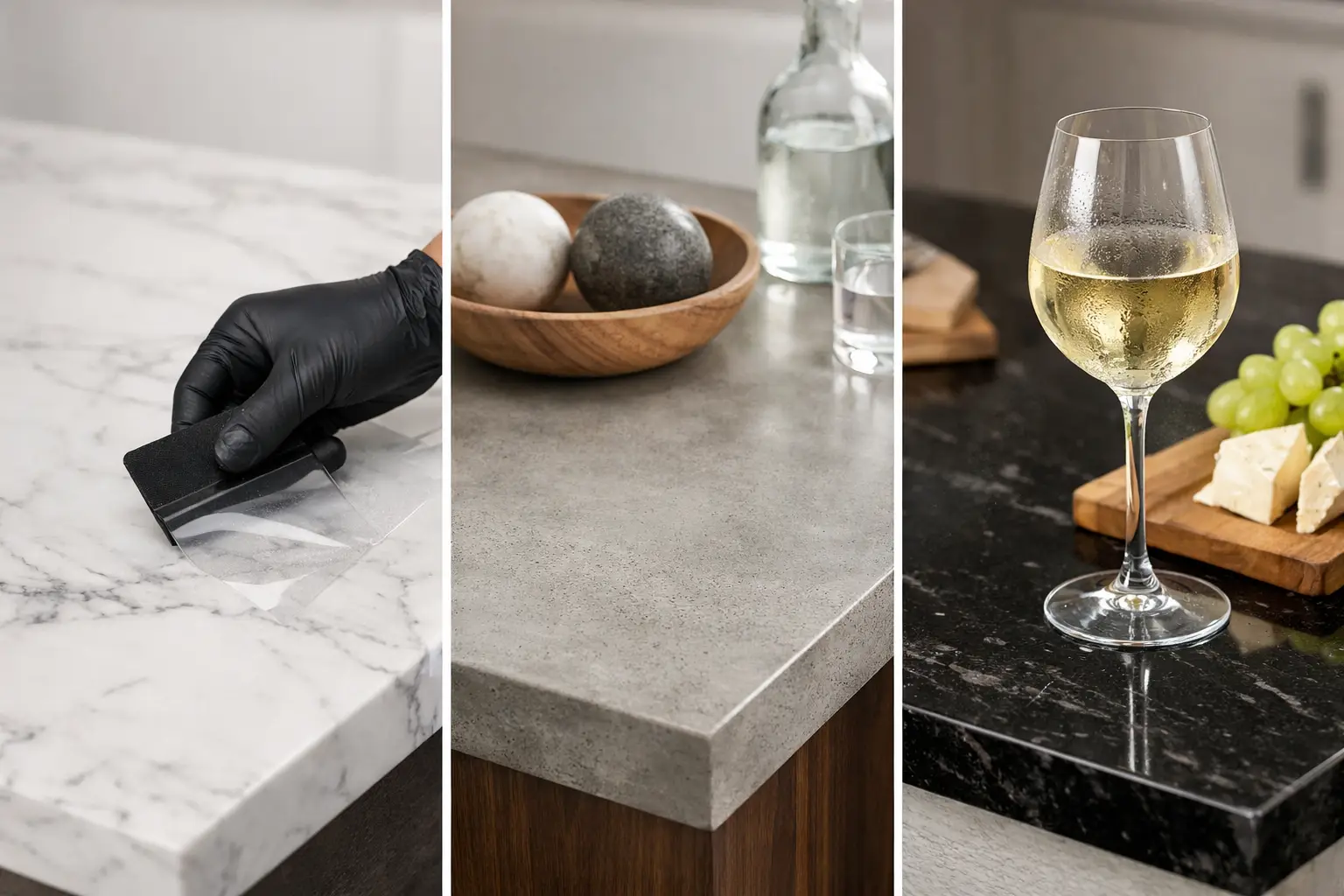
A marble island can look flawless at install and visibly marked six months later. One splash of lemon juice, one ring from a wine glass, one missed wipe after a cleaning product, and the finish starts to lose its crisp, refined appearance. That is why so many property owners ask about the best surfaces for anti etch film – not as a cosmetic extra, but as a practical way to protect high-value stone in busy, design-led spaces.
Anti etch film is not the right answer for every surface. When it is chosen well, however, it can preserve the look of elegant stone and engineered surfaces that would otherwise show daily wear far too quickly. The key is understanding where it performs best, where it is less suitable, and how it fits into a broader protection strategy.
What anti etch film is designed to do
Anti etch film is a clear, protective surface layer applied over selected benchtops, vanities, bars and similar flat surfaces. Its role is to absorb the day-to-day punishment that would normally affect the material below. Instead of acidic foods, spills, minor abrasion and cleaning contact reaching the stone itself, the film takes that impact first.
For premium interiors, the appeal is obvious. Natural stone and engineered surfaces often carry a significant material and installation cost. Replacing them because of etching, dull patches or visible wear is expensive and disruptive. A professionally installed film offers a controlled, lower-disruption way to preserve the original finish.
That said, anti etch film is not a substitute for proper restoration. If a surface is already etched, scratched, chipped or uneven, it generally needs to be corrected first. Film protects a finish well – it does not hide poor condition underneath.
The best surfaces for anti etch film in real-world use
The best surfaces for anti etch film are typically smooth, polished or honed, high-contact horizontal surfaces where aesthetics matter and chemical exposure is common. In practical terms, that usually means kitchens, bathrooms, bars and reception-style settings rather than every stone surface in a property.
Marble benchtops and islands
Marble is one of the strongest candidates for anti etch film. It delivers undeniable elegance, but it is also one of the most vulnerable surfaces to etching. Acids in citrus, vinegar, sauces, wine and many household products can mark polished marble quickly. Even careful households can struggle to keep a marble island pristine if it sees regular use.
Film works especially well here because the risk profile is high and the visual expectations are even higher. On a large kitchen island or marble benchtop, a clean, consistent finish matters. Anti etch film helps preserve that premium appearance without asking the owner to treat the surface as though it were off-limits.
Marble bathroom vanities
Bathrooms are often overlooked in protection planning, yet marble vanities can deteriorate faster than many owners expect. Toothpaste, skincare, perfume, soaps and cleaning chemicals all contribute to dulling and etching over time. Add water spotting and routine friction, and the finish begins to lose clarity.
A bathroom vanity is one of the most practical uses for anti etch film because the surface is generally flat, compact and exposed to frequent product contact. For luxury bathrooms where visual detail matters, it is a sensible preventative measure.
Limestone and travertine tops
Limestone and travertine can benefit from anti etch film in the right setting, particularly when they are used as vanity tops, bar tops or decorative benchtops. These stones bring warmth and softness to interiors, but they are calcium-based and therefore susceptible to acid damage.
The trade-off is that softer, character-rich stones often appeal because of their natural variation and texture. If the finish is heavily textured, tumbled or irregular, film may not be the best option. It performs best where the substrate is smooth and stable enough for a clean, even application.
Engineered stone in high-use areas
Engineered stone is more resistant to etching than marble or limestone, but that does not mean it is immune to wear. Some surfaces are more prone to fine scratching, loss of sheen, staining concerns or general finish fatigue in heavily used kitchens and commercial settings.
Where anti etch film can add value is on premium engineered stone benchtops that need to stay visually sharp under constant use. In family kitchens, apartment kitchens, office breakout areas or hospitality counters, the benefit is less about rescuing a delicate material and more about preserving a polished presentation.
Bar tops, serveries and hospitality counters
Commercial environments often get the most measurable return from anti etch film. Bar tops and service counters are exposed to citrus, alcohol, spills, glassware movement and relentless cleaning. In these settings, even a beautiful stone surface can age quickly.
A protective film is particularly effective when the surface is central to presentation. Hospitality venues, retail counters and premium office foyers all rely on finishes that still look fresh under pressure. Protecting the top layer can reduce avoidable wear and help maintain a more refined appearance between restoration works.
Surfaces where anti etch film is less suitable
Not every surface should be wrapped in film simply because it is expensive. Material, finish, shape and usage all matter.
Textured stone is one of the most common examples. Sandstone, split-face finishes, deeply pitted travertine and rough outdoor stone are generally poor candidates because the film cannot achieve the stable, consistent bond needed for a refined result. Likewise, uneven surfaces with lippage, chips or existing coating failure need remedial work before any protective layer is considered.
Flooring is another area where expectations need to be realistic. Anti etch film is usually intended for benchtops and similar surfaces, not general foot traffic areas. Floors need a different protection and maintenance strategy, often involving honing, polishing, sealing or scheduled restoration rather than film.
Heavily curved edges, intricate profiles and complex joinery can also limit the practicality of installation. Some layouts are simply not ideal if the goal is a discreet, premium finish.
Why surface condition matters as much as material
The conversation often starts with stone type, but condition is just as important. A damaged marble benchtop is still a poor candidate for film until the etching, scratches or dullness have been professionally addressed. Applying a protective layer over visible damage usually locks in the problem rather than solving it.
This is where specialist assessment matters. A surface may need honing to remove etching, polishing to restore brilliance, repairs to correct chips, or sealing to support long-term performance. Once the surface is brought back to the right standard, anti etch film can then act as a protective finish rather than a compromise.
For high-end homes and commercial properties, this sequence is critical. Protection only adds value when the surface underneath is worth preserving.
Anti etch film versus sealing
Owners often assume sealing and anti etch film are interchangeable. They are not. A sealer penetrates or protects against staining to varying degrees, depending on the product and material. It does not reliably stop etching caused by acidic substances on calcium-based stone.
Anti etch film sits on the surface and forms a physical barrier. That makes it a stronger option when the core concern is acid contact and finish preservation. In many cases, the right approach is not film instead of restoration or sealing, but film as part of a wider protection plan.
For example, a marble vanity may be restored, polished, sealed where appropriate and then protected with anti etch film if the client wants the strongest day-to-day defence. The right specification depends on the material, the location and how the surface is actually used.
Choosing the right surfaces for anti etch film
If you are deciding where film is worth the investment, focus on three factors. First, is the surface vulnerable to visible etching, scratching or wear? Second, is it smooth and well-prepared enough for a premium application? Third, does the visual standard of that space justify proactive protection?
That usually points back to marble kitchen benchtops, bathroom vanities, select limestone or travertine tops, engineered stone in high-use zones, and commercial counters where presentation matters. These are the surfaces most likely to show the value of protection quickly.
In a market like Sydney, where many residential and commercial interiors feature expensive stone as a centrepiece, it makes sense to protect the surfaces that carry the most visual and financial weight. Grand Stone Restoration approaches this as part of the full surface lifecycle – restore first if needed, then protect with methods suited to the material rather than forcing one treatment onto every finish.
The smartest protection choice is rarely the broadest one. It is the one that respects how the surface looks, how it performs and how hard you expect it to work every day. If the stone is beautiful, exposed and costly to replace, protecting it before damage becomes permanent is often the better decision.