
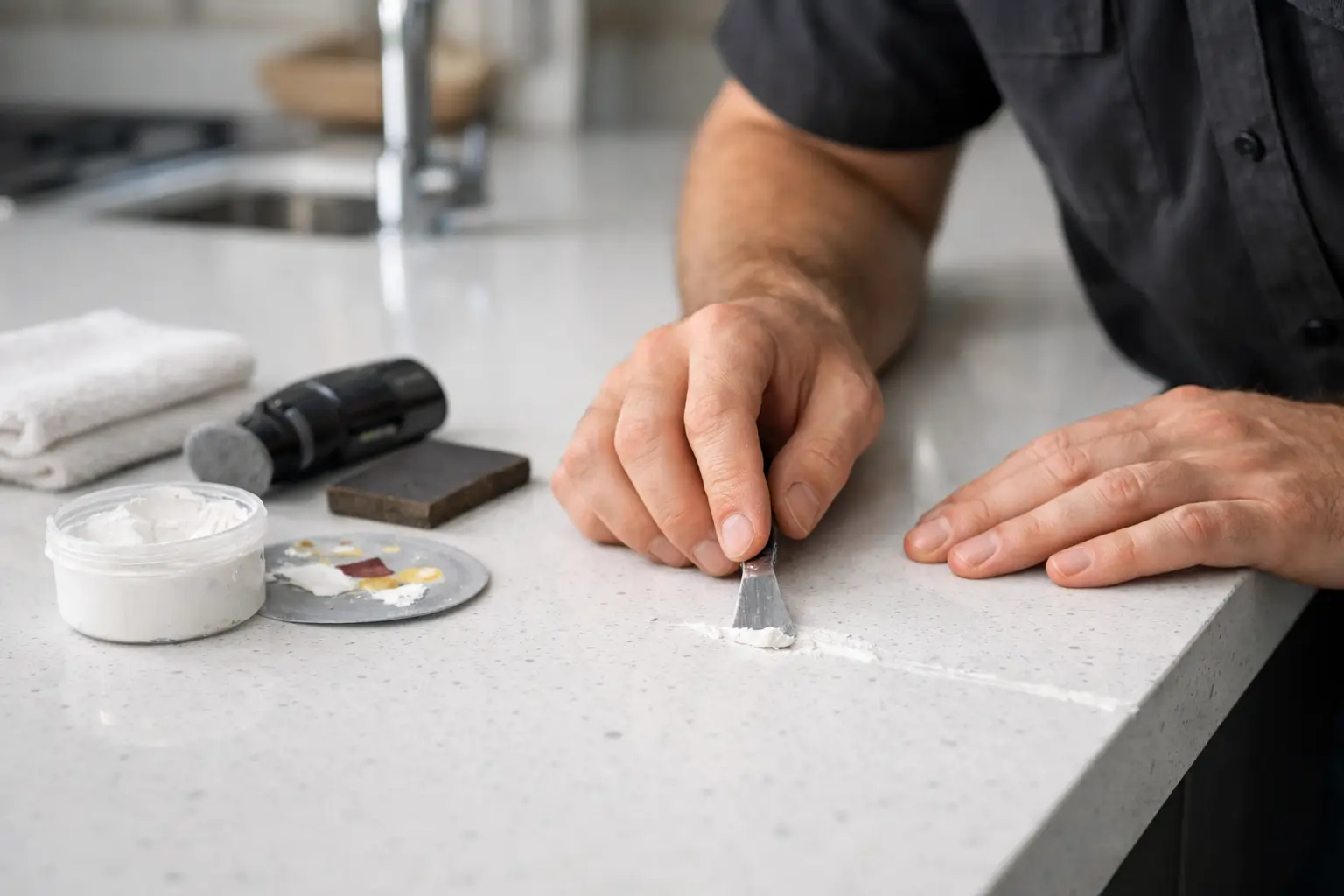
A chipped edge near the sink, a scorch mark beside the cooktop, a dull patch that catches the light every morning – damage on an engineered stone surface rarely stays invisible for long. Caesarstone benchtop repair is often the smarter alternative to replacement, especially when the goal is to restore a refined finish without the cost, demolition and disruption of starting again.
Caesarstone is designed for durability, but durability is not the same as indestructibility. In busy kitchens, bathrooms and commercial fit-outs, these surfaces face constant use. Heavy impact can chip an edge. Heat can affect the resin binders. Harsh chemicals can leave discolouration or a patchy appearance. Even when the damage seems minor, the wrong repair method can make it more obvious rather than less.
When Caesarstone benchtop repair is the right option
Not every damaged benchtop needs replacing. In many cases, a professional repair can restore both appearance and function with impressive results. This is particularly true where the issue is localised rather than spread across the entire surface.
Small chips, edge damage, minor cracks, light scratching, isolated stains and dull sections can often be treated successfully. The outcome depends on the colour, pattern, finish and extent of the damage. A solid light tone is handled differently from a heavily veined or speckled surface, because colour matching and texture blending become more complex.
This is where experience matters. Engineered stone does not respond like marble, granite or porcelain. It requires material-specific methods, controlled abrasion, careful filling and a strong understanding of how the surface reflects light. A repair is not simply about filling a flaw. It is about making the repair sit naturally within the benchtop so the eye is not drawn straight to it.
Common problems that affect Caesarstone surfaces
The most frequent issue is edge chipping. This usually happens around sink cut-outs, island corners and high-use overhangs where impact is concentrated. While a chip might look cosmetic, it can also leave the edge more vulnerable to further damage if ignored.
Heat exposure is another concern. Despite the strength of engineered stone, direct contact from hot cookware can cause resin discolouration or thermal shock. Once that happens, the affected area may show a yellowed mark, a cloudy patch or a change in sheen that cleaning will not remove.
Staining can also develop, especially when spills are left to sit or unsuitable cleaning products are used. Caesarstone is non-porous, but certain substances can still mark the surface, particularly if they react with the resin or leave a residue film. On darker benchtops, this often appears as a hazy patch. On lighter colours, it may present as a visible stain line or spot.
Scratches are less common than people expect, but they do occur. Grit, dragged ceramic bases and abrasive pads can all leave fine surface marking. Depending on the finish, these marks may only be visible in angled light, or they may interrupt the smooth, premium appearance of the whole top.
Why DIY repairs often fall short
A repair kit from the hardware shop can look appealing when the damage seems small. The problem is that benchtop repairs are judged by finish quality, not just by whether the hole is filled. If the colour is slightly off, the surface profile is uneven or the gloss level does not match, the repair remains visible.
DIY attempts also tend to create secondary damage. Over-sanding can flatten the texture around the repair. Incorrect adhesives can yellow over time. Aggressive polishing can produce a shinier patch that stands out against the original finish. In some cases, a simple chip becomes a larger cosmetic issue because the surrounding area has been altered.
There is also the question of safety and warranty. Engineered stone should be handled with the proper dust controls and specialist equipment. Dry cutting, grinding or reshaping is not something to approach casually. For high-value interiors, a poor repair usually costs more in the long run because it limits the quality of the final restoration.
How professional Caesarstone benchtop repair works
A specialist approach starts with assessment. The surface is examined for the type of damage, the depth of the issue, the finish of the benchtop and the likelihood of achieving an inconspicuous repair. This step is critical because not all damage responds to the same treatment.
For chips and small losses, the damaged section is cleaned, stabilised and rebuilt with a colour-matched repair compound. The repair is then shaped and refined to restore the edge line or surface contour. Good craftsmanship here is about precision. The profile needs to feel right under the hand and look right from multiple angles.
For scratches or dull sections, the process may involve controlled resurfacing to reduce the visual impact and rebalance the sheen. This is not the same as polishing natural stone. Engineered stone needs a more selective approach to avoid changing the factory finish beyond the damaged zone.
For stains or heat marks, the repair path depends on whether the issue sits on the surface or has altered the resin matrix below it. Some marks can be carefully reduced or blended. Others may only be improved rather than removed entirely. A reputable specialist will be clear about that from the start.
Matching the finish matters as much as fixing the damage
One of the biggest differences between an average repair and a premium one is finish matching. Caesarstone surfaces come in polished, matte, concrete-style and textured looks, and each interacts with light differently. Even when the structural repair is sound, a mismatch in sheen can make the damaged area stand out.
This is why repair work should never be treated as a generic patch-up. It needs to be tailored to the exact surface. In luxury kitchens and presentation-focused commercial spaces, the visual standard is higher. The repair has to support the overall elegance of the room, not just make the damage less obvious.
Repair versus replacement
Replacement is sometimes necessary, but it should not be the default. If the benchtop has extensive cracking, severe heat distortion, widespread surface failure or underlying installation problems, replacement may be the better investment. The same applies if the damage runs through a structurally compromised section.
But for localised defects, repair is usually far more practical. It avoids removing cabinetry, disconnecting plumbing or dealing with the lead time of a new slab. It also preserves the original installation, which matters when the surrounding joinery, splashback and appliances have been fitted tightly around the benchtop.
From a cost perspective, the difference can be substantial. More importantly, repair often delivers what owners actually want – a surface that looks polished, feels complete and does not interrupt the broader aesthetic of the space.
Caring for the benchtop after repair
Once the repair is complete, the goal is to protect the finish and avoid repeat damage. Use chopping boards rather than cutting directly on the surface, and never place hot pots or trays straight onto the benchtop. A trivet is a small habit that prevents expensive heat damage.
Cleaning should remain simple. A soft cloth, warm water and a pH-neutral cleaner are usually sufficient. Abrasive pads, strong solvents and harsh alkaline products can all compromise the appearance over time. If a spill has strong colour or chemical content, wipe it promptly rather than leaving it to sit.
It also helps to pay attention to vulnerable areas. Sink edges, corners and overhangs tend to wear first because they take more knocks. A little care in these zones goes a long way toward preserving the restored finish.
Choosing a specialist for Caesarstone benchtop repair
This is not a job for a general cleaner or a broad trade service that treats every hard surface the same way. Caesarstone benchtop repair calls for technical understanding, controlled methods and a high standard of finish work. The best result comes from a specialist who works across stone and engineered surfaces and knows where repair is the right solution – and where it is not.
For property owners who value presentation, restoration quality matters. Whether the benchtop sits in a family kitchen, an apartment, a retail fit-out or a premium office kitchenette, the goal is the same: restore the surface so it feels intentional again, not compromised.
A well-executed repair does more than hide damage. It protects the investment already built into the space and brings the surface back to the level of polish the room deserves. If your benchtop has lost that clean, refined finish, the right repair can return it to service with far less disruption than you might expect.