
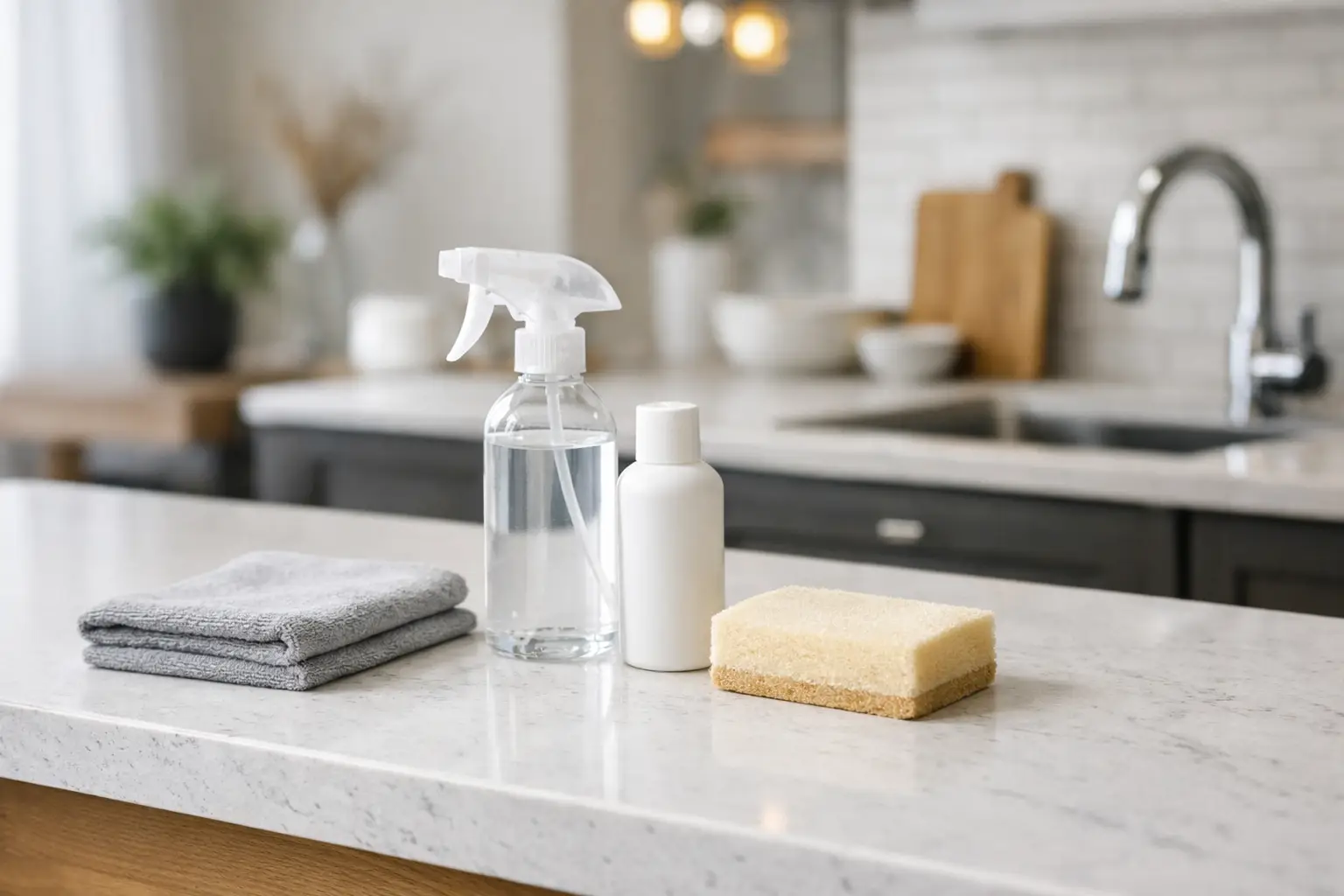
A beautifully finished engineered stone benchtop is designed to be lived on, not worried over. Yet the polished, consistent surface seen in a premium kitchen can lose its clarity through small daily habits: a hot pan placed directly on the bench, an overlooked wine spill, or repeated cleaning with harsh products. This engineered stone benchtop care guide explains how to preserve its refined appearance, prevent avoidable damage and recognise when specialist restoration is the better alternative to replacement.
Engineered stone is commonly made from mineral quartz combined with resin and pigments. Products vary between manufacturers and ranges, so care instructions should always begin with the supplier’s recommendations. In general, however, the resin component is what makes sensible cleaning and heat protection essential. A benchtop may be highly durable, but it is not invulnerable.
Daily care for an engineered stone benchtop
The most effective routine is also the simplest. Wipe the benchtop after food preparation with a soft microfibre cloth, warm water and a small amount of mild, pH-neutral cleaner. Drying the surface afterwards prevents water spots and leaves the finish looking more polished, particularly on dark colours and high-gloss designs.
For normal kitchen residue, avoid scrubbing hard. Let warm, soapy water sit briefly on sticky marks, then wipe it away with a non-abrasive cloth. A plastic scraper can help lift dried food or paint, provided it is used gently and held close to the surface rather than driven into it at a sharp angle.
It is worth keeping a separate cloth for the benchtop. A cloth that has picked up grit from the floor, sink surrounds or outdoor areas can leave fine scratches over time. These marks may be subtle individually, but under pendant lighting or sunlight they can diminish the clean, even finish that makes engineered stone so desirable.
Clean spills before they settle
Engineered stone is less porous than many natural stones, but prompt attention still matters. Coffee, tea, turmeric, curry, red wine, beetroot, cooking oils and coloured sauces can leave marks if residue remains on the surface, especially around joins, splashbacks and silicone edges.
Blot a spill first rather than spreading it across the bench. Follow with a soft cloth and mild cleaner, then rinse and dry. If a stain remains, do not immediately reach for a powerful solvent, bleach or abrasive paste. The right response depends on what caused the mark and whether it is sitting on the surface, affecting the resin, or occurring around a seam or damaged edge.
Some apparent stains are actually dull patches caused by chemical exposure. Others are deposits left by cleaning products. Treating both as a conventional stain can make the finish worse. When a mark resists careful cleaning, an assessment from a stone restoration specialist can prevent an expensive mistake.
Products and tools to keep away from the bench
Many household products are too aggressive for regular engineered stone care. Avoid using the following directly on the benchtop unless the specific manufacturer confirms their suitability:
- Abrasive powders, scouring creams and steel wool
- Oven cleaner, drain cleaner and strong alkaline degreasers
- Concentrated bleach, ammonia and chlorine-based products
- Paint stripper, caustic soda and harsh solvent cleaners
- Rough scourers, wire brushes and heavily worn cleaning pads
The issue is not simply scratching. Strong chemicals can discolour, dull or weaken the resin binder, while abrasive cleaning can alter the sheen in isolated areas. Once a section has become visibly flatter than the surrounding surface, ordinary cleaning will not restore a uniform finish.
Heat, impact and cutting: the damage that happens in seconds
A trivet is not an optional accessory for an engineered stone benchtop. Pots, pans, baking trays, air-fryer baskets and heatproof dishes can retain far more heat than expected. Direct contact may cause discolouration, thermal stress or permanent damage to the resin matrix. Even when no immediate mark is visible, repeated heat exposure can affect the long-term appearance of the surface.
Always use trivets or heat pads, and avoid placing hot cookware near joins, cut-outs or edges. These areas are more vulnerable because the stone is narrower and more exposed. Take particular care around the cooktop and sink, where daily activity often brings heat, water and heavy items together.
Likewise, use a chopping board rather than cutting directly on the bench. Knives can leave scratches, while the hard surface will quickly blunt quality blades. Do not use the benchtop as a landing place for heavy cookware, glass bottles or small appliances. A chip usually occurs at an edge or corner after a concentrated impact, not from general day-to-day use.
Do engineered stone benchtops need sealing?
This depends on the product. Most engineered stone benchtops are manufactured with a low-porosity surface and do not require the routine sealing associated with some natural stones. Applying an unsuitable sealer can leave residue, create patchiness or interfere with the intended finish.
That said, the broader benchtop installation may include areas that need attention. Grout, silicone, joins, splashbacks and adjacent natural stone can all have different maintenance requirements. Where staining occurs repeatedly around a sink or seam, the cause may be failed silicone or a compromised join rather than the engineered stone itself.
A material-specific inspection is the sensible approach. Premium surfaces deserve treatments selected for their composition and condition, not a one-size-fits-all product from the cleaning aisle.
What to do when the surface looks dull, scratched or stained
Not every imperfection means the benchtop is beyond repair. Fine scratches, dull patches, light staining, surface residue and minor chips can often be improved through carefully controlled restoration work. The appropriate process may involve specialised cleaning, resin repair, honing or polishing techniques suited to the particular engineered stone product and finish.
The trade-off is that engineered stone is not restored in exactly the same way as marble or granite. Aggressive grinding or generic polishing methods can expose different components of the slab, alter its sheen or make a local repair more noticeable. Colour, pattern, texture, age and the location of the damage all affect what can be achieved.
For this reason, avoid DIY sanding, polishing discs and online “miracle” repair kits. A small blemish can become a larger, more visible patch if the surface profile is changed. Professional restoration is about matching the surrounding finish as closely as possible, protecting the benchtop’s integrity and extending its useful life without the disruption of replacement.
Chips, cracks and damaged edges
A small chip near a corner may be repairable with colour-matched resin and careful finishing. A crack near a cooktop, sink cut-out or structural join calls for more urgent attention, particularly if movement, water entry or further breakage is possible. Avoid loading the affected area until it has been assessed.
Do not attempt to drill, cut, grind or modify an existing engineered stone benchtop yourself. This work requires specialist controls, appropriate equipment and material knowledge. It is also the point where a minor repair can become a safety and replacement issue if handled incorrectly.
A maintenance routine that protects the investment
For most households, daily wiping and immediate spill removal will do the bulk of the work. Once a week, clean the full benchtop with a pH-neutral product, including around taps, cooktops and splashbacks where residue tends to build up. Check silicone and joins periodically for gaps, discolouration or lifting, especially in wet areas.
In commercial kitchens, hospitality settings and high-use office spaces, maintenance needs to be more disciplined. Staff should know which cleaning products are approved, where trivets are stored and how to report a chip or chemical spill before the damage becomes more difficult to rectify. A surface that presents beautifully to clients and guests is also an asset worth protecting.
When the finish no longer reflects the quality of the room, Grand Stone Restoration can assess the material, damage and realistic restoration options. The aim is not to apply a generic fix, but to return the surface to a clean, elegant and durable standard wherever possible.
A few considered habits will keep engineered stone looking exceptional for years. Protect it from heat, clean it with restraint and seek specialist advice early when a mark, crack or dull patch refuses to lift – timely care is often what preserves both the benchtop and the value of the space around it.