
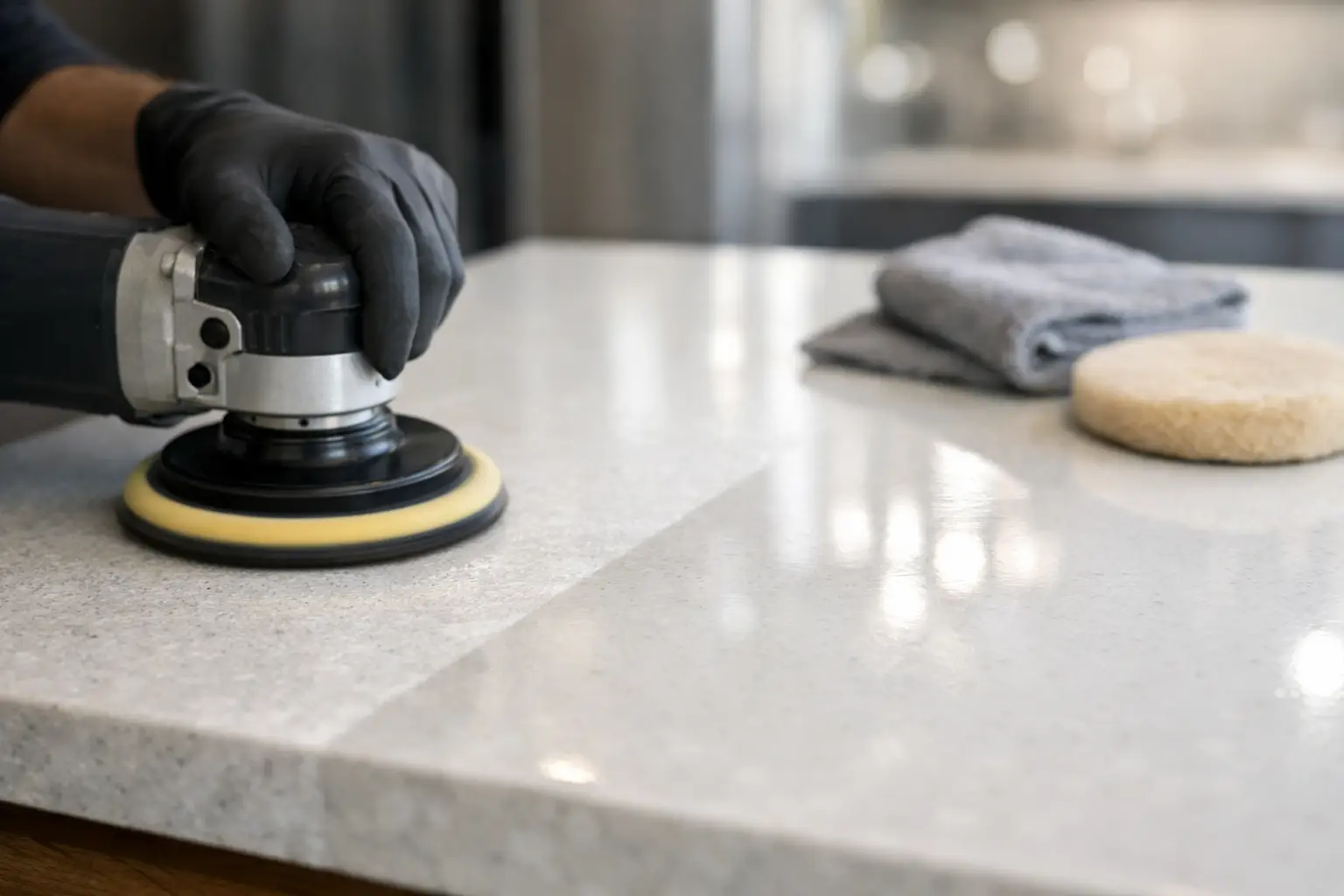
A dull engineered stone benchtop can make an otherwise polished kitchen look tired very quickly. If you are asking can engineered stone be polished, the short answer is yes – but only in specific situations, with the right method, and with a clear understanding of the material you are working with.
That distinction matters. Engineered stone is not natural marble or granite, and it does not respond to restoration in quite the same way. It is a manufactured surface made from crushed stone bound with resins and pigments. That composition gives it consistency, durability, and a refined finish, but it also means polishing has limits. In some cases, professional polishing can improve the appearance beautifully. In others, the wrong approach can leave the surface patchy, hazy, or permanently altered.
Can engineered stone be polished without damage?
Engineered stone can be polished, but not in the broad, aggressive way many people associate with natural stone restoration. The factory finish on engineered stone is typically created during manufacturing rather than achieved purely through onsite mechanical polishing. Once that original finish is disrupted by scratches, dull spots, heat damage, chemical exposure, or wear, restoring it requires precision.
Light surface refinement is often possible. Minor dullness, fine scratches, and some isolated marks can sometimes be reduced or corrected with specialist polishing systems designed for engineered stone. The goal is not simply to make the surface shiny. It is to blend the repaired area into the surrounding finish so the surface looks even, clean, and premium again.
Where problems start is with DIY polishing or treatment by contractors who treat engineered stone like marble or granite. Resin-bound surfaces react differently to friction, heat, and abrasives. Too much pressure or the wrong pad can burn the resin, flatten the texture, or create obvious inconsistencies in gloss.
Why engineered stone behaves differently
Natural stone has a mineral structure that can often be honed and polished repeatedly to restore clarity and shine. Engineered stone contains quartz or other stone particles, but it is held together with polymer resins. Those resins are part of what gives the slab its appearance and performance.
That means restoration is partly about the stone content and partly about the resin matrix. If the surface has become dull because of residue build-up, incorrect cleaning products, or a topical film, the fix may be relatively straightforward. If the finish itself has been physically damaged, restoration becomes more delicate.
This is why there is no one-size-fits-all answer. A pale polished benchtop with fine scratches near the sink will need a different treatment from a dark engineered stone island that has developed cloudy patches from chemical damage. The visible result depends on the colour, pattern, sheen level, age of the slab, and extent of wear.
When polished engineered stone can be improved
The best candidates for polishing are surfaces with localised wear rather than deep structural damage. Fine scratches from day-to-day use, slight loss of lustre in high-contact zones, and mild surface dullness can often be improved significantly.
Benchtops around sinks and prep areas are common examples. Over time, repeated wiping, cleaning sprays, water splash, and abrasive contact can leave certain sections looking flatter than the rest of the slab. In commercial settings, reception counters and service tops can develop the same issue where constant traffic wears down the visual finish.
In these cases, a controlled restoration process may restore clarity and bring the surface back to a more even presentation. The emphasis is on refinement, not overworking the slab.
When polishing may not be the right solution
There are situations where polishing engineered stone is either limited or not advisable as a standalone fix. Deep chips, cracks, heavy burns, severe resin damage, or widespread surface distortion may require repair work first, and sometimes replacement of a section becomes the more realistic option.
Dark colours can also be especially unforgiving. On black, charcoal, or deep brown engineered stone, even a slight mismatch in sheen can stand out under direct lighting. What looks acceptable in a workshop can become very obvious in a kitchen with pendant lights or strong natural light.
Textured, suede, matte, and leathered finishes also add complexity. A polished repair on a textured finish can look unnatural if the treatment does not replicate the original surface character. In those cases, restoration is less about creating shine and more about matching the intended finish.
What causes engineered stone to lose its finish?
Not every dull surface is damaged beyond repair. Often, the issue is a build-up of residues or gradual wear from incorrect care.
Harsh cleaners are a frequent culprit. Products that leave films, react with the resin, or contain abrasive components can reduce clarity over time. Heat can also affect engineered stone, particularly near cooktops or where hot cookware has been placed directly on the surface. While engineered stone is durable, it is not immune to thermal stress.
Another common issue is using rough scouring pads or abrasive powders. These may seem harmless in the moment, but repeated use can create fine scratching that disrupts the way light reflects across the slab. What starts as a small dull patch can become a broad area of uneven finish.
Can engineered stone be polished by DIY methods?
This is where caution is warranted. Many off-the-shelf polishing products promise quick shine, but engineered stone does not respond well to trial-and-error treatment. DIY polishing can leave swirl marks, cloudy patches, and inconsistent gloss, especially if the product is not specifically suited to the slab’s finish.
Homeowners sometimes make the problem worse by using topical shine enhancers that sit on the surface rather than correcting it. These coatings may give temporary gloss, but they can wear unevenly and attract further attention to the damaged area. Once that happens, proper restoration becomes more involved because the residue has to be removed before the actual surface can be assessed.
For high-value kitchens, bathrooms, and commercial interiors, the safer path is to have the surface assessed first. A specialist can determine whether the issue is contamination, superficial wear, or true finish damage.
How professional polishing of engineered stone works
Professional restoration starts with identifying the type of engineered stone and the nature of the damage. That sounds simple, but it is critical. Different brands, colours, and finish levels can behave quite differently under restoration.
The process may involve specialised cleaning, controlled abrasion, blending techniques, and finish correction to minimise visual contrast between repaired and untouched areas. The skill is not in making one spot glossy. It is in achieving a refined, consistent result that respects the original appearance of the slab.
In premium homes and presentation-driven commercial spaces, that level of finish matters. A repaired benchtop should not draw the eye for the wrong reason. The restoration should feel integrated, elegant, and proportionate to the quality of the interior.
This is also where experience has real value. A trained stone restoration specialist understands where improvement is achievable and where expectations need to be managed. That honesty protects the client as much as the surface.
Polishing versus replacement
Many owners assume a dull or damaged engineered stone surface has to be replaced. Sometimes that is true, particularly where the damage is extensive. But often, restoration is the more economical and less disruptive option.
A professional polish or surface correction can refresh the appearance of a benchtop without the upheaval of demolition, disposal, reinstallation, and potential joinery adjustments. In established homes and active commercial sites, avoiding replacement can save both cost and downtime.
That said, restoration is not magic. If the slab has suffered major heat damage, severe chipping, or broad finish failure, polishing alone may not restore a near-factory appearance. The right recommendation depends on what the material can realistically deliver.
Protecting the finish after restoration
Once engineered stone has been restored, ongoing care becomes part of protecting that investment. Gentle pH-neutral cleaning, soft cloths, prompt removal of spills, and sensible heat protection all help preserve the finish.
It also helps to avoid assuming all stone products are interchangeable. Advice that works for marble, granite, or porcelain may not suit engineered stone at all. Material-specific care is what keeps surfaces looking refined over time.
For property owners who value presentation, the difference is visible. A well-maintained engineered stone surface keeps its clean lines, even sheen, and premium character far longer than one subjected to harsh products and guesswork.
If your benchtop or vanity has lost its lustre, the question is not only can engineered stone be polished, but whether it can be polished well. The right assessment makes that answer far more useful – and often far more cost-effective than living with damage or rushing into replacement.