
A sandstone courtyard can look beautifully refined one season, then tired and patchy the next. Leaf tannins, barbecue spills, mould, dust and hard water marks all settle into its naturally porous surface. Knowing how to clean sandstone pavers properly protects the stone’s character while restoring the warm, elegant finish that makes it such a valued feature in Sydney homes and commercial spaces.
The key is restraint. Sandstone is not concrete, nor is it a surface that benefits from aggressive chemicals or indiscriminate pressure washing. The wrong approach can roughen the face, strip protective sealer, drive moisture into the stone or leave permanent pale marks. A careful clean, matched to the specific staining and condition of the pavers, delivers a far better result.
Understand the sandstone before you start
Sandstone is a sedimentary natural stone made from compacted mineral grains. Its texture, colour variation and gentle movement are part of its appeal, but its porosity means it readily absorbs moisture, oils and organic matter. Some sandstone is denser and more resilient than others, while softer varieties can erode or flake when treated harshly.
Outdoor pavers also face more than ordinary foot traffic. They are exposed to rain, UV, garden debris, pool water, pets and food spills. In shaded areas, moisture can encourage algae, mould and lichen. Before cleaning, identify whether the issue is surface dirt, organic growth, a localised stain or general dullness. Each calls for a slightly different treatment.
If the pavers are crumbling, severely stained, unevenly coloured or showing white powdery deposits, a general clean may not be enough. These symptoms can point to moisture movement, failed sealant or salt migration through the stone, and need a more considered restoration process.
How to clean sandstone pavers safely
Start by clearing outdoor furniture, planters and loose debris from the area. Sweep thoroughly with a soft outdoor broom, paying attention to joints where soil and leaves gather. This dry preparation matters because wetting loose organic material can turn it into a muddy residue that settles back into the pores.
Mix a pH-neutral stone cleaner with water according to its directions. This is preferable to household cleaners because it is designed to lift dirt without attacking the minerals or protective treatment on natural stone. Apply the solution in manageable sections rather than soaking the entire courtyard at once.
Use a soft-bristled deck brush to agitate the surface. Work methodically with light, even pressure. The aim is to loosen grime from the texture of the stone, not to scour its face. Allow the cleaner a short dwell time if required, ensuring it does not dry on the pavers, then rinse generously with clean water.
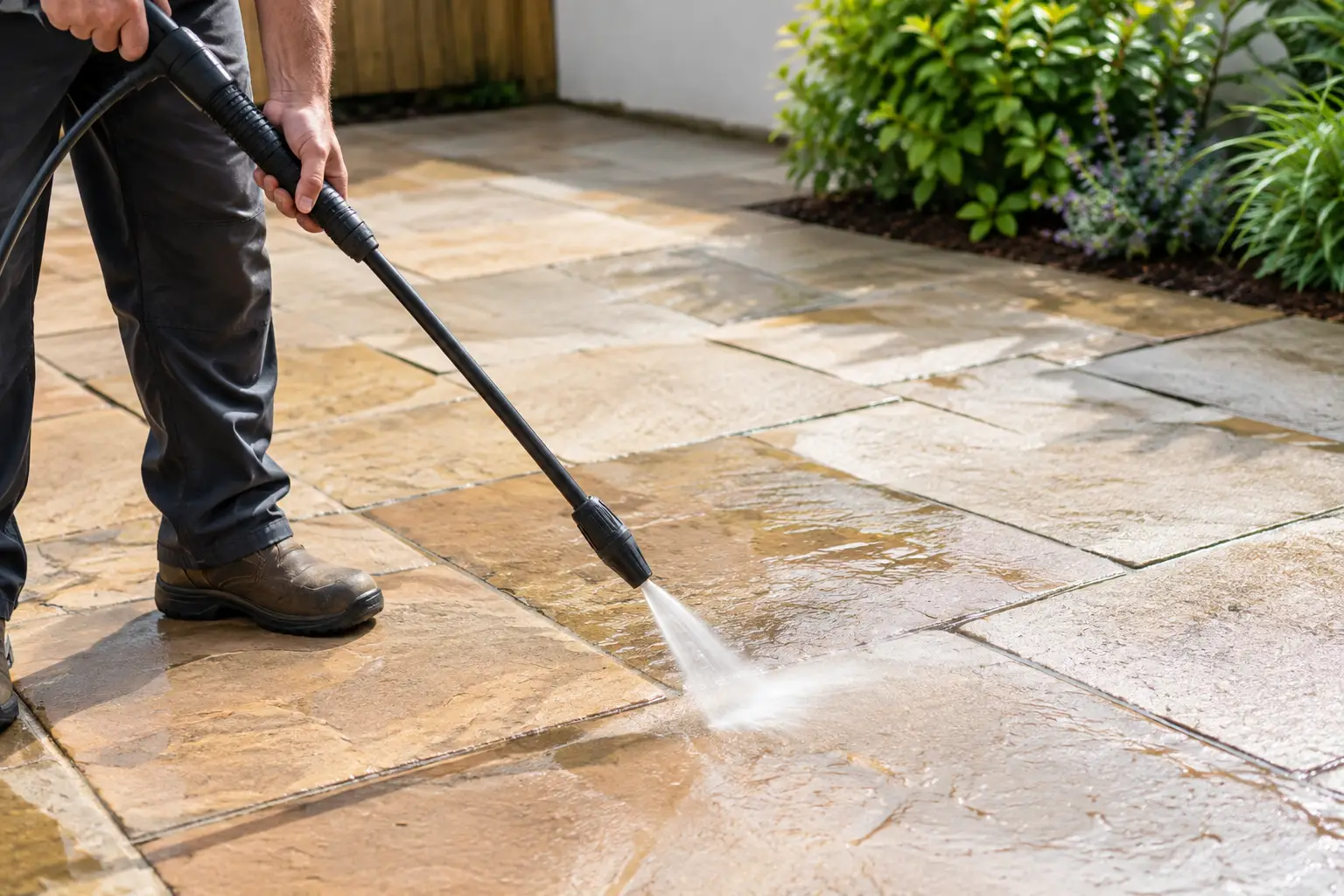
A low-pressure rinse is usually sufficient for routine cleaning. If using a pressure washer, keep it on a low setting, use a wide fan nozzle and hold it well back from the surface. Never concentrate the stream in one spot or run it close along edges and joints. High pressure can leave obvious etched lines, expose softer grains and dislodge jointing material. The damage is often only visible once the pavers have dried.
Allow the area to dry naturally before deciding whether further treatment is needed. Sandstone darkens when wet, so stains and colour variation can look very different until moisture has fully evaporated.
Treat stains according to their source
A single product rarely solves every sandstone stain. Using the right treatment is more effective and reduces the risk of creating a larger problem.
Organic stains, mould and algae
Leaves, berries, pot plants and damp shaded corners can leave brown, green or black marks. First remove the source of the moisture or debris, then clean with a stone-safe mould and algae treatment suitable for sandstone. Avoid chlorine bleach unless a stone professional has specifically recommended it for the situation. Bleach may alter colour, weaken some sealers and harm nearby plants.
For persistent growth, the cleaner may need time to work before gentle brushing and rinsing. Keep runoff away from garden beds where possible, and avoid allowing cleaning solution to dry on the pavers.
Oil, grease and barbecue spills
Oil stains need prompt attention because they travel deep into porous stone. Blot fresh spills with absorbent paper or cloth rather than rubbing them outward. An absorbent poultice or specialist oil-removal product may be required for established marks. These treatments draw contaminants from the pores over time, which is why a quick scrub alone often has little effect.
Do not use petrol, turpentine or strong solvent cleaners on sandstone. They can spread the stain, leave residues and interfere with future sealing.
Rust, mineral and hard water marks
Rust from outdoor furniture, fertiliser, metal pots or irrigation can be especially stubborn. Acid-based rust removers are risky on sandstone because acids react with mineral content and may leave pale etching or an uneven finish. Use only a rust treatment specifically rated for natural sandstone, and test it first in an inconspicuous corner.
White, chalky deposits may be efflorescence, where salts carried by moisture crystallise at the surface. Brushing the dry residue away can help, but repeated efflorescence should be investigated rather than repeatedly washed. The underlying moisture source needs to be addressed for a lasting result.
What not to use on sandstone pavers
The most expensive cleaning mistakes are usually made with products already sitting in the laundry or garage. Avoid hydrochloric acid, brick cleaner, vinegar, harsh degreasers and abrasive powders. These may appear to brighten the surface temporarily, but can etch the stone, strip its natural colour and make it more vulnerable to future staining.
Wire brushes, sanding discs and stiff abrasive pads should also stay away from sandstone. They scratch and open the surface, leaving a patchy appearance that is difficult to blend. Even a pressure washer can be too aggressive when used with a narrow nozzle or excessive force.
It is also wise to avoid sealing a paver that is still damp, dirty or carrying salts. Sealer can lock in problems below the surface, creating cloudy patches and uneven absorption.
Should sandstone pavers be sealed after cleaning?
For many outdoor sandstone installations, a high-quality penetrating sealer is a worthwhile investment after the pavers are clean and fully dry. Unlike a heavy topical coating, a suitable penetrating sealer is designed to absorb into the stone and improve resistance to water, oils and everyday staining while retaining a natural look.
The right choice depends on the sandstone, location and desired appearance. Pool surrounds, barbecue areas and heavily used entertaining spaces generally benefit most from protection. A colour-enhancing sealer can deepen the stone’s natural tones, while an impregnating sealer is often preferred where a more understated, natural finish is wanted.
Sealing is not a substitute for cleaning. It reduces absorption, but it does not make sandstone stain-proof or eliminate the need to remove spills promptly. It also needs renewing over time, particularly in sun-exposed or high-traffic areas.
A practical maintenance routine for outdoor pavers
Sandstone responds best to consistent, low-impact care. Sweep weekly or whenever leaves and soil accumulate, particularly after windy weather. Rinse dust and light grime away as needed, and carry out a pH-neutral wash every few months or before an important outdoor event.
Attend to spills immediately, keep garden irrigation from constantly wetting the stone, and trim back dense planting that prevents airflow. These small measures greatly reduce mould, tannin staining and premature sealer wear.
For strata properties, hotel courtyards, retail entrances and other presentation-critical areas, scheduled professional maintenance is often more cost-effective than waiting for extensive staining or surface deterioration. It maintains a consistent finish and helps preserve the asset value of a significant stone installation.
When professional sandstone restoration is the better choice
DIY cleaning is suitable for routine dirt and light organic growth. However, deeply embedded oil, rust staining, widespread black mould, failed coatings, efflorescence and pressure-washer damage need specialist assessment. A professional can determine whether the stone needs deep cleaning, poultice treatment, controlled honing, joint repairs, sealing or a combination of treatments.
Grand Stone Restoration applies material-specific methods to revive natural stone without the disruption and expense of unnecessary replacement. For sandstone that has lost its elegance through years of weathering or unsuitable cleaning, a tailored restoration can return a more even, refined appearance while preparing the surface for long-term protection.
Your sandstone does not need to look brand new to look exceptional. It needs to be clean, stable and protected in a way that respects the natural variation that made it worth choosing in the first place.