
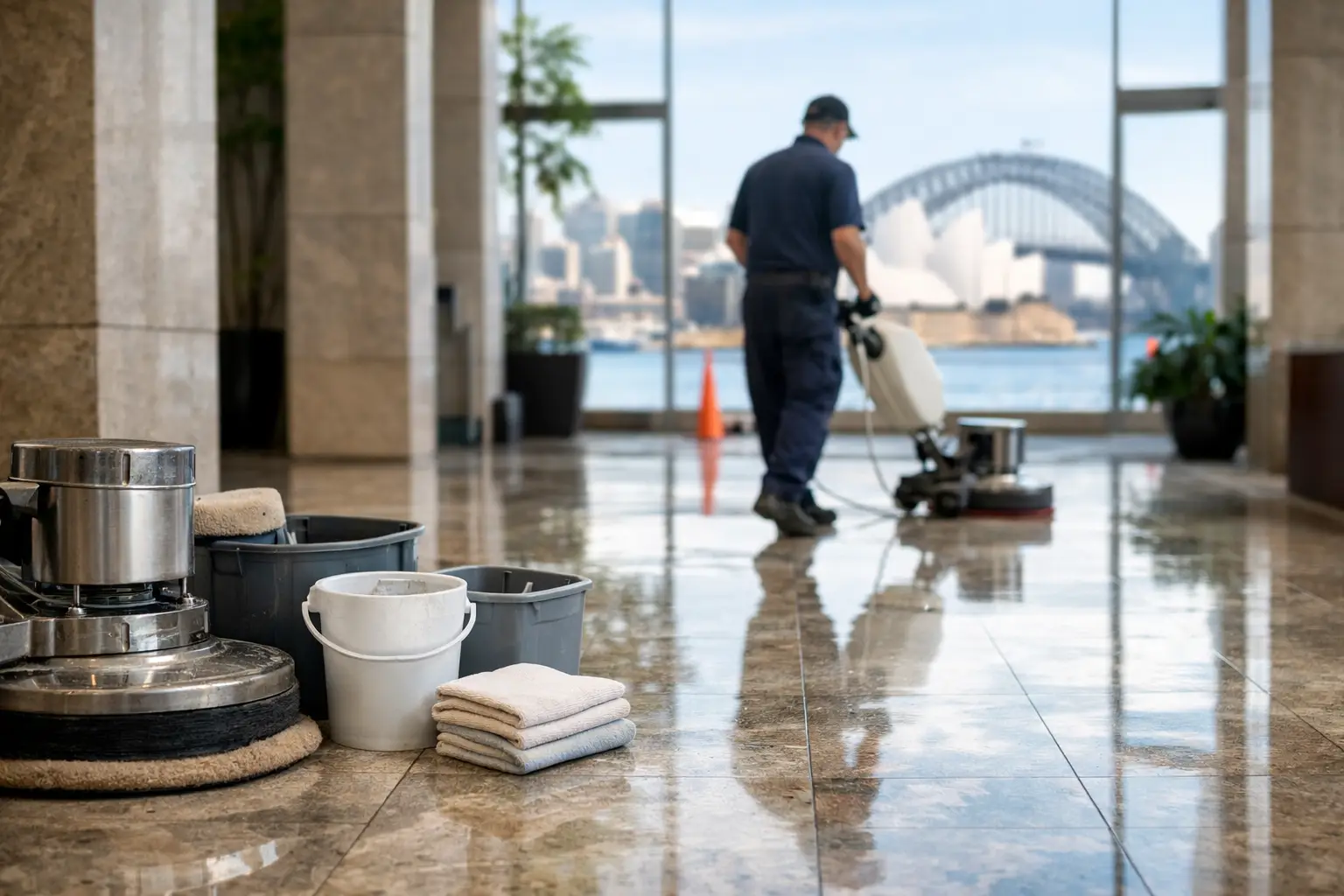
A marble lobby can lose its authority long before it becomes visibly damaged. Foot traffic creates fine scratching, spills leave dull etched patches, and routine cleaning products slowly strip away the clarity that made the surface impressive in the first place. Commercial stone maintenance Sydney property managers can rely on is not simply about keeping floors clean. It is about preserving a valuable finish, protecting the presentation of the space, and avoiding premature replacement.
For offices, hotels, retail stores, strata buildings and hospitality venues, stone is part of the customer experience. A polished foyer, immaculate bathroom vanity or well-maintained terrazzo floor speaks to the standard of the business behind it. When those surfaces become cloudy, uneven or stained, professional restoration offers a more economical and far less disruptive alternative to replacement.
Why commercial stone needs a different maintenance approach
Commercial environments place far more pressure on stone than most homes. Entrances collect grit from the footpath, wet areas endure constant moisture and chemical exposure, and food-service settings face oil, wine, citrus and cleaning residues. Even a premium stone surface will show wear if it is maintained with a one-size-fits-all cleaning regime.
The right approach depends on the material. Marble and limestone are calcium-based stones, making them vulnerable to etching from acidic products and spills. Granite is generally harder but can still lose its protective seal and develop staining. Terrazzo, sandstone, travertine, engineered stone, porcelain tile and grout each require their own treatment method.
This is where general cleaning can become costly. An acidic cleaner may create dull marks on marble. An overly aggressive pad can alter the surface finish. Applying a sealer over embedded contamination can lock in the problem rather than resolve it. A specialist begins by identifying the stone, its existing finish, the source of damage and the demands of the site before selecting a treatment.
Commercial stone maintenance Sydney facilities can plan for
A successful maintenance programme is not necessarily a major restoration every few months. It is a measured combination of regular professional care, suitable daily cleaning and timely corrective work. The frequency depends on foot traffic, the stone type, the finish required and how critical presentation is to the venue.
Deep cleaning restores the true condition of the surface
Stone floors and tiled areas can look permanently dull when the issue is actually built-up soil, detergent residue or contaminated grout. Professional deep cleaning removes what routine mopping leaves behind, allowing the natural colour and texture of the surface to reappear.
In commercial bathrooms, kitchens and external entertaining spaces, this work often includes grout cleaning and treatment. Grout can hold moisture, soap residue, oils and stains, creating an aged appearance even when the tiles remain sound. Restoring grout and applying appropriate protection can transform the entire area without the expense of retiling.
Honing and polishing correct visible wear
Polishing is often mistaken for applying a topical shine. True stone polishing is a mechanical restoration process that refines the surface to achieve a clear, reflective finish. It is particularly effective for marble, travertine, terrazzo and other natural stone floors that have become scratched, dull or uneven.
Honing is the right choice when a softer, satin finish is preferred or when scratches and etching need to be removed before polishing. In a busy restaurant or retail environment, a honed finish may be more practical than a high-gloss finish because it can make minor wear less noticeable. In a premium office foyer or luxury hotel entrance, a polished finish may better suit the desired level of elegance.
The decision is not just aesthetic. A skilled technician will consider slip resistance, surrounding lighting, the stone’s condition and how the area is used before recommending the finish.
Repairs prevent small defects becoming major visual issues
Chips, cracks, open joints and damaged edges can undermine an otherwise refined stone installation. They also create points where dirt and moisture can collect. Professional repairs can rebuild chipped corners, fill cracks, stabilise loose sections and blend repairs into the surrounding surface as closely as the stone allows.
Not every defect should be treated the same way. A small chip on a marble reception counter may need a colour-matched repair and polish for a discreet finish. A crack in external sandstone may require a different approach that accounts for movement and weather exposure. Material knowledge is what separates a durable repair from a temporary cosmetic fix.
Sealing and protective treatments reduce future risk
Sealing does not make stone maintenance-free, nor does it prevent all damage. It does, however, give many porous surfaces additional resistance to staining by slowing the absorption of liquids. This provides staff more time to address spills before they penetrate the stone.
The type of sealer matters. Penetrating sealers are commonly used where the aim is to protect the stone while retaining its natural appearance. Enhancing sealers can deepen colour on suitable materials, while certain protective coatings may be appropriate for specific commercial applications. The wrong product can change the look of the stone, leave a patchy finish or create an unsuitable surface film.
For marble benchtops, bars, reception desks and bathroom vanities exposed to acidic products, anti-etch film can also provide an additional layer of practical protection. It is not the right solution for every surface, but it can be a considered option where daily use places a high-risk finish under constant pressure.
The daily practices that protect professional results
A restoration programme performs best when site staff use stone-safe routines between specialist visits. This does not require complicated products, but it does require consistency. Grit should be removed from entry areas before it is ground into polished stone, spills should be attended to promptly, and cleaners should avoid acidic, abrasive or heavily alkaline products unless they have been confirmed as suitable for the surface.
Mats at external entries can make a substantial difference to the life of a foyer floor, particularly in high-traffic buildings. They reduce the abrasive dirt carried inside on shoes. In wet areas, regular removal of soap and moisture residue helps prevent staining and maintains a cleaner appearance around grout lines.
It is also worth reviewing cleaning equipment. Dirty mop water can redistribute soil, while rough pads can gradually scratch polished finishes. A quality maintenance plan should give facilities teams clear, practical instructions tailored to the surfaces they look after.
When restoration is better than replacement
Replacement may be necessary when stone is structurally compromised, extensively cracked or no longer suitable for its setting. However, many surfaces that appear beyond saving can be cleaned, honed, repaired, polished and sealed to a remarkable standard.
Restoration avoids the demolition, disposal, material lead times and operational disruption associated with replacement. For a functioning business, this matters. Work can often be scheduled around trading hours, tenant needs or quieter periods to minimise interruption. The result is a refreshed surface that retains the character and value of the original installation.
The financial benefit is only one part of the decision. Natural stone develops a presence that is difficult to replicate. Restoring it preserves the design intent of the property while bringing back the brilliance that attracted attention when it was first installed.
Choosing a specialist for commercial stone care
Commercial stone work should be assessed on more than price. The lowest quote can be expensive if it uses unsuitable chemicals, leaves swirl marks, creates inconsistent gloss or shortens the service life of the surface. Ask whether the provider understands the specific material, can explain the proposed finish and has experience managing presentation-critical commercial spaces.
A thorough assessment should cover the stone type, visible damage, prior coatings or sealers, access requirements, site safety and the desired result. It should also distinguish between a cosmetic clean and genuine restoration. Clear expectations are essential, especially where stone has natural variation, deep staining or long-term wear.
Grand Stone Restoration applies material-specific techniques across marble, natural stone, engineered stone, tile and grout, with treatments designed to restore beauty while supporting long-term protection. With more than 25 years of experience, the focus is on a finish that looks exceptional and performs appropriately for the environment.
A well-maintained stone surface does more than reflect light. It reassures every visitor that the property is cared for with the same attention to detail expected from the business within it. Addressing early signs of wear is the most effective way to keep that impression intact.