
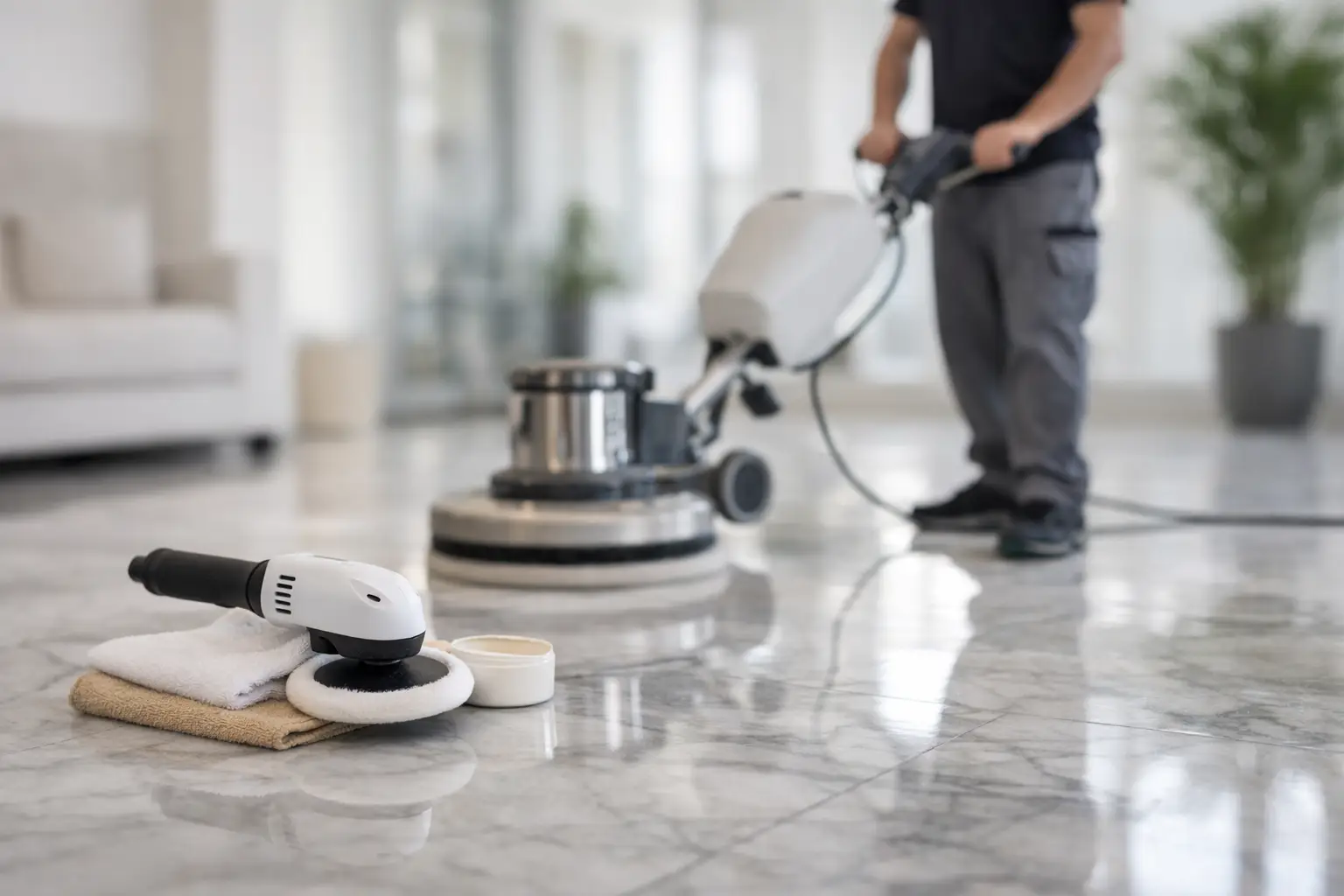
A marble floor rarely goes dull all at once. It happens gradually – foot traffic through an entry, acidic splashes in a kitchen, fine grit under shoes, cleaning products that leave the surface flat instead of luminous. If you are looking up how to polish marble floors, the first thing to know is that polishing is not just about adding shine. It is about restoring clarity, smoothing light surface wear, and choosing the right method for the condition of the stone.
Marble is a calcium-based natural stone, which means it is elegant but sensitive. It scratches more easily than granite, and it reacts to acids in a way that leaves etching – those dull, cloudy marks that no amount of regular mopping will fix. That matters because many floors that appear “dirty” are not dirty at all. They are worn, etched, or microscopically uneven.
What polishing marble floors actually does
Polishing marble floors is a refinement process. At a surface level, it improves gloss and reflectivity. At a technical level, it smooths out fine abrasion, reduces the visibility of minor wear, and helps the stone present a more even finish.
There is an important distinction here. A floor with light dullness may respond well to polishing. A floor with etching, deeper scratches, lippage, heavy traffic wear, or patchy shine usually needs honing before polishing can achieve a premium result. Polishing alone cannot correct damage that sits below the immediate surface.
That is why two marble floors in similar rooms may need completely different treatment. One might come back beautifully with a polishing compound and the right pad. The other might need mechanical restoration to remove the damaged layer first.
How to polish marble floors without causing damage
If the marble is in generally good condition and you are dealing with mild dullness rather than visible etching or scratches, a careful polishing process can improve the finish. The key is restraint. Marble rewards proper technique and punishes aggressive cleaning.
Start by dry dusting or vacuuming with a soft floor attachment. Any loose grit left on the floor can act like sandpaper once a pad or cloth moves across it. After that, clean the surface with a pH-neutral stone cleaner and allow it to dry fully. Household cleaners, vinegar, citrus products, and multipurpose sprays should stay well away from marble.
Once the floor is clean, test a marble polishing powder or polish designed specifically for calcite-based stone in a small, inconspicuous area. Follow the product directions closely. Some require a damp surface and buffing with a white pad, while others are worked in by hand on smaller areas. The aim is to enhance the finish gradually, not force shine onto a damaged floor.
Work in manageable sections and keep your pressure even. If one area develops more gloss than another, the floor can start to look patchy under natural light. After polishing, remove residue carefully and inspect the result from different angles. A floor that looks glossy at night under warm lighting may still show haze during the day.
When DIY polishing works – and when it does not
DIY can be effective on marble floors with very light wear, especially in low-traffic residential settings such as an ensuite or formal room. If the stone has simply lost some of its crisp reflection, a light polish may lift the appearance enough to satisfy you.
Where DIY usually falls short is on floors with true etching, widespread traffic lanes, uneven gloss, scratches, or old product build-up. In those cases, the issue is not a lack of polish. The issue is surface damage. Applying more product often makes the finish look smeary, inconsistent, or artificially coated.
Large open-plan marble floors are also harder than they look. A result that seems acceptable in one corner can become noticeably uneven across a foyer, living area, or commercial entrance. Premium stone finishes rely on consistency, and consistency is where specialist equipment and experience make a visible difference.
Common mistakes people make when polishing marble floors
The biggest mistake is treating marble like ceramic tile. Marble is softer, more reactive, and far less forgiving. Products marketed as general floor shine enhancers can leave films, streaking, or a plastic-looking finish that detracts from the natural depth of the stone.
Another common issue is using acidic cleaners before polishing. Even a small amount of acidic residue can worsen etching and interfere with the final finish. Abrasive pads are another risk. If the pad is too aggressive, you may create fresh scratching while trying to remove dullness.
There is also the temptation to over-polish one problem spot. That often creates a glossy patch surrounded by flatter stone, which draws more attention than the original mark. Marble restoration is about balancing the whole floor, not chasing one small section too aggressively.
How professionals polish marble floors
Professional marble polishing is more controlled and materially precise. The process begins with assessing the stone type, finish level, existing damage, previous treatments, and how the floor is used. This matters because polished marble in a hotel-style lobby needs a different restoration approach from honed marble in a family home.
If the floor is etched or scratched, professionals will usually hone the surface first using diamond abrasives to remove a fine top layer and create a uniform base. Only then is the stone polished to restore brilliance. On badly worn floors, this staged process is what separates a temporary cosmetic improvement from a true restoration.
Professionals also manage edge work, transitions, and large-area consistency more effectively. That is especially valuable on high-visibility floors where natural light exposes every variation in gloss. In many cases, sealing may follow, depending on the marble and the setting. A sealer does not make the floor shinier, but it can help resist staining and support easier maintenance.
For property owners weighing cost, restoration is typically far more economical than replacing marble altogether. A well-executed polish or full restoration can transform tired stone without the expense, demolition, and disruption of new flooring.
How often should marble floors be polished?
There is no fixed schedule that suits every property. It depends on the marble itself, the finish, traffic levels, maintenance habits, and whether the floor is exposed to acidic spills or tracked-in grit.
In a quieter residential setting, marble floors may hold their finish for years with proper cleaning and periodic maintenance. In busy commercial interiors, apartment lobbies, or frequently used living zones, the shine can soften much sooner. What matters more than the calendar is the condition of the surface. If the floor looks cloudy, uneven, or worn despite correct cleaning, it is time to assess whether polishing or honing is needed.
A good maintenance routine extends the life of the finish. Use pH-neutral stone cleaners, attend to spills promptly, place mats at entry points, and avoid dragging furniture across the surface. These small measures protect the polish and reduce the frequency of heavier restoration work.
Knowing when to call a marble restoration specialist
If your floor has dull traffic paths, visible etch marks, scratches you can feel, or inconsistent reflection from one area to the next, polishing products alone are unlikely to deliver the result you want. The same applies if the marble has lost its luxury appearance and started to look tired even after cleaning.
This is where a stone restoration specialist becomes the smarter option. A tailored treatment can restore refinement, preserve the value of the material, and avoid the false economy of repeated DIY attempts that never quite solve the problem. For Sydney homes and commercial spaces where presentation matters, that level of finish is not a small detail. It is part of how the entire space is perceived.
At Grand Stone Restoration, we see this often – clients assume the marble needs replacing, when in reality the stone can be honed, polished, repaired, and protected back to a far more impressive standard.
Marble has a presence that few flooring materials can match, but it only looks luxurious when the finish is handled properly. If you are deciding how to polish marble floors, the best approach is to match the method to the condition of the stone. A light polish can refresh minor dullness. Damage, etching, and uneven wear call for something more exact. Done well, marble does not just look cleaner – it regains the depth, elegance, and quiet brilliance that made it worth choosing in the first place.