
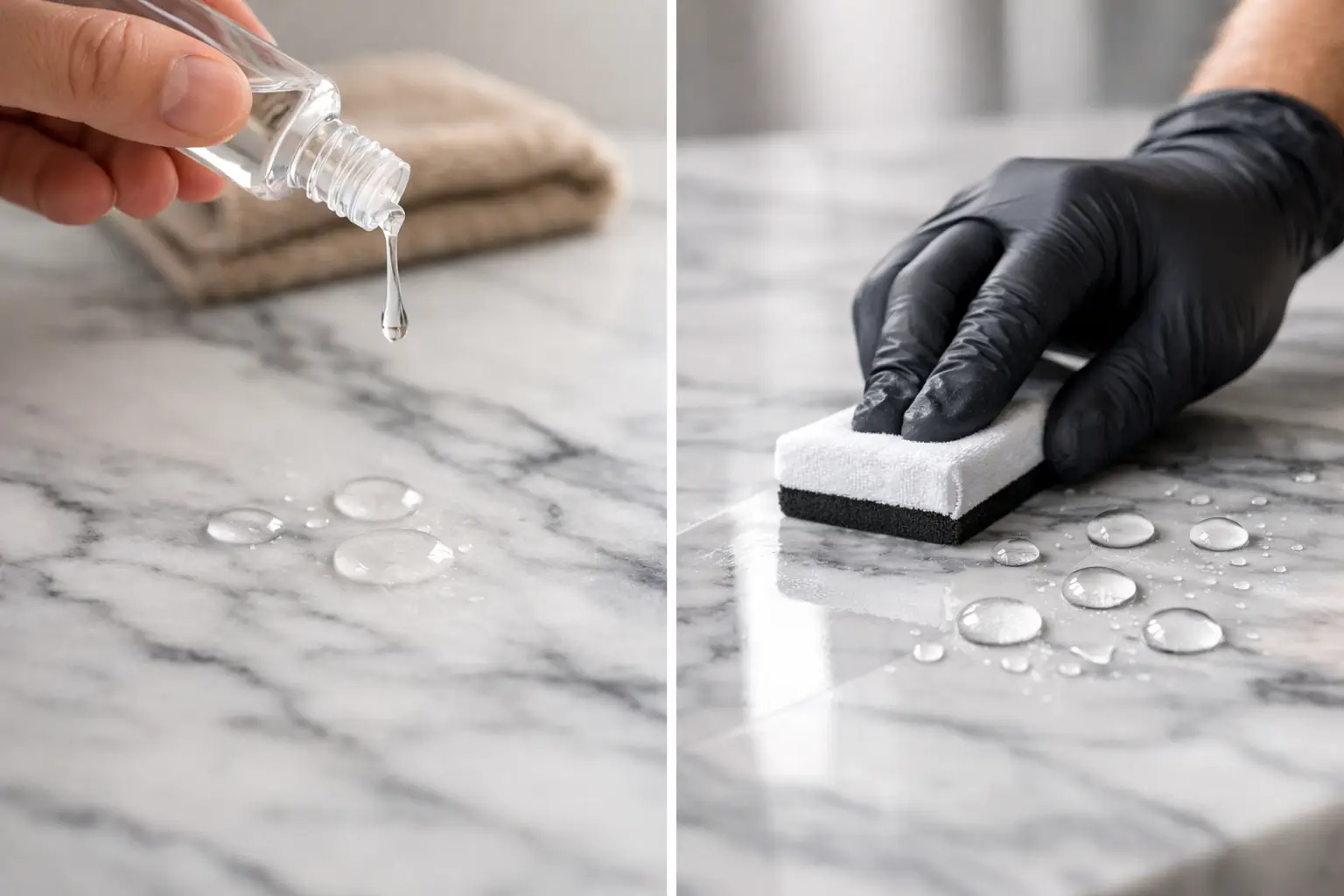
A marble surface can still look immaculate and fail in daily use. That is the point many property owners start comparing marble sealing vs protective coating – usually after a benchtop etches around a sink, a bathroom vanity loses its polish, or a lobby floor starts showing wear far earlier than expected.
The confusion is understandable. Both treatments are designed to protect marble, but they work in very different ways. Choosing the wrong one can leave a premium surface vulnerable to staining, acid damage or premature dullness. Choosing the right one can preserve brilliance, reduce maintenance and extend the life of a costly stone installation without the disruption of replacement.
Marble sealing vs protective coating – what is the difference?
Sealing and coating are not interchangeable terms. A marble sealer is typically an impregnating treatment that penetrates the stone and helps reduce the absorption of liquids. Its main role is stain resistance. It sits below the surface rather than forming a visible layer on top.
A protective coating, by contrast, creates a sacrificial barrier over the marble. That surface layer is designed to absorb wear before the stone itself does. Depending on the system used, it can improve resistance to etching, scratching, abrasion and surface marking in ways a sealer alone cannot.
This distinction matters because marble has two separate vulnerabilities. The first is porosity, which allows oils, wine, coffee and other contaminants to soak in and stain. The second is its calcium-based composition, which reacts with acidic substances and causes etching. A penetrating sealer can help with the first issue, but it does not stop the chemical reaction that causes etch marks. That is where many owners are disappointed. The stone was sealed, but still marked.
What marble sealing actually does
Professional marble sealing is a valuable treatment, but it needs to be understood clearly. Its purpose is to slow the rate at which liquids penetrate the stone. That gives you more time to wipe spills before they become deep-set stains.
For marble floors, this can be especially useful in kitchens, entries and dining spaces where exposure to water, food and foot traffic is routine. For bathroom vanities and shower surrounds, sealing can help reduce the absorption of soaps, cosmetics and moisture-borne contaminants. On benchtops, it offers worthwhile protection against common staining agents, particularly oils and coloured liquids.
What sealing does not do is make marble maintenance-free. It does not make the surface immune to lemon juice, vinegar, skincare acids or harsh cleaning products. It does not stop scratching from grit or heavy movement. And it does not correct existing dullness, etching or wear. If the marble is already compromised, restoration should come first, with sealing applied after the finish has been properly refined.
That is why sealing is best viewed as part of a broader stone care plan rather than a complete shield.
What a protective coating is designed to do
A protective coating changes the equation because it sits at the point of contact. Instead of relying on the stone to endure every spill, scuff and cleaning cycle, the coating takes that impact first.
On marble, this can be a major advantage in high-use environments. Apartment kitchens, hotel bathrooms, office foyers and retail entries often demand more than stain resistance. They need a practical surface defence that helps preserve the visual finish under frequent use.
The right coating system can reduce the risk of etching from acidic exposure, minimise fine scratching and create a more controlled maintenance outcome. In premium interiors, that can mean fewer visible blemishes, longer intervals between restoration works and a more consistently polished appearance.
The trade-off is that coatings are not one-size-fits-all. They must be selected according to stone type, finish, location and traffic conditions. A poorly chosen or poorly applied coating can alter the appearance, create uneven sheen or wear inconsistently. This is where specialist judgement matters. A luxury marble bathroom and a commercial marble floor do not need the same solution.
When sealing is the right choice
Sealing is often the right answer when the key concern is stain management and the marble is not exposed to constant acidic attack or intense abrasion. Many wall surfaces, lower-use bathroom areas and decorative stone features benefit from sealing without needing a surface coating.
It also suits clients who want to preserve the natural look and feel of the stone with minimal alteration. Because penetrating sealers work within the stone, they generally maintain the original character of the marble rather than changing its surface profile.
For some residential floors and benchtops, sealing remains the most appropriate and economical option, particularly when users understand the need for prompt cleaning and correct daily care. It is a practical treatment, but it relies on realistic expectations.
When a protective coating makes more sense
If marble is being damaged by etching rather than staining, a sealer alone is unlikely to solve the problem. This is the scenario where protective coating systems are often the better investment.
Benchtops around sinks, vanity tops exposed to skincare products, dining areas where acidic foods are common, and commercial spaces with repeated cleaning cycles are all examples where the surface itself needs more active protection. In these settings, the question is not just whether the marble absorbs spills. It is whether the finish can withstand everyday use without visibly deteriorating.
A coating can also be a sensible choice after restoration on high-value stone where maintaining appearance is critical. If a surface has been honed or polished back to a refined finish, protecting that finish becomes just as important as correcting the original damage.
For clients who want the strongest defence against surface wear, specialist anti-etch systems may also come into the discussion. These are particularly relevant where marble needs to keep its elegance while performing in demanding domestic or commercial conditions.
Marble sealing vs protective coating for different areas
In kitchens, the deciding factor is usually acid exposure. Marble benchtops are highly vulnerable to etching from food preparation, drinks and cleaning products, so coating systems often deliver better real-world protection than sealing alone.
In bathrooms, it depends on how the space is used. A guest ensuite may perform well with sealing, while a heavily used main bathroom with constant exposure to toiletries, water spotting and cosmetics may benefit from a more protective surface treatment.
For marble floors, traffic levels matter. In a private residence with moderate use, sealing combined with proper maintenance may be sufficient. In apartment common areas, hotel foyers or retail spaces, a protective coating can provide a more durable buffer against wear patterns and maintenance-related dulling.
On feature walls, fireplace surrounds and low-contact surfaces, sealing is often enough because the main concern is preserving the stone against occasional staining rather than defending it from constant abrasion.
Why professional assessment matters
Marble is not a single uniform material. Different marbles vary in density, finish, porosity and sensitivity. The same is true of site conditions. A polished white marble vanity in a harbour-facing apartment will behave differently from a honed marble floor in a busy commercial entry.
That is why a technical assessment should come before any recommendation. The right treatment depends on the current condition of the stone, the type of damage already present, the expected level of traffic and the client’s tolerance for maintenance.
An experienced stone specialist will also look at whether the surface needs cleaning, honing, polishing or repairs before any protective product is applied. Protection should never be used to mask unresolved issues. The best outcome comes from restoring the marble properly first, then selecting the treatment that supports how the space is actually used.
The better question is not which is best
When clients ask whether sealing or coating is better, the honest answer is that neither is universally superior. They solve different problems.
If your main risk is staining, sealing may be the right fit. If your main risk is etching, wear and visible surface damage, a protective coating is often the stronger solution. In some cases, a combined strategy makes sense, particularly where the stone needs both internal stain resistance and external surface defence.
For premium marble, the goal is not simply to apply a product and hope for the best. It is to preserve the elegance of the stone with a treatment matched to the way the surface lives and performs.
A well-finished marble surface should feel like an asset, not a maintenance headache. The right protection approach keeps it that way.