
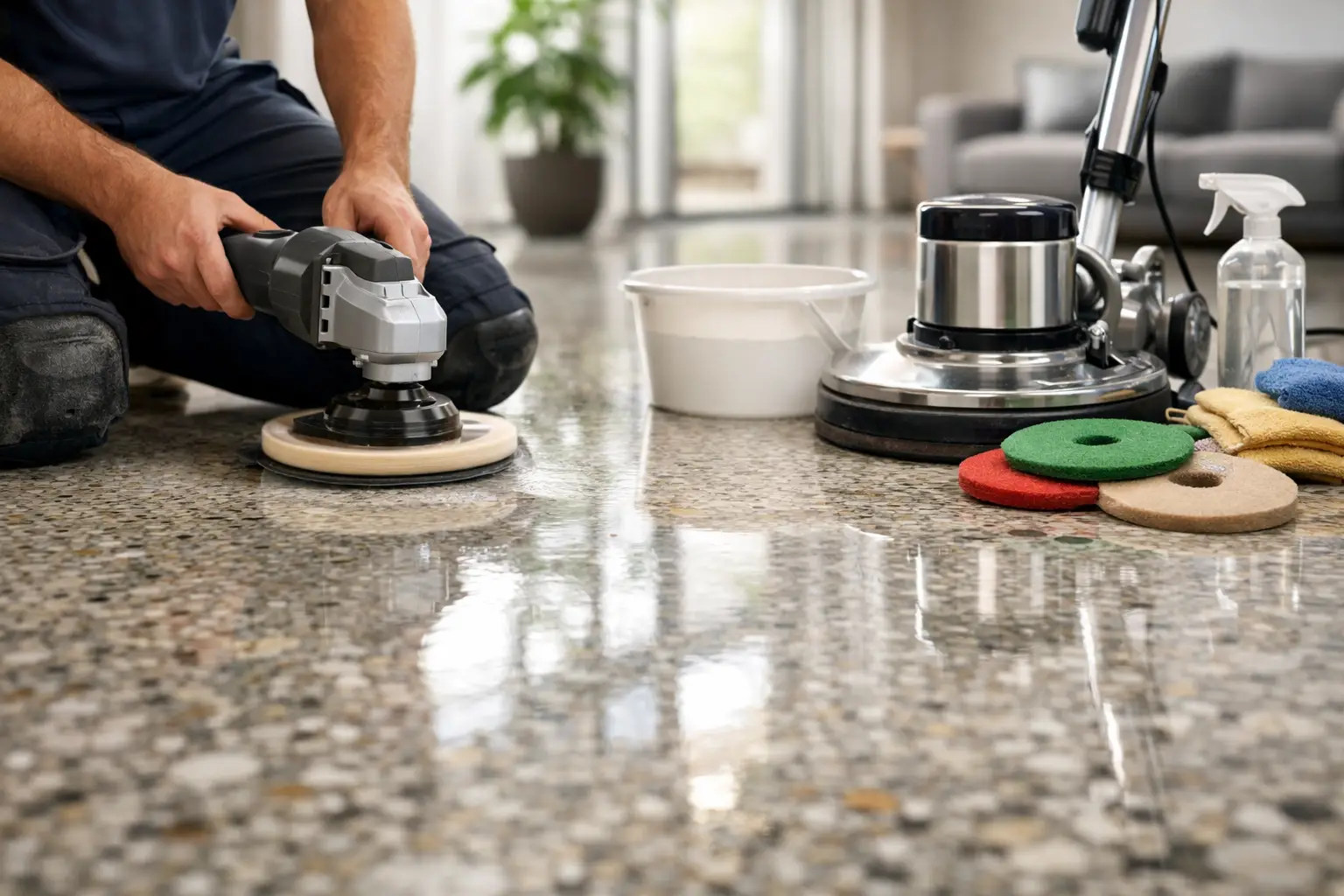
A terrazzo floor can look permanently tired long before it is beyond repair. Grey traffic lanes, ingrained marks, scratches and a flat, lifeless surface often lead owners to consider replacement. Yet when the terrazzo body is sound, knowing how to restore terrazzo floors can preserve an original architectural feature, avoid major demolition and bring back the refined depth that made the floor worth installing.
Terrazzo restoration is not a one-size-fits-all cleaning job. The right process depends on whether the floor is traditional cement-based terrazzo or epoxy terrazzo, its existing finish, the depth of damage and the level of gloss required. A careful assessment comes first. From there, a tailored restoration can return a Sydney residence, lobby, retail space or common area to a far more elegant standard.
Understand What Your Terrazzo Is Telling You
Terrazzo is a composite surface, usually made from marble, quartz, granite or glass aggregate set within a cement or resin binder. Once cured, it is ground flat and finished to reveal the decorative chips beneath. Its density and appearance make it exceptionally durable, but it is still vulnerable to poor cleaning methods, abrasive grit, moisture issues and years of foot traffic.
Dullness is not always dirt. It may be a worn topical coating, fine scratching that disrupts the reflection of light, residue from unsuitable cleaning products, or surface wear that requires mechanical honing. Dark staining can also point to moisture movement or contamination beneath the surface, particularly in older cement-based terrazzo.
This distinction matters because aggressive products can create more damage than they remove. Acidic cleaners may attack cementitious binders and dull calcareous aggregate. Heavy-duty degreasers can leave residue or compromise a coating. A restoration plan should solve the cause of the problem, not simply make the floor look temporarily cleaner.
How to Restore Terrazzo Floors Step by Step
Start with a material and damage assessment
Before any polishing begins, establish the terrazzo type and inspect the floor under good lighting. Look for hollow or loose sections, chips, cracks, failed joints, deep stains, uneven previous repairs and signs of moisture. Check whether the floor has been waxed, coated or sealed, as these treatments affect the preparation process.
Cement-based terrazzo generally tolerates grinding, honing and polishing when completed by an experienced stone restoration specialist. Epoxy terrazzo demands a different approach. It can be highly resilient, but excessive heat, the wrong abrasives or unsuitable chemicals may damage the resin matrix. In either case, a small test area is the sensible way to confirm the restoration method and expected finish.
Remove surface contamination and old coatings
The floor must be properly cleaned before its condition can be judged. This usually involves a pH-neutral or material-appropriate cleaning solution, mechanical agitation and controlled extraction of dirty slurry. If waxes, acrylic dressings or other coatings are present, they may need to be stripped using products compatible with the particular terrazzo system.
This stage is often underestimated. A floor can appear glossy because of old coating build-up while looking cloudy or yellowed in daylight. Removing that build-up exposes the true surface and prevents contaminants being locked beneath a new protective treatment.
Repair chips, cracks and missing material
Small chips and cracks are not only visual distractions. They collect dirt, catch shoe edges and allow moisture into vulnerable areas. Repairs should be colour-matched as closely as possible to the binder and aggregate, then levelled carefully with the surrounding floor.
A repair will rarely be invisible at close range on a heavily patterned terrazzo floor, particularly where the original mix contains varied stone chips. Skilled colour matching and finishing minimise the contrast, however, and a consistent polished surface helps the repair sit far more naturally within the overall design.
Where cracking is widespread or sections have become unstable, cosmetic filling is not enough. The movement or substrate issue must be investigated first. Restoration is highly cost-effective when the slab is stable, but it should not disguise an unresolved structural problem.
Hone the surface to remove wear and scratches
Honing is the controlled use of progressively finer diamond abrasives to remove surface damage and flatten the floor. It is the stage that corrects widespread scratching, stubborn etching, traffic patterns and uneven sheen. The required level of honing depends on the depth of the defects.
Light wear may respond to a fine honing sequence. Deep scratches, lipping between sections or a severely neglected finish may require more substantial grinding before finer refinement begins. More aggressive work can produce a dramatic transformation, but it also removes material. That is why it should be specified only where it is genuinely needed.
During wet honing, the slurry must be carefully managed. It should never be allowed to dry on adjacent walls, joinery or porous surfaces. In occupied homes and presentation-critical commercial settings, thorough protection of the surrounding area is part of professional workmanship.
Polish or refine to the right finish
A polished terrazzo floor reflects light with clarity and gives interiors an unmistakably premium appearance. Polishing follows honing with increasingly fine abrasives and, where appropriate, a system suited to the binder and aggregate. The objective is not merely shine. It is an even, refined finish across the field of the floor, including edges and detailed areas where practical.
High gloss is not always the right answer. A honed or satin finish can be an excellent choice for busy entries, hospitality spaces or households where a softer look and more forgiving day-to-day appearance are preferred. The best finish balances the architecture of the space, slip considerations, lighting and maintenance expectations.
Seal and protect the restored floor
Once the terrazzo is clean, dry and finished, a suitable penetrating sealer can help resist water-borne and oil-borne staining without creating an artificial surface film. The exact protection depends on the material and the floor’s location. Cement-based terrazzo in a kitchen, foyer or commercial area may benefit from a premium impregnating sealer, while other surfaces may require a different specified treatment.
Sealer is protection, not invincibility. It reduces the chance of rapid absorption and gives spills more time to be removed, but it will not prevent scratching from grit or eliminate the need for correct cleaning. In some situations, a protective coating may be appropriate, though coatings need ongoing maintenance and can alter the natural appearance of the terrazzo.
Avoid the Shortcuts That Dull Terrazzo Again
The most common restoration mistake is treating terrazzo like ordinary tile. Harsh acidic cleaners, bleach-heavy products, abrasive powders and rough scrubbing pads can leave the surface flatter, patchier or more vulnerable. Steam cleaning can also be unsuitable where moisture-sensitive adhesives, joints or underlying issues are present.
Avoid applying household polish, wax or shine-enhancing products without confirming their compatibility. These may create a short-lived gloss but attract soil, yellow over time and make future restoration more complex. Likewise, do not assume a rental floor machine and a general polishing pad will correct scratches. Without the correct diamond sequence, technique and slurry control, it can produce inconsistent results.
For daily care, use a soft microfibre mop or dust mop to remove abrasive grit, then clean with a pH-neutral stone cleaner and clean water as required. Attend to spills promptly, place quality mats at entrances and use felt protection beneath furniture. In commercial environments, an effective maintenance programme protects the restored appearance between periodic professional services.
When Professional Restoration Is the Better Investment
DIY cleaning can manage routine soil, but it cannot reliably correct deep scratches, uneven gloss, failed coatings, cracks or embedded staining. Terrazzo is a premium surface with a distinctive composition, and the restoration outcome depends heavily on reading that material correctly.
Professional restoration is particularly worthwhile when replacement would involve removing skirtings, disrupting occupied areas, altering floor levels or matching a discontinued terrazzo design. A specialist can assess whether the existing floor has the thickness and stability for honing, repair localised damage and create a finish aligned with the property’s standard.
Grand Stone Restoration approaches terrazzo with material-specific expertise, from detailed cleaning and repairs through to honing, polishing and long-term protection. The aim is to retain the character of the original surface while restoring the clarity, colour and lasting shine expected of a premium interior.
A terrazzo floor does not need to look brand new to look exceptional. With the right level of restoration and considered ongoing care, its natural variation and history become part of a finish that continues to add distinction to the space.