
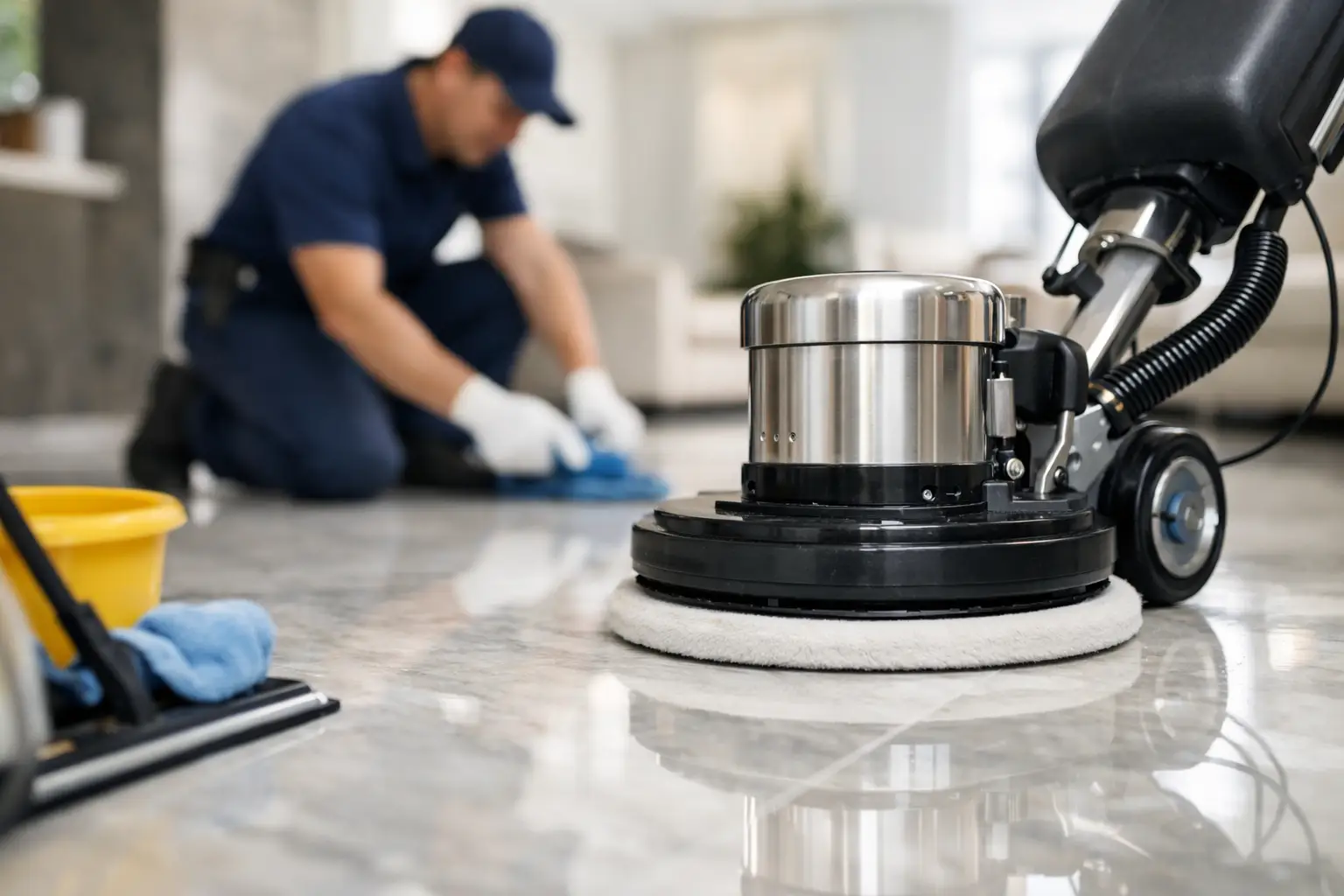
A marble floor rarely loses its appeal all at once. It happens gradually – traffic paths turn flat, spills leave light etching, fine scratches catch the light, and the finish that once looked elegant starts to feel tired. That is usually the point when property owners start looking into marble floor polishing Sydney services, not because the stone is beyond saving, but because its original character has been masked by wear.
Professional polishing is not a cosmetic shortcut. Done properly, it is a corrective and restorative process that brings marble back to a more refined, even finish while extending the life of the surface. For homes, that can mean reviving an entry, kitchen or bathroom floor without the disruption of replacement. For commercial spaces, it can mean restoring a foyer or hospitality setting so the presentation matches the standard of the business.
What marble floor polishing actually does
Marble is a premium material, but it is also softer and more reactive than many people expect. It scratches more easily than granite, and acidic spills can etch the surface even when the stone looks solid and dense. Polishing addresses that wear at the surface level by refining the marble through specialist abrasives and polishing compounds until the floor regains clarity, depth and light reflection.
That process can improve dullness, light to moderate scratching, surface etching, uneven sheen and the general tired appearance that develops over time. If the floor has deeper damage, polishing may be only one stage of the restoration. In many cases, honing is required first to remove more pronounced wear before a polished finish can be achieved.
This is where expertise matters. Marble is not a single, uniform category. Different varieties respond differently to restoration, and the right finish depends on both the stone and the space. A highly reflective result may suit a formal entrance or luxury interior, while a softer satin finish may be more practical in a bathroom or a high-traffic commercial setting.
When marble floor polishing in Sydney is worth doing
Not every marble floor needs the same level of treatment. Some need a light polish to refresh the finish. Others need a fuller restoration that includes stain treatment, crack or chip repair, grout attention and sealing. The value of professional assessment is that it prevents the wrong fix.
If your floor looks dull despite regular cleaning, if etch marks are visible in natural light, or if traffic lanes stand out against protected areas under furniture, polishing is often the right next step. It is also worth considering when a property is being prepared for sale, after renovation works have left surface wear, or when a commercial interior no longer reflects the quality of the space.
Sydney properties often present an added layer of complexity. Coastal moisture, sand underfoot, indoor-outdoor living, and heavy foot traffic in apartment buildings or commercial entries can all accelerate wear. Marble in these settings benefits from a treatment plan that goes beyond surface shine and considers long-term protection as well.
Why DIY marble polishing usually falls short
Marble floors attract well-meaning DIY attempts because the damage often looks minor at first glance. A store-bought polish or rented machine can seem like a simple fix. The problem is that marble is unforgiving when the wrong product, pad or pressure is used.
Household cleaners with acidic ingredients can worsen etching. General buffing products may add temporary gloss without correcting the surface beneath. Aggressive machine use can create swirl marks, uneven patches or more visible dull areas. Once that happens, restoring the floor properly can become more involved than it needed to be.
Professional marble restoration is less about making the floor shiny and more about reading the stone correctly. The technician needs to understand the marble type, its existing finish, the depth of wear, previous treatments, and how the floor is used day to day. That is what separates genuine restoration from a short-lived visual improvement.
The process behind professional marble floor polishing Sydney services
A quality result starts with inspection. The floor is assessed for etching, scratches, stains, lippage, chips, grout issues and previous sealers or coatings. From there, the treatment is tailored. That tailored approach matters because over-restoring can be as problematic as under-restoring, particularly on decorative or high-value marble.
If the floor has notable wear, honing usually comes first. This removes a fine layer of stone to level out scratches and etching. Once the surface is refined and even, polishing works to develop the desired finish. Depending on the look required, that may range from a soft honed sheen to a high-polish gloss.
The final stage often includes sealing. Sealing does not make marble stain-proof or etch-proof, but it can improve resistance to staining and make ongoing maintenance more manageable. In some settings, additional protective solutions may be worth considering, particularly where the marble is exposed to repeated spills or demanding traffic.
For premium interiors, the difference is visible immediately. Light reflects more evenly, the veining appears clearer, and the floor feels intentional again rather than worn down by use.
Polishing versus replacing marble floors
Replacement is sometimes necessary, but far less often than people assume. Unless the stone is severely broken, unstable or improperly laid, restoration is usually the more economical and far less disruptive option.
Replacing marble involves demolition, disposal, sourcing matching material, installation and often significant downtime. Matching existing marble can be difficult, especially in older properties or where natural variation is part of the appeal. Restoration preserves the original surface while correcting the wear that has made it look aged.
For homeowners, that means avoiding a major renovation for a problem that is often surface-deep. For commercial operators, it means less interruption to tenants, staff or guests. In many cases, a properly restored floor delivers the visual impact people want without the cost and inconvenience of starting again.
Choosing the right finish for the space
One of the most overlooked parts of marble floor restoration is finish selection. High gloss is popular because it creates a sense of luxury and brightness, but it is not automatically the best choice for every area.
In formal residential spaces, a polished finish can elevate the room and emphasise the stone’s natural movement. In bathrooms, kitchens or busy commercial settings, a honed or lower-sheen finish may be more forgiving and better suited to the way the floor is used. There is also a maintenance consideration. Higher gloss finishes tend to show traffic patterns, dust and minor marks more readily.
That does not make one finish better than another. It simply means the right finish depends on appearance, practicality and how much day-to-day maintenance the client is prepared to manage. A specialist should talk through those trade-offs rather than pushing the same finish for every floor.
Aftercare matters as much as the polish
A beautifully restored marble floor can lose its edge quickly if aftercare is poor. The good news is that maintenance does not need to be complicated, but it does need to be correct.
Marble should be cleaned with pH-neutral products designed for natural stone. Grit should be removed regularly so it does not act like sandpaper underfoot. Spills, especially acidic ones such as wine, juice or bathroom products, should be cleaned promptly. In higher-traffic settings, periodic maintenance polishing can help preserve the finish before the wear becomes more pronounced.
This is where specialist support adds value beyond the initial service. A restoration company with deep stone knowledge can advise on realistic maintenance intervals, sealer performance, and whether a floor would benefit from additional protective treatment over time. Grand Stone Restoration, for example, approaches marble as a long-term asset, not a one-off cleaning job.
What quality looks like in marble floor polishing Sydney
The best result is not a floor that looks artificially coated or overly glossy. It is a floor that looks refined, balanced and true to the stone. The reflection should be even. The finish should suit the environment. Repairs should blend cleanly. The restored surface should feel like the marble has been brought back to itself, not covered up.
That standard is especially important in presentation-driven properties. In luxury homes, the floor is part of the overall impression of quality. In apartment buildings, hotels, offices and retail settings, it shapes how the space is perceived before anyone speaks a word. Marble that is dull or heavily etched can drag the whole interior down. Marble that has been expertly restored does the opposite.
If your marble floor still has strong bones but no longer has the finish to match, polishing is often the most intelligent next step. The right restoration does more than improve shine – it protects the investment you already made in the stone and returns a sense of elegance that replacement is not always required to achieve.