
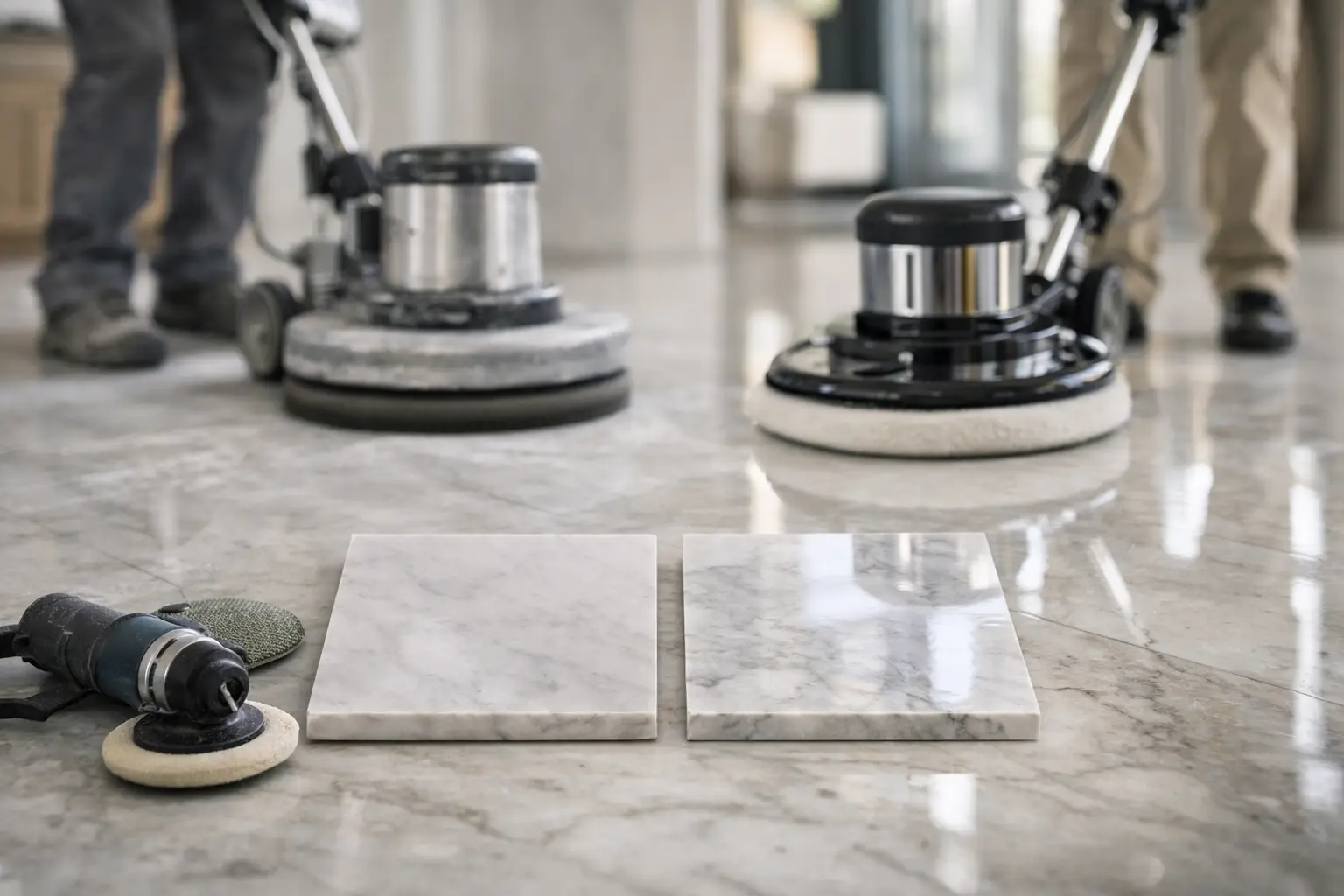
A marble floor can look tired long before the stone itself is beyond saving. Acid etching around a vanity, fine scratches across a foyer, dulled traffic lanes and cloudy patches on a benchtop can all interrupt the elegant finish that made marble such a valuable choice. The question of marble honing vs polishing is not simply about choosing matte or glossy. It is about selecting the right restoration process for the condition of the stone, the look of the space and the way the surface is used.
For Sydney homes, apartments and presentation-critical commercial interiors, the right finish can restore marble’s refinement without the expense, dust and disruption of replacement.
What is marble honing?
Honing is a controlled mechanical process that removes a very fine layer of marble to level the surface. Diamond abrasives are used progressively to reduce scratches, etch marks, light staining and uneven wear. The aim is to create a smooth, consistent surface while retaining a low-sheen or satin appearance.
A honed finish does not mean unfinished stone. Properly honed marble feels refined and even underfoot or by hand, with a soft, understated lustre. It is particularly well suited to contemporary bathrooms, kitchen benchtops, floors and high-traffic areas where a quieter visual effect is preferred.
The key benefit of honing is correction. A marble surface that has been marked by acidic cleaners, wine, citrus, toiletries or everyday abrasion often needs more than a cleaning treatment. Etching is physical damage to the calcium-based stone, not a stain sitting on top. Honing removes or reduces that damaged layer so the surface can be brought back into a uniform condition.
What is marble polishing?
Polishing takes marble to a higher level of reflectivity. It also uses specialist diamond abrasives and polishing compounds, but the process is refined through finer stages to close and smooth the stone’s surface at a microscopic level. The result is the familiar high-gloss finish associated with luxury marble foyers, formal bathrooms and premium interiors.
A polished finish enhances colour, movement and veining. On white Carrara, Calacatta or richly patterned marble, the increased reflection can make the stone appear deeper and more dramatic. It is a beautiful choice where light, brilliance and visual impact are priorities.
However, polish is not a universal upgrade. High-gloss marble makes an immediate impression, but it can show new etching, water spotting, scratches and footprints more readily than a honed surface. In a busy family kitchen or hotel entry, that trade-off deserves proper consideration.
Marble honing vs polishing: the essential difference
The most visible difference is sheen. Honed marble has a matte to satin finish, while polished marble has a glossy, reflective finish. Yet the more meaningful difference is how each surface performs in its setting.
Honed marble is generally more forgiving of daily wear. Light etching and fine scratches tend to blend into its softer appearance, making it a practical choice for benchtops, bathroom floors and areas used frequently by children, guests or staff. It still requires care, and acidic spills can still etch it, but damage is often less conspicuous.
Polished marble delivers greater visual brilliance and can make a space feel more formal and expansive. It is ideal for feature walls, low-traffic floors, reception areas and bathrooms where a luminous finish is central to the design. Its reflective quality requires more attentive maintenance to preserve a consistently pristine appearance.
Neither finish is inherently better. The right decision depends on the marble type, existing damage, intended use, lighting and your expectations around maintenance.
Does honing always come before polishing?
In restoration work, honing is often an essential stage before polishing, but not every marble surface requires a full honing process. If a floor is broadly sound but has lost some lustre, a specialist may be able to polish it without aggressive resurfacing. If there are deep scratches, widespread etching, lippage between tiles or uneven patches, the stone usually needs more substantial honing first.
This distinction matters because marble should never be treated with a one-size-fits-all approach. Excessive grinding removes more material than necessary, while an attempt to polish over significant damage can leave the surface shiny but visibly uneven. Skilled restoration balances correction with preservation, removing only what is needed to achieve a consistent, elegant result.
For tiled marble floors, the process may also include grout cleaning, stain treatment and careful attention to tile edges. A floor can only look truly restored when its finish is even across the full surface, rather than glossy in some areas and worn in others.
Which finish suits each area?
Kitchen benchtops
A honed finish is often the practical choice for marble kitchen benchtops. Lemon juice, vinegar, wine and cooking splashes can etch polished marble quickly, and a satin finish disguises minor marks more effectively. Homeowners who value the dramatic shine of polished marble can still choose it, but should be prepared to wipe spills promptly and arrange professional restoration when needed.
Where etching is a recurring concern, an anti-etch protective film may be worth considering. It can provide a discreet protective barrier while preserving the appearance of the stone, particularly on heavily used kitchen surfaces.
Bathrooms and vanities
Both finishes work well in bathrooms. Honed marble creates a calm, spa-like effect and is less likely to reveal water marks. Polished marble offers a more luxurious, light-reflecting appearance, especially on wall cladding and vanity tops. The choice often comes down to whether the room is designed for soft texture or high-impact glamour.
Floors, foyers and commercial spaces
For marble floors, honing is often the more practical finish in busy areas. It reduces the visual impact of traffic wear and provides a sophisticated, contemporary look. Polished marble is highly effective in carefully maintained foyers, retail spaces and formal residential entries, where its brilliance contributes to the overall presentation of the property.
Slip resistance should also be assessed separately from appearance. A highly polished floor may not suit every wet or high-traffic location. The stone, site conditions and applicable safety requirements should guide the recommended finish.
Sealing protects marble, but it does not prevent etching
After honing or polishing, sealing is commonly recommended to reduce the stone’s absorption of oils, coloured liquids and other contaminants. A quality impregnating sealer penetrates the marble rather than sitting as a thick surface coating, helping to make routine cleaning and spill response easier.
Sealing does not make marble acid-proof. Acid reacts with the stone itself, which is why lemon juice can leave a dull spot even on sealed marble. This is a frequent source of disappointment for property owners who have been told that sealing offers complete protection. It does not. It is valuable protection against staining, but it must be paired with suitable cleaning products and prompt attention to spills.
Avoid acidic, abrasive or generic bathroom cleaners on marble. Use a pH-neutral stone cleaner, a soft mop or microfibre cloth, and clean water for everyday care. On floors, grit is often the real enemy, so regular dry mopping helps prevent fine scratches from becoming widespread dullness.
Why professional assessment produces a better result
Marble restoration is precision work. Different stones can look similar while responding very differently to abrasives, moisture and polishing methods. Marble may also contain natural fissures, filled areas, chips or previous coating residues that need to be assessed before work begins.
A professional specialist will identify whether the issue is etching, staining, scratching, coating failure or structural damage. They can then determine the appropriate honing level, finish, repair method and protection plan. This avoids the common mistake of using topical shine products that briefly improve appearance but leave residue, attract dirt or create an uneven finish over time.
Grand Stone Restoration approaches marble as a premium natural material, not as a surface to be quickly cleaned. The objective is a finish that looks considered, feels consistent and suits the property long after the restoration equipment has left.
Choose the finish you will enjoy living with
The best marble finish is the one that matches the life happening around it. Choose polishing when you want pronounced brilliance and can support the care it deserves. Choose honing when you prefer a softer, more forgiving finish that handles everyday activity with greater discretion.
If your marble is etched, scratched or dull, the condition of the stone should lead the decision. A tailored assessment can reveal how much restoration is needed and whether a honed or polished finish will bring out the most enduring beauty in your surface.