
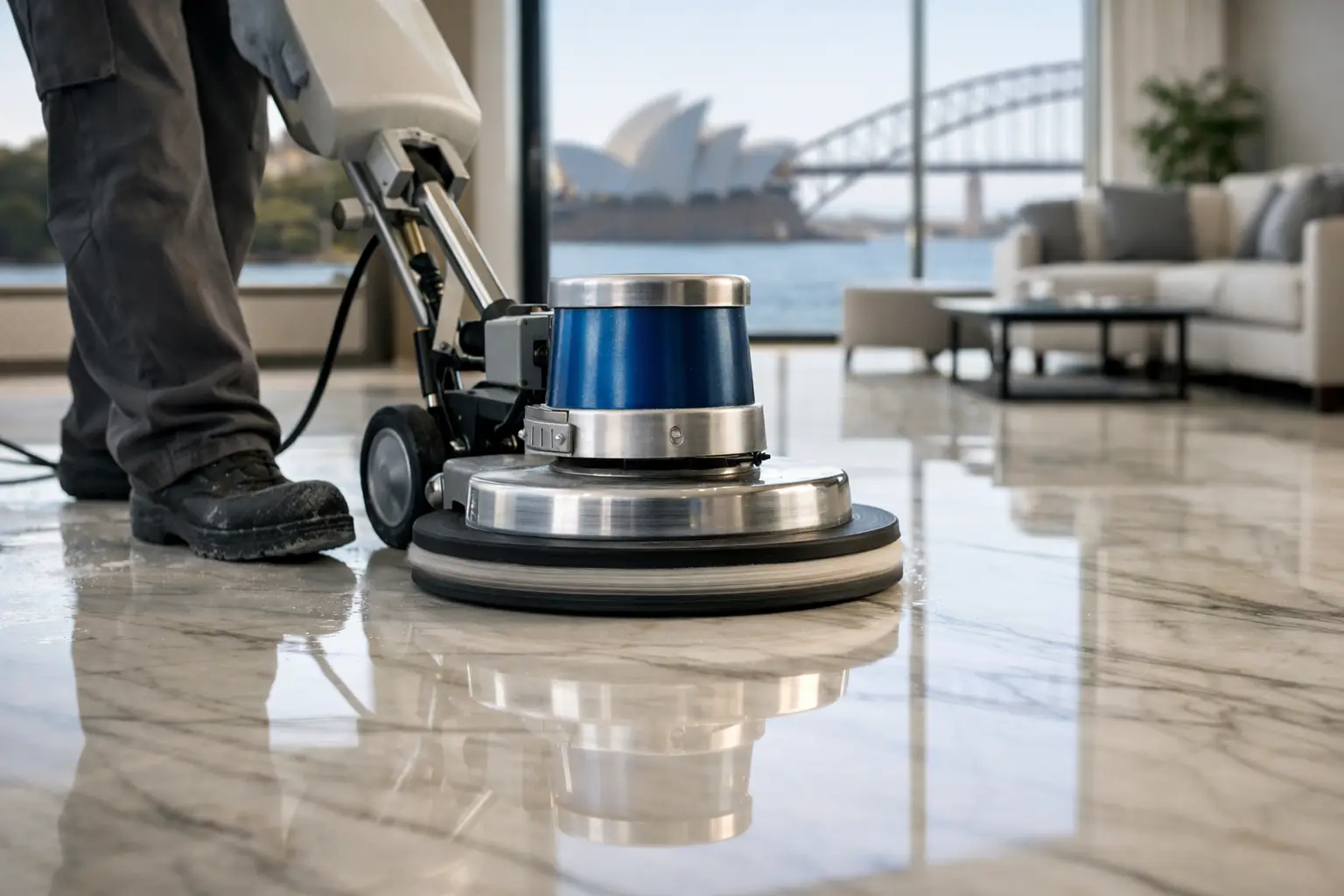
A marble floor rarely loses its appeal all at once. It happens in stages – light traffic paths that turn flat, splash marks that etch the surface, fine scratches that catch the afternoon light, and a once-crisp reflection that starts to look tired. That is usually the point when property owners begin searching for marble polishing Sydney specialists, not because the stone has failed, but because its finish no longer reflects the standard of the space around it.
Professional marble polishing is not simply about making stone look shiny again. It is a corrective process that removes wear, refines the surface and restores clarity in a way that everyday cleaning never can. When done properly, it brings marble back to a finish that feels deliberate, elegant and in keeping with the value of the property.
What marble polishing actually does
Marble is a calcium-based natural stone, which means it is softer and more reactive than many people expect. Acids from bathroom products, kitchen spills and common cleaners can etch the surface. Grit underfoot can create micro-scratches. Over time, even premium marble can appear dull, patchy or uneven.
Polishing addresses that wear at the surface level. Depending on the condition of the stone, the process may involve honing first to remove scratches, etching or lippage, followed by polishing to refine the finish and develop the desired level of sheen. In some cases, sealing or a protective treatment follows to help reduce future staining and make maintenance easier.
The key point is that polishing is not one fixed treatment. A lightly worn vanity top needs a different approach from a high-traffic hotel foyer or a marble hallway in an apartment building. Good restoration work starts with reading the stone correctly.
Why marble loses its shine in Sydney homes and commercial spaces
Sydney properties place very different demands on marble depending on how the surface is used. In a private residence, bathrooms and kitchen benchtops often suffer from etching, cosmetic scratches and product build-up. In commercial settings, the main issue is usually abrasion from foot traffic, entry grit and inconsistent maintenance methods.
Moisture can also complicate the picture, especially in bathrooms, poolside interiors or ground-level spaces where stone is regularly exposed to humidity and residue. Then there is the cleaning factor. Many marble surfaces are dulled not by neglect, but by the wrong products. Acidic sprays, harsh chemicals and abrasive pads can strip away the finish surprisingly quickly.
That is why a polished result should never be judged on shine alone. A mirror-like finish on a surface that still has unresolved etching, scratches or uneven wear is rarely a quality outcome. The real measure is uniformity, clarity and how well the finish suits the stone and the space.
Marble polishing Sydney services should be tailored, not generic
One of the biggest mistakes in stone care is treating all hard surfaces as though they respond the same way. Marble does not behave like granite. Honed marble needs a different finish strategy from high-gloss marble. A soft Carrara bathroom floor and a darker marble lobby each call for different abrasives, compounds and finishing stages.
This is where specialist restoration matters. Proper marble polishing Sydney services should assess the stone type, level of wear, previous treatments and practical use of the area before deciding on the process. If there are chips, open joints, uneven tiles or deep etching, these issues may need to be resolved before polishing begins.
There is also a question of finish. Higher gloss is not always the right answer. In some interiors, a honed or low-sheen finish is more refined, easier to maintain and better suited to the architectural style. In others, a crisp polished finish lifts the entire room and brings back the sense of luxury that made marble worth choosing in the first place.
The difference between cleaning, honing and polishing
These terms are often used interchangeably, but they do very different jobs.
Cleaning removes surface soiling, residues and contaminants. It can improve appearance, but it does not correct physical damage to the stone. If the marble is etched, scratched or worn, cleaning alone will not restore the finish.
Honing is a mechanical resurfacing step that removes a fine layer of stone to eliminate damage such as etching, light scratches and dull traffic patterns. It creates a smooth, even surface and is often the stage that makes proper restoration possible.
Polishing refines the honed surface and develops the final sheen. That sheen may be soft and natural or highly reflective, depending on the stone and the brief. In premium restoration, the best result often comes from combining all three steps in the right order, not skipping straight to a polish in the hope of masking wear.
Where professional marble polishing delivers the most value
Marble restoration is especially worthwhile in areas where replacement would be expensive, disruptive or unnecessary. Floors are the most obvious example. Removing and replacing marble flooring can create major downtime, noise and cost, particularly in occupied homes, apartment buildings, hotels and commercial premises. If the stone is structurally sound, restoration is usually the smarter investment.
Benchtops, vanities, bathroom walls, staircases and feature stone in foyers also respond well to polishing when the damage is cosmetic rather than structural. A surface that looks beyond saving can often be corrected with the right sequence of grinding, honing, polishing and sealing.
For property managers and commercial operators, the value goes beyond appearance. Well-restored marble supports presentation, extends the life of the asset and helps avoid premature replacement budgets. For homeowners, it protects the visual standard of high-end interiors and preserves the finish of a material that was chosen for elegance, not convenience.
What to expect from a quality restoration result
A quality result should look balanced, not exaggerated. The finish should be consistent across the whole surface, with reduced visibility of etching, scratches and wear. Reflections should appear cleaner and sharper where a polished finish is appropriate, and the stone should feel smooth underfoot or to the touch.
There are, however, realistic limits. Deep staining, severe structural cracking or extensive edge loss may require repair work beyond polishing alone. Some older marble also contains natural variation that will remain visible after restoration. That is not a flaw. It is part of the character of genuine stone.
The right specialist will explain those trade-offs clearly. They will tell you when polishing is enough, when honing is necessary, and when repairs or protective treatments should be included for a lasting result.
Protecting marble after polishing
Restoring the finish is only part of the job. Keeping that finish is where many surfaces come undone.
Marble benefits from a maintenance plan that suits its use. In a home, that may mean pH-neutral stone care, quick clean-up of spills and periodic resealing where needed. In commercial environments, it often means more structured maintenance, especially at entries and high-traffic zones where grit causes avoidable wear.
Protective solutions can also make a meaningful difference. Sealers help reduce the risk of staining, though they do not prevent etching. In more vulnerable areas, specialist protective coatings or anti-etch film may be appropriate, particularly on benchtops, vanities and other surfaces exposed to regular chemical contact. It depends on how the stone is used and how much ongoing upkeep the client wants to manage.
Choosing a marble polishing specialist
When the surface is premium, the service should be specialised. Marble restoration requires material knowledge, the correct machinery, and an understanding of finish control that general cleaning services rarely provide. The difference shows in the details – edge consistency, reflection quality, repair blending and the overall refinement of the final surface.
Experience matters because every stone presents differently. Some marble responds beautifully to polishing. Some needs more corrective work before a finish can be built back. Some surfaces in older Sydney properties have already been treated multiple times and require a more measured approach to avoid overworking the stone.
This is where a specialist company such as Grand Stone Restoration brings real value. The goal is not a quick cosmetic lift. It is a properly restored surface that looks right, performs well and holds its finish with the right care.
If your marble has become dull, etched or uneven, the best time to act is before minor wear turns into deeper damage. A professional assessment can often reveal that the stone does not need replacing at all – it simply needs the right hands to bring back its brilliance.