
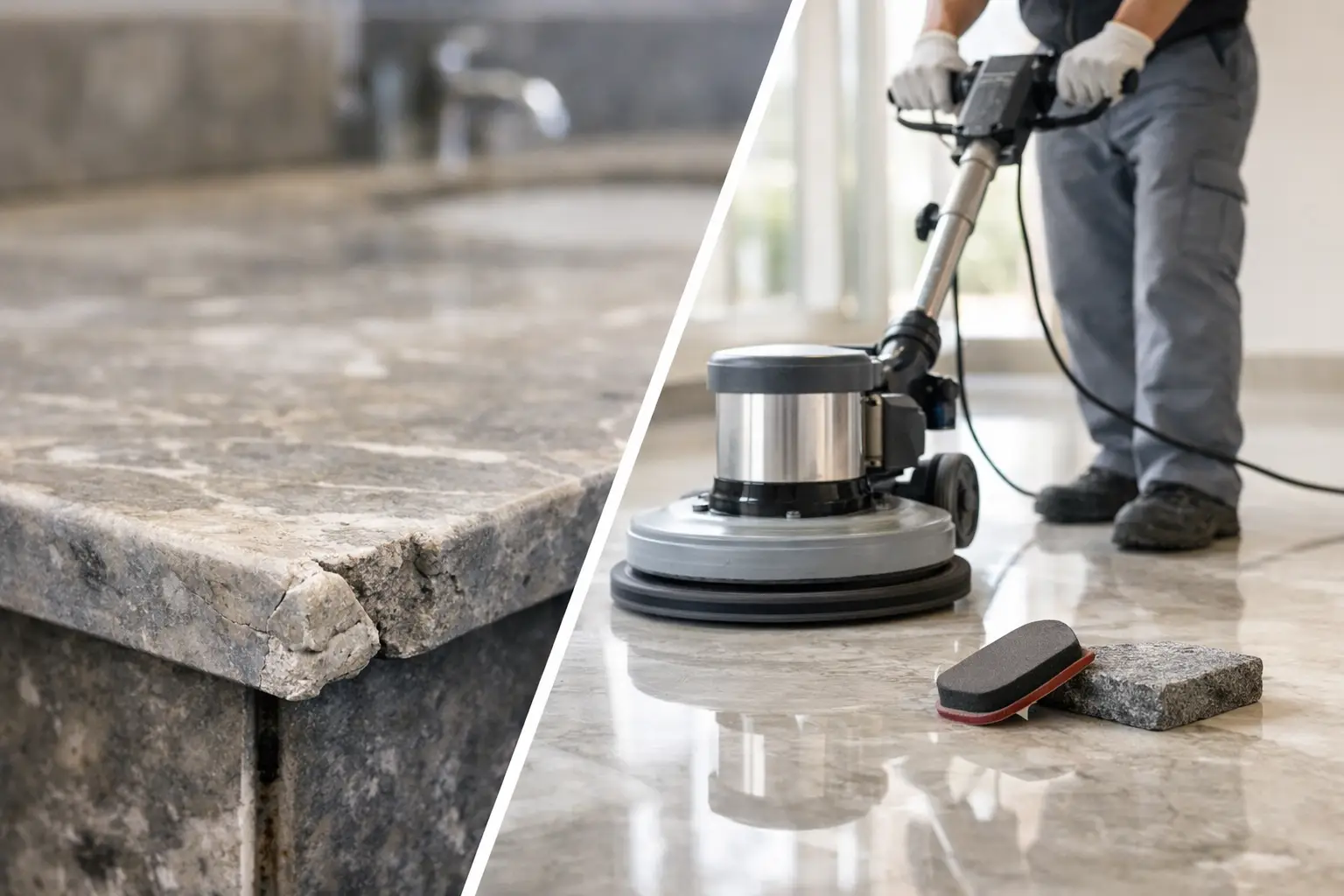
A marble vanity that once reflected light cleanly can start looking flat long before most owners realise there is a problem. The same applies to limestone floors, engineered stone benchtops, terrazzo entries, and tiled wet areas. One of the clearest signs your stone needs restoration is not dramatic damage, but a gradual loss of finish, consistency, and protection that makes a premium surface look tired.
Stone rarely fails all at once. It wears in layers. The polish softens, the sealer weakens, fine scratching builds up, and isolated marks become part of the overall appearance. Acting early usually means more restoration options, better results, and less cost than waiting until replacement feels like the only path left.
Signs your stone needs restoration before damage spreads
Not every mark calls for a full restoration, but certain patterns are worth taking seriously. The question is not simply whether the surface has damage. It is whether the surface is no longer performing or presenting as it should.
1. The surface has lost its shine
Dull stone is one of the most common complaints in both homes and commercial interiors. On polished marble, granite, terrazzo, and engineered stone, that loss of brilliance is often the first visible signal that the finish has broken down.
Sometimes the issue is residue from incorrect cleaning products. More often, especially in kitchens, bathrooms, foyers, and lift lobbies, the surface itself has worn. General cleaning will not bring back a true polished finish if the stone has been scratched, etched, or abraded over time. In those cases, professional honing and polishing are what restore clarity and depth.
2. You can see etching or cloudy patches
Etching is especially common on calcium-based stones such as marble, limestone, and travertine. It appears as dull spots, rings, splashes, or cloudy patches where acidic products or food have reacted with the stone surface.
This is where many owners waste time trying household remedies. Etching is not a topical stain sitting on the surface. It is physical surface damage. That means wiping, scrubbing, or sealing over it will not remove it. If your benchtop or vanity has pale marks around taps, soap dispensers, wine glasses, or citrus preparation areas, restoration is usually the right fix.
3. Scratches are becoming more noticeable
Fine scratches are easy to ignore at first, particularly on floors and benchtops used every day. Over time, they catch the light differently, soften the overall finish, and make the surface appear older than it is.
On darker stones and high-gloss finishes, even light scratching can become visually disruptive. In commercial spaces, this often shows up in traffic lanes. In residential interiors, it is common around kitchen work zones, dining areas, and hallway entries. If the stone no longer looks even from one section to the next, restoration can rebalance the finish and remove or reduce visible scratching depending on depth.
4. Stains are setting deeper into the stone
A proper sealer helps reduce absorption, but no sealer lasts forever. When stone starts taking in water, oil, cosmetics, food spills, or rust more easily than before, its protection may have deteriorated.
This does not always mean the stone is permanently ruined, but it does mean it is more vulnerable. Porous materials such as limestone, sandstone, and some marbles can stain quickly once the protective barrier is compromised. Darkening around sinks, patchy marks near cooking areas, or persistent discolouration in outdoor paving are all strong indicators that the surface needs more than a standard clean.
When appearance issues point to structural wear
Some of the most important signs your stone needs restoration are not just cosmetic. They suggest the surface is beginning to break down physically, and that delay may allow a manageable issue to become a more complex repair.
5. Chips, edge damage, or small cracks are appearing
A chipped benchtop corner or fractured tile edge may look minor, but these defects rarely improve on their own. Repeated impact, moisture ingress, and continued use can make them worse.
Stone repair is often highly effective when done early, particularly on premium surfaces where preserving the original slab or tile is far preferable to partial replacement. This is especially relevant for feature stone, bookmatched installations, older materials, or finishes that are difficult to match. A skilled restoration approach can repair the defect while blending it into the surrounding surface far more successfully than a basic patch-up job.
6. Grout lines look tired, stained, or uneven
In tiled areas, the condition of the grout affects the overall presentation just as much as the stone itself. If grout is darkened, breaking down, uneven in colour, or beginning to recede, the surface can look aged even when the tiles remain sound.
Bathrooms, entries, balconies, and commercial wash areas often suffer from this. The problem is partly visual, but not only visual. Failing grout can allow moisture to move where it should not, creating hygiene concerns and longer-term maintenance issues. Restoring the stone while ignoring the grout rarely delivers a premium finish. The best result comes from treating the surface as a complete system.
7. The finish looks patchy or inconsistent
A quality stone surface should read as deliberate and balanced. When one section is glossy, another is matte, and another has a hazy cast, the finish has lost consistency.
This can happen after years of uneven wear, after isolated spot treatments, or after unsuitable products have been used by previous cleaners or contractors. It is particularly obvious on larger floor areas, open-plan living spaces, hotel reception zones, and commercial foyers where natural light exposes every variation. Restoration is not just about shine. It is about returning uniformity, so the surface looks refined again rather than piecemeal.
Why some stone problems keep returning
A repeated cycle of staining, dullness, or water marking usually means the underlying issue has not been properly addressed. Many surfaces are cleaned repeatedly when they actually need honing, polishing, sealing, repair, or a protective treatment such as anti-etch film.
8. Cleaning no longer improves the look of the surface
This is often the tipping point for owners and managers. If the stone still looks tired straight after cleaning, the issue is no longer dirt alone. The finish itself has changed.
That distinction matters because it affects what will actually work. A stone floor that remains flat after mopping may need mechanical polishing. A marble benchtop that still shows rings after careful cleaning may be etched, not stained. A shower wall that never looks fresh may need grout restoration and sealing rather than stronger chemicals. Once cleaning stops delivering visual improvement, restoration becomes the practical next step.
What these signs mean for different stone types
Not all stone behaves the same way, and that is where experience matters. Marble and limestone are more vulnerable to etching. Granite is harder, but it can still lose polish and suffer from chips or staining if neglected. Travertine may develop wear around filled holes and edges. Sandstone is porous and often needs careful cleaning and sealing. Engineered stone and solid surfaces like Corian can also lose lustre, scratch, and show edge damage over time.
Because of these differences, there is no one-size-fits-all treatment. A method that improves one material may damage another or leave it looking artificial. Proper restoration starts with identifying both the material and the finish required – high polish, honed, satin, slip-resistant, or natural.
Restoration is often the smarter option than replacement
When a premium surface starts showing age, many people assume replacement is inevitable. In reality, replacement is often the more disruptive and expensive path, particularly when cabinetry, splashbacks, fittings, waterproofing, or adjoining finishes are involved.
Professional restoration can remove surface damage, revive clarity, repair localised defects, and extend the life of valuable stone without pulling out the whole installation. For homeowners, that protects the quality of the interior. For commercial properties, it helps preserve presentation standards with less downtime and less waste.
In Sydney, where many properties feature marble bathrooms, natural stone flooring, engineered stone kitchens, and tiled common areas, restoring well-installed surfaces is usually a sound investment. It preserves both visual impact and asset value.
Knowing when to call a specialist
If your stone looks flat, marked, uneven, or increasingly hard to maintain, it is worth getting it assessed before the damage deepens. The earlier the issue is identified, the more likely it can be corrected cleanly and economically.
The right restoration should not leave the surface looking overworked or coated in a false shine. It should look as though the stone has been brought back to its intended finish – clean, elegant, and properly protected for daily use.
When premium stone starts asking for more effort and delivering less beauty, it is usually telling you something. Listening early is what keeps a good surface from becoming a costly problem.