
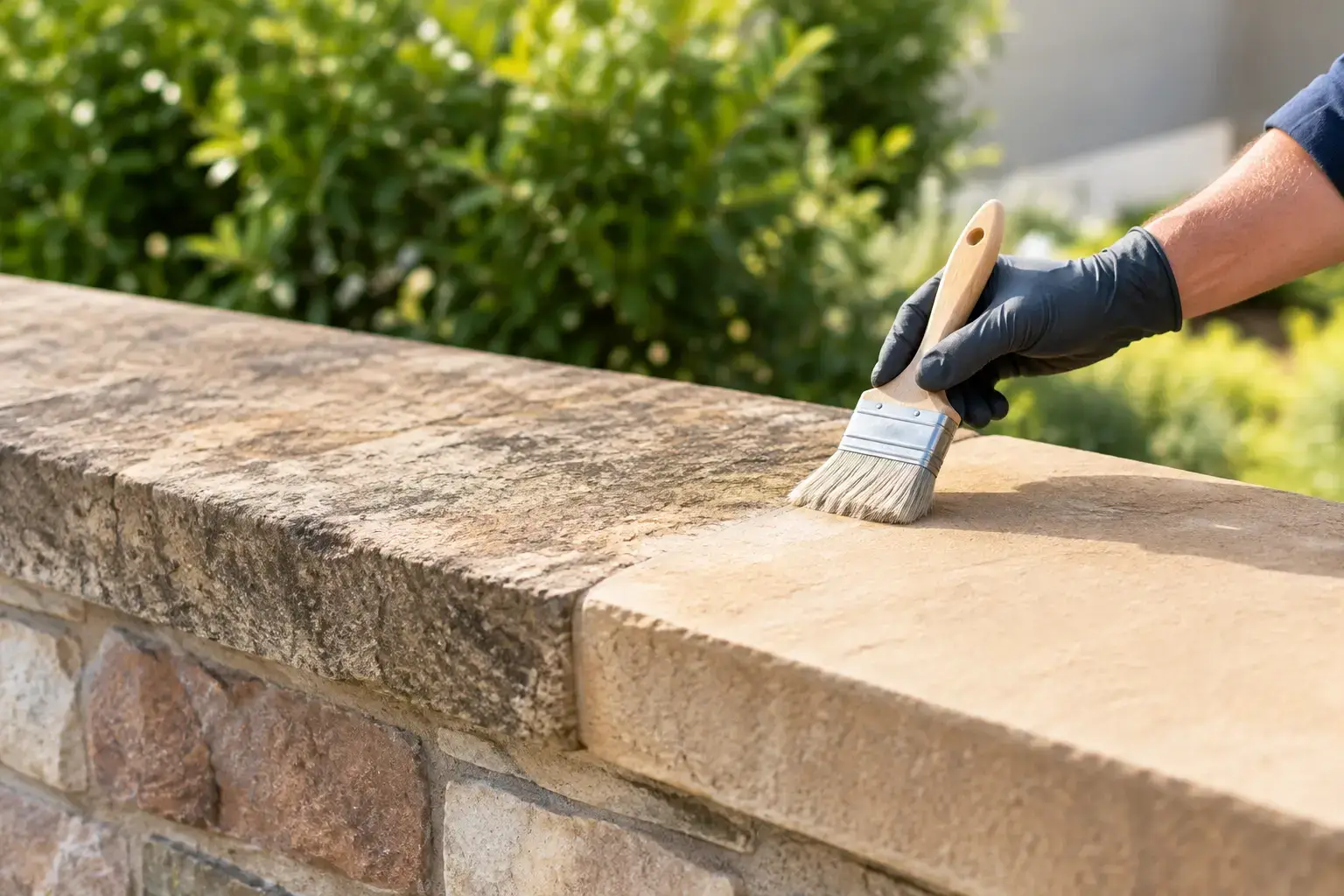
Pool coping has a demanding role. It frames the water, provides a practical edge for swimmers, and sets the standard for the entire outdoor area. Yet sandstone coping is continually exposed to chlorinated or salt water, sunscreen, wet feet, harsh sunlight and changing weather. Over time, a once-refined pool surround can become pale, rough, stained or uneven. Professional sandstone coping restoration brings back the stone’s natural character while addressing the surface deterioration that can compromise both presentation and performance.
For Sydney homes and commercial properties, restoring existing coping is often a more considered investment than replacing it. The right process preserves the original stone, reduces disruption around the pool and delivers a finish tailored to the sandstone’s condition.
What damages sandstone pool coping?
Sandstone is valued for its warm colour variation and tactile finish, but it is also naturally porous. Unlike dense engineered surfaces, it absorbs moisture and contaminants unless it has been properly protected. This does not make sandstone unsuitable for pool surrounds. It simply means its care needs to reflect the material.
Pool chemicals are a common contributor to deterioration. Water that repeatedly splashes over the coping can leave mineral deposits, salt residue and bleaching marks. Saltwater pools may feel gentler on skin, but salt can still crystallise within porous stone as moisture evaporates. That crystallisation places pressure on the stone’s surface and can contribute to flaking, fretting or granular breakdown over time.
The environment matters as well. Full sun can fade some areas while shaded sections retain moisture, encouraging algae, mould or dark organic staining. Leaf tannins, rust from outdoor furniture, food and drink spills, and sunscreen residue can all leave their mark. In high-use areas, abrasion from bare feet and pool equipment gradually wears away the surface, leaving the coping patchy and tired.
There is also a structural element to consider. Loose pieces, cracked mortar joints and failed sealant around the pool edge are not merely cosmetic defects. They allow water to travel where it should not, potentially worsening movement, staining and deterioration beneath the coping.
Sandstone coping restoration is not just pressure cleaning
A powerful pressure cleaner may make a surface look brighter for a short period, but it can be the wrong answer for fragile or weathered sandstone. Excessive pressure can strip soft grains from the face of the stone, open the pore structure and create an inconsistent texture. Harsh acidic cleaners can cause further damage, particularly where the sandstone contains mineral inclusions or has already been weakened by weather exposure.
Quality sandstone coping restoration begins with diagnosis. The stone needs to be assessed for its hardness, porosity, existing coatings, stains, loose material and joint condition. A treatment suitable for one type of sandstone may be unsuitable for another, which is why a generic cleaning approach rarely produces a premium or lasting result.
The aim is to remove contamination without unnecessarily removing stone. It is a balance of technical control and craftsmanship: enough cleaning to revive the surface, enough repair to stabilise damaged areas, and the right protection to slow down future staining and moisture ingress.
The restoration process for a refined pool surround
Every pool surround has its own history, so the exact treatment varies. However, a professional restoration commonly follows a clear sequence.
Careful cleaning and contaminant removal
The first stage is to lift accumulated dirt, biological growth, residue and surface staining using stone-appropriate solutions and controlled cleaning methods. This reveals the true condition of the sandstone beneath. In some cases, targeted treatments are required for stubborn marks such as rust, tannin stains or efflorescence.
Cleaning should never be treated as a race to the lightest possible colour. Sandstone has natural variation, and an over-cleaned surface can look sterile, uneven or prematurely worn. The best result respects the stone’s original tone while removing the grime that has dulled it.
Repairing chips, cracks and unstable edges
Coping edges are vulnerable to impact damage. Small chips can catch the eye, while larger breaks may feel sharp or create a more serious safety concern. Suitable colour-matched repair materials can be used to rebuild selected damaged areas and improve the visual continuity of the surround.
Where joints have deteriorated, they may need to be repaired or renewed so the coping remains properly supported. If individual pieces have shifted or become loose, the underlying cause should be considered before cosmetic work begins. A beautiful finish will not last if movement or water entry has been left unresolved.
Refining the surface without making it slippery
Pool coping must feel comfortable underfoot and provide appropriate traction when wet. For that reason, a high-gloss finish is generally not the objective outdoors. The preferred result is usually a clean, even, natural-looking surface that retains the sandstone’s texture and practical slip resistance.
Depending on the condition of the stone, light refinishing may be used to soften rough, weathered areas or reduce visible surface inconsistency. This must be performed selectively. Sandstone’s appeal lies partly in its authentic texture, and aggressive mechanical work can erase that character.
Sealing for practical, long-term protection
Once the stone is clean, dry and sound, an appropriate penetrating sealer can help reduce the absorption of water, oils, sunscreen and everyday contaminants. Unlike a heavy topical coating, a quality penetrating treatment is designed to protect within the pore structure while preserving a natural appearance.
The right sealer depends on the sandstone, its finish and its exposure. Some clients prefer an invisible finish, while others may wish to enrich the natural colour slightly. This is a decision best made after testing, particularly where the coping has varied tones or previous treatments.
Sealing is not a permanent shield against every spill or pool chemical. It is a protective measure that makes ongoing care more manageable and gives contaminants less opportunity to penetrate deeply. It will also need periodic review and reapplication based on use, weather exposure and the product selected.
When restoration is better than replacement
Replacement may be necessary where sandstone is extensively fractured, severely delaminated or no longer stable. However, many pool surrounds that appear beyond saving are affected mainly by surface contamination, worn sealers, isolated chips and neglected joints. In these cases, restoration can provide a substantial visual transformation without the cost, waste and upheaval of lifting an entire pool edge.
This is particularly valuable for established homes, strata properties and hospitality venues where matching replacement sandstone can be difficult. New material may differ in colour, texture and thickness from the original coping. Restoring the existing stone protects the continuity of the space and can retain the character that made the outdoor area distinctive in the first place.
The trade-off is that restoration does not turn naturally varied sandstone into a perfectly uniform manufactured product. Some mineral markings, age-related variation and deeper defects may remain visible. A specialist will set realistic expectations and focus on an elegant, cohesive result rather than an artificial one.
How to protect restored sandstone coping
After restoration, straightforward habits can help maintain the finish. Rinse splashed pool water from the coping regularly, especially in saltwater settings, and remove leaves before they become wet and stain the stone. Attend to spills promptly rather than allowing sunscreen, food, wine or pot-plant runoff to sit on the surface.
Avoid household acids, bleach-heavy products and harsh degreasers unless they have been confirmed as suitable for your particular stone. A pH-neutral stone cleaner is the safer choice for routine maintenance. It is also wise to keep metal furniture feet, fertiliser and rust-prone objects away from the coping where possible.
Check the joints and sealant periodically, particularly after heavy rain or periods of high pool use. If water is repeatedly getting beneath or behind the coping, early attention can prevent a minor maintenance issue becoming a more expensive repair.
Choose a specialist for sandstone coping restoration
Outdoor sandstone deserves the same material-specific care as a premium internal stone floor or benchtop. Its condition is shaped by porosity, weather, pool chemistry and the way the space is used. A generic cleaner may address the visible dirt, but specialist restoration considers the entire surface lifecycle: cleaning, repair, refinement and protection.
Grand Stone Restoration applies tailored stone-care methods to revive worn coping with a focus on durability, safety and a refined natural finish. Whether the issue is staining, roughness, broken edges or a pool surround that has simply lost its original appeal, the right restoration plan can preserve the stone and elevate the setting around it.
A restored pool edge should feel as considered as the water it frames: clean underfoot, visually balanced and ready to be enjoyed for many seasons ahead.