
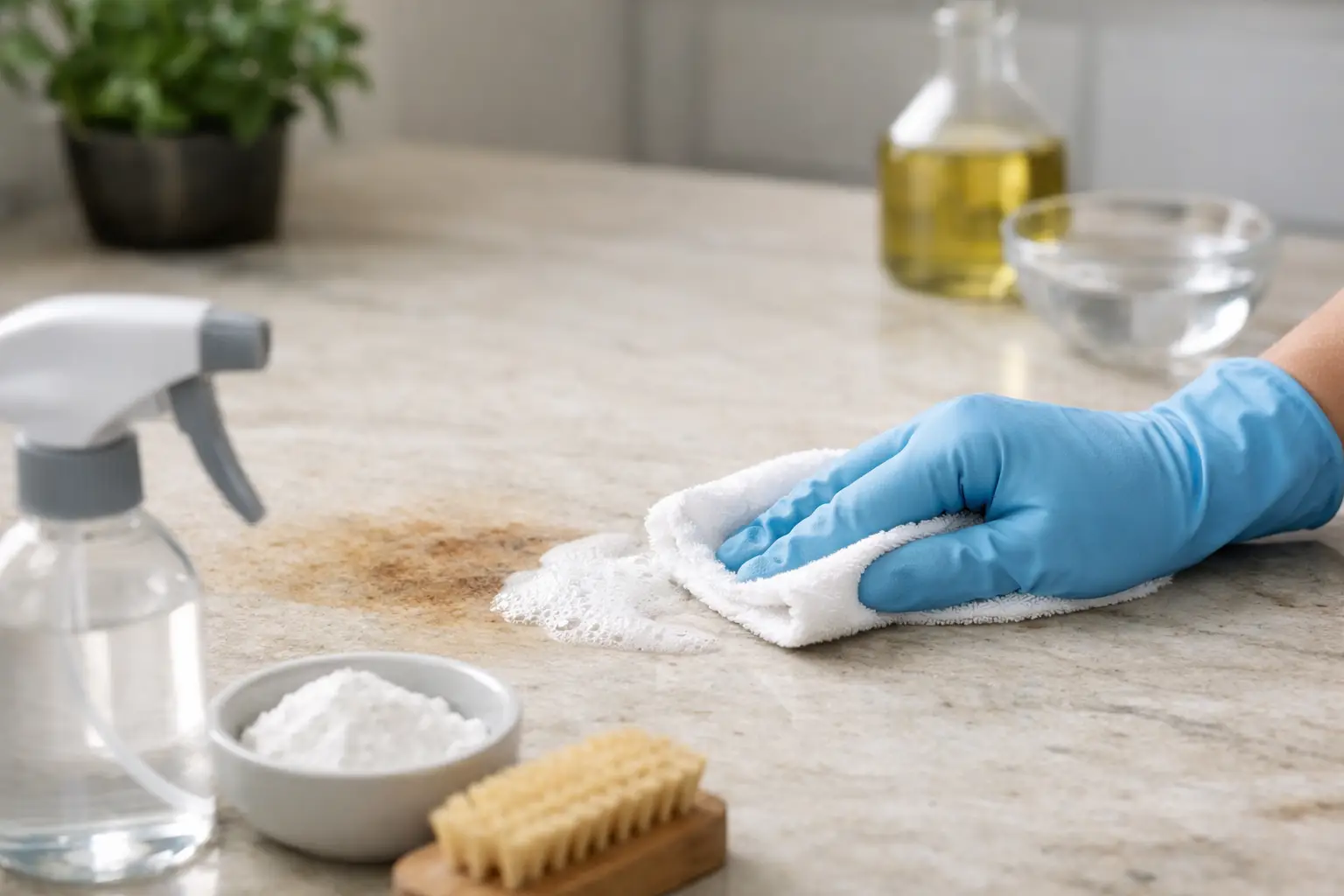
A dark ring around a bathroom tap, an oily mark beside the cooktop or a stubborn red-wine spill on a marble floor can make an otherwise immaculate surface look neglected. Knowing how to remove stone stains begins with one essential principle: natural stone is not a generic surface. The treatment that lifts a stain from dense granite can permanently dull acid-sensitive marble or limestone.
Premium stone deserves a measured approach. Before applying a cleaner, identify the stone, the source of the mark and whether you are looking at a true stain, surface residue or etching. That diagnosis protects the finish and gives the best chance of restoring the stone’s natural depth, colour and elegance.
First, confirm that it is a stain
A stain is a substance that has entered the pores of the stone. It may appear darker than the surrounding area, often with a soft or irregular edge. Cooking oil, cosmetics, rust, organic matter, ink and coloured drinks are common culprits in Sydney homes and commercial spaces.
Etching is different. On marble, limestone, travertine and some terrazzo, acidic liquids react with the calcium in the stone. Lemon juice, wine, vinegar, bathroom cleaners and some toiletries can leave pale, dull or rough patches. No amount of stain remover will correct an etched patch because the damage is physical rather than absorbed. It generally needs professional honing and polishing to bring back a consistent sheen.
Surface residue can also be misleading. Soap scum, hard-water minerals, grout haze and old sealer may sit on top of the stone, creating cloudy patches or dark-looking areas. A specialist cleaner may resolve residue, but aggressive scrubbing can mark a polished finish.
Identify your stone before choosing a cleaner
Marble, limestone and travertine are beautiful but reactive calcareous stones. They require pH-neutral products and should never be treated with vinegar, lemon, bleach, descaling products or general bathroom cleaners. Even a single acidic application can create visible etching.
Granite is generally denser and more acid-resistant, yet it can still stain if its sealer has worn away or if oil and pigments are left to dwell. Sandstone is more porous and requires especially careful cleaning, as excessive water or harsh chemicals may cause patchiness, salt movement or surface degradation.
Engineered stone, including products commonly known as Caesarstone and Silestone, has its own care requirements. Although it is less porous than many natural stones, abrasive pads, strong solvents and highly alkaline or acidic products can damage its resin-bound surface. Always follow the manufacturer’s guidance where relevant.
If you do not know the material, do not test an internet remedy on the most visible part of the benchtop or floor. A discreet area can help establish whether a product affects colour or shine, but valuable stone is best assessed by a restoration specialist before treatment.
How to remove stone stains safely at home
The right home treatment depends on the stain type. Start conservatively and allow time to work. Rushing the process with stronger chemicals is where avoidable damage occurs.
Act quickly and blot, never scrub
For fresh spills, blot with a clean white microfibre cloth or paper towel. Press down to absorb the liquid, working from the outside of the spill towards the centre. Scrubbing can push pigment or oil deeper into pores and may abrade polished stone.
Rinse the area with clean water and use a pH-neutral stone cleaner. Dry the surface thoroughly afterwards. Water left on porous stone may temporarily darken it, making it difficult to judge whether the original stain remains.
Treat organic, food and drink marks carefully
Tea, coffee, fruit juice, wine, leaves and food spills are organic stains. On appropriately sealed stone, prompt cleaning with a pH-neutral stone cleaner is often enough. If a shadow remains, a poultice may be required.
A poultice is an absorbent paste designed to draw contamination out of the stone as it dries. The correct formula varies by stone and stain. For example, an oxidising agent can assist with some organic staining, while the wrong mixture can bleach, etch or discolour sensitive surfaces. Marble, limestone and coloured stones call for particular restraint.
For a small, known organic stain on a non-acid-sensitive stone, use only a purpose-made stone poultice product according to its instructions. Apply it beyond the edge of the mark, allow it to dry naturally, then remove it gently. Deep staining may need repeated applications. If there is no improvement after one careful attempt, stop rather than escalating the chemistry.
Address oil-based stains with patience
Cooking oil, grease, hand cream and cosmetic products can leave a darkened patch because they penetrate beneath the surface. Wiping alone rarely solves the problem. A degreasing poultice formulated for stone can gradually draw oil out, although success depends on the stone’s porosity, how long the oil has been present and whether the surface has been sealed.
Avoid household degreasers, dishwashing liquids used repeatedly or solvent-heavy products unless they are specifically approved for your material. They may strip sealer, leave a residue or create an uneven appearance around the treated area.
Do not improvise on rust, ink or metal stains
Rust is among the most difficult marks to remove from stone. It can originate from a metal planter, a leaking fixture, steel furniture feet or reinforcing material beneath the surface. Many rust removers contain acids that can severely etch marble, limestone and travertine. Ink, dyes and paint can be equally unpredictable, particularly on pale stone where a chemical reaction may leave a larger mark than the original spill.
These are professional-treatment stains. A stone restoration technician can identify the contaminant, use stone-safe chemistry and, where needed, combine stain removal with honing or polishing for a uniform result.
Products and methods to avoid
A beautiful finish is easily compromised by well-intentioned cleaning. Keep the following away from natural stone unless the manufacturer and a stone specialist confirm suitability:
- Vinegar, lemon juice and acidic descalers
- Bleach and ammonia-based cleaners
- Abrasive powders, scourers and melamine sponges
- Bathroom, toilet and grout cleaners not designed for stone
- High-pressure cleaning on delicate stone, soft grout or indoor surfaces
Steam cleaning also requires caution. It may seem harmless, but heat and moisture can affect some sealers, grout lines and engineered-stone surfaces. The safest daily routine remains simple: pH-neutral cleaner, soft microfibre cloths, prompt spill removal and a dry finish.
When stain removal becomes stone restoration
Stain removal is not always a cleaning job. A surface can be stained and etched at the same time, or it may have worn sealer, scratches and uneven gloss that make the affected area stand out. Attempting to spot-clean one patch may leave a cleaner, duller or glossier section beside the original finish.
Professional restoration considers the surface as a whole. Depending on the material and condition, the process may involve deep cleaning, targeted poultice treatment, stain extraction, honing to remove etching and light scratches, polishing to restore clarity, then sealing for ongoing protection. On commercial foyers, hospitality venues and high-value residential interiors, this complete approach is often more cost-effective and visually refined than replacing stone that is still structurally sound.
A specialist will also determine whether the stain has come from an ongoing issue. Persistent moisture beneath a floor, a leaking tap, failing grout, corroding metal or planter drainage can keep reintroducing the problem. Restoring the stone without addressing the source only delays its return.
Seal stone after restoration, not before diagnosis
Sealer is valuable protection, but it does not make stone stain-proof. A penetrating sealer slows absorption, giving you more time to clean a spill before it becomes a problem. It will not prevent acid etching, scratching or damage from harsh products.
Do not apply sealer over an active stain in the hope of concealing it. It can make future removal more difficult and may lock in an uneven appearance. Once the stone is clean and completely dry, a correctly selected sealer can provide discreet protection without changing the intended look of the surface.
The reapplication schedule depends on stone type, finish, location and use. A busy kitchen benchtop, hotel foyer or outdoor sandstone area will have very different maintenance needs from a lightly used marble vanity. Water beading is not the only measure of protection, so an expert assessment is preferable to routine over-sealing.
Protect the finish you have restored
Use coasters beneath drinks, trivets under hot cookware and felt pads beneath decorative items, especially metal objects that may rust. In bathrooms, wipe cosmetics and toiletries promptly and keep acidic products away from marble surrounds. Outdoors, lift pots periodically, improve drainage and avoid allowing leaf litter to sit on sandstone or travertine.
For stone that has lost its brilliance, developed etching or retained a stain despite careful treatment, professional restoration offers a precise alternative to replacement. Grand Stone Restoration can assess the material, the cause and the finish required, then tailor treatment to restore a surface that looks considered, consistent and made to last.