
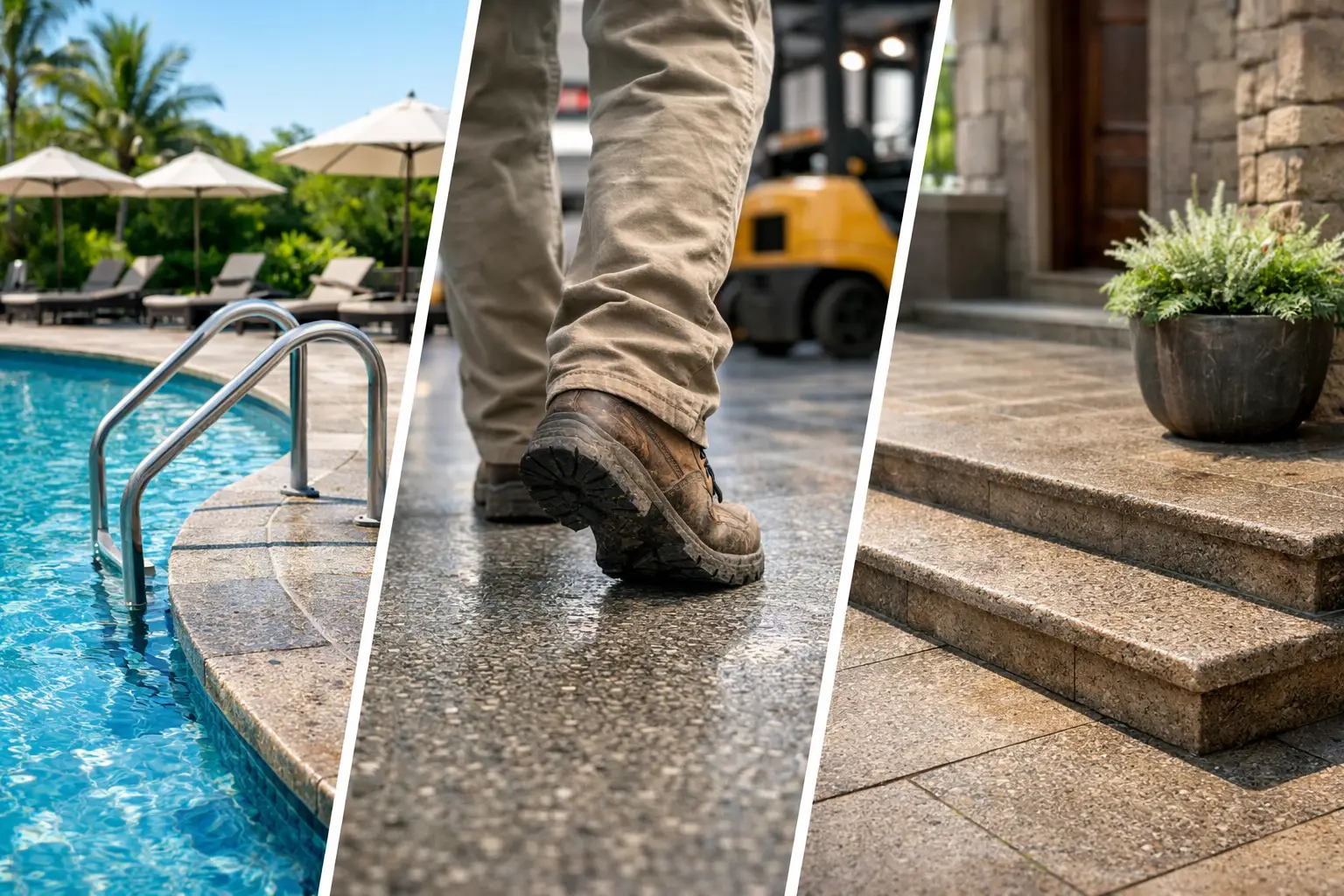
A polished stone floor can look exceptional under natural light, yet the same high sheen may become a concern when water, pool splash, rain or cleaning residue is introduced. A slip resistant stone coating is designed to improve grip underfoot while preserving the character and value of the surface. The right solution can make a meaningful difference in a marble entry, sandstone courtyard, tiled bathroom or commercial foyer. The wrong one can leave a premium surface looking cloudy, patchy or artificially textured.
For high-value stone, slip resistance should never be treated as a one-size-fits-all coating exercise. It is a surface-performance decision that requires an accurate reading of the stone, its existing finish, the location and how people use the area.
What a slip resistant stone coating actually does
A slip resistant treatment works by increasing traction between footwear or bare feet and the stone surface. Depending on the system selected, this may be achieved through a clear protective coating with a fine texture, a specialised treatment that modifies the surface at a microscopic level, or a restoration process that adjusts the degree of polish and surface profile.
The goal is not to make a floor feel rough or diminish its elegance. It is to create more reliable footing where moisture is likely, without turning a refined stone installation into something that appears heavily coated.
This distinction matters. Many stone surfaces are naturally dense and smooth, particularly honed or polished marble, granite, porcelain and engineered stone. A generic anti-slip product may adhere poorly, alter the colour, trap grime or wear unevenly in traffic paths. Natural stone has its own porosity, mineral composition and finish, which is why a treatment that performs well on one surface can be unsuitable for another.
Where slip resistant stone coating delivers the most value
The most suitable locations are generally areas where a beautiful surface regularly meets water, contaminants or high foot traffic. In residential properties, this often includes bathroom floors, shower surrounds, pool coping, outdoor entertaining areas, front entries and stairs. In commercial environments, it may include hotel lobbies, retail entrances, common areas, amenities, cafés and building foyers.
Outdoor stone deserves particular care in Sydney conditions. Sandstone, travertine and other porous paving can collect moisture, algae, leaf tannins and fine dirt. Even a surface with a naturally textured finish can become slippery when it is soiled or saturated. Restoring the stone first, then applying an appropriate protective or slip-resistant treatment, can improve both presentation and day-to-day safety.
Indoors, polished marble and terrazzo are often chosen for their light reflection and luxurious visual depth. These floors do not always require a visibly textured coating throughout the entire space. A tailored approach may focus on wet transition zones, entrance areas or particular paths of travel, allowing the wider floor to retain its intended finish.
Bathrooms, showers and pool surrounds
Bare feet, soap residue and standing water make these the most obvious candidates for improved slip resistance. However, these areas also demand materials that are easy to clean and resistant to staining. A coating that adds grip but creates a difficult-to-maintain surface is not a lasting solution.
In shower areas, grout condition is equally relevant. Cracked, recessed or deteriorated grout can retain water and harbour staining, while loose tiles create a separate safety issue that no surface coating can resolve. Professional preparation may involve cleaning, grout restoration, tile repairs and sealing before any slip-resistant system is considered.
Entrances, stairs and commercial floors
An entry floor carries more than foot traffic. It receives rainwater, dust, grit and moisture brought in from outside. On stairs, the consequences of reduced traction are higher again. The surface treatment should therefore be assessed alongside drainage, matting, lighting, cleaning routines and the condition of the stone itself.
For commercial property operators, appearance remains central. A dull, dirty-looking anti-slip finish does not support a premium lobby, showroom or hospitality venue. The best result balances traction, visual consistency and a maintenance plan that keeps the surface clean without stripping or damaging its protective layer.
The finish of the stone changes the answer
Not every stone floor needs a coating, and not every slippery floor should be treated with the same product. The existing finish is a major factor.
Polished marble, limestone and terrazzo can be exceptionally elegant, but their smoothness may be less forgiving when wet. Honed stone has a softer, lower-sheen appearance and may offer more natural traction, though it can still become slippery when contaminated. Flamed, sandblasted or naturally split outdoor stone usually has stronger texture, but sealing choices and accumulated grime can still affect underfoot performance.
Some surfaces respond best to a specialised anti-slip treatment that retains a near-natural appearance. Others may benefit from restoration to a honed finish rather than a high polish, particularly where practical performance must take priority over reflectivity. In a premium home or commercial setting, this is a design decision as much as a safety decision.
Engineered stone, porcelain and ceramic tile require their own assessment. Their dense composition means that penetration, adhesion and finish compatibility differ markedly from porous natural stone. Applying a product intended for sandstone to a glossy porcelain tile, for example, can lead to poor bonding or an unsatisfactory visual result.
Preparation determines how well the treatment performs
A coating can only perform as well as the surface beneath it. Before applying any slip-resistant treatment, the stone should be inspected for previous sealers, waxes, soap film, oil, etching, scratches, grout haze and embedded contamination. These issues can interfere with adhesion and create inconsistent results.
Preparation may include deep cleaning, stripping unsuitable topical products, diamond honing, stain treatment, grout cleaning or repair, and targeted stone restoration. This is particularly important where a floor has been repeatedly mopped with products that leave a residue. Residue is one of the most common reasons a floor feels slick, even when the stone itself is not inherently unsafe.
A small test area is also good practice for valuable or visually sensitive surfaces. It reveals how the treatment affects colour, sheen, texture and cleanability before work proceeds across the full floor. For marble, limestone and other acid-sensitive stones, this level of care protects the finish from costly surprises.
Appearance, cleaning and durability: the real trade-offs
More grip is not automatically better. A highly textured coating may provide stronger traction in wet conditions, but it can hold soil more readily and change the tactile quality of the stone. A subtler treatment may preserve the natural appearance more effectively, but it may not be suitable for every high-risk environment.
The right choice depends on who uses the space and how it is used. A private ensuite, a family pool area, a busy restaurant entrance and an aged-care common area have very different risk profiles. Footwear, drainage, cleaning frequency, exposure to weather and accessibility requirements all matter.
Maintenance should also be considered before treatment begins. Harsh acidic cleaners, bleach-heavy products and abrasive pads can damage stone or reduce the life of a protective system. Neutral-pH stone cleaners, prompt removal of spills and regular professional maintenance help preserve both traction and visual clarity. Outdoor areas may need more frequent cleaning during wet seasons, when organic growth and fine debris are more likely to build up.
Why professional assessment is worth it
Slip resistance is not something that can be accurately judged by appearance alone. A floor may look matte and still become hazardous when wet, while another floor may retain a soft sheen yet perform well with the right treatment and cleaning regime. Where duty of care is especially significant, formal slip-resistance testing may be appropriate to establish the existing condition and guide the specification.
An experienced stone restoration specialist can identify the material, assess its finish and porosity, remove surface contaminants, and recommend a treatment that respects the stone rather than masking it. This approach avoids the short-term fixes that often create peeling coatings, uneven shine or a permanently altered appearance.
Grand Stone Restoration approaches slip-resistant surface protection as part of the wider restoration lifecycle. Where needed, cleaning, honing, repairs, sealing and protective treatment are coordinated to deliver a surface that looks refined, performs reliably and is built for its setting.
A safer stone floor should not come at the expense of its elegance. With the correct preparation and a treatment selected for the material and environment, stone can retain its natural beauty while offering greater confidence with every step.