
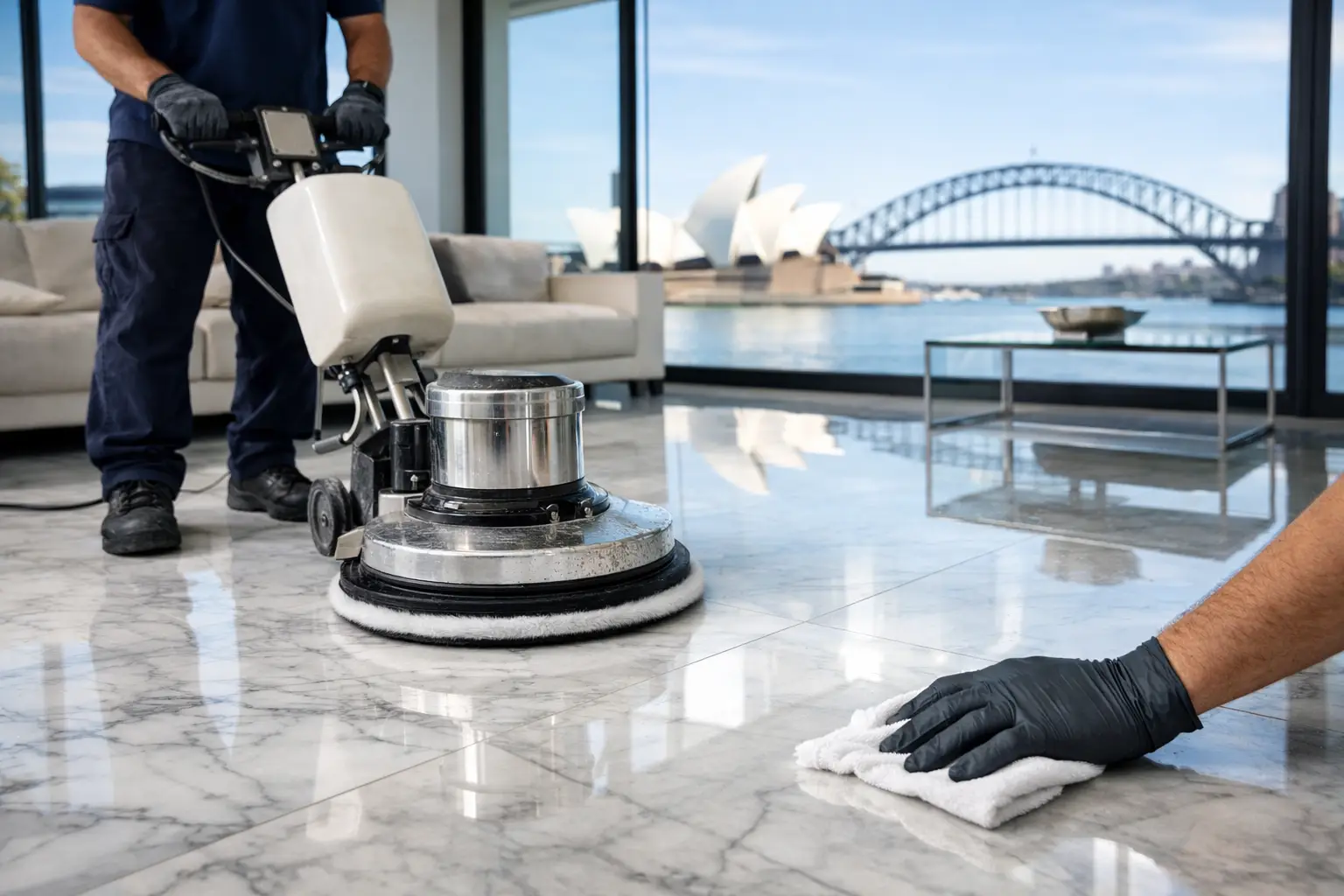
A marble floor can lose its presence slowly. The shine softens, foot traffic leaves dull paths, and everyday splashes begin to etch the surface long before the damage looks serious. By the time most owners start looking into Sydney marble polishing, the stone is no longer reflecting light evenly and the room feels flatter, older and harder to maintain.
Professional polishing is not about adding a temporary gloss. It is a corrective process that refines the stone itself, removes surface wear, and brings marble back to the level of finish it was meant to have. In premium homes, apartments and commercial spaces, that difference is visible immediately.
What Sydney marble polishing actually does
Marble is a calcium-based natural stone, which means it is beautiful but also vulnerable. Acidic spills, cleaning chemicals, grit underfoot and general use can all leave their mark. Polishing addresses the uppermost layer of the stone, gradually refining it through specialist abrasives until the finish becomes smoother, clearer and more reflective.
The right result depends on the condition of the surface. Some marble only needs light refinement to restore brilliance. Other surfaces need honing first to remove scratches, lippage, dull patches or etching before a polished finish can be achieved. That is why experienced assessment matters. The process should be tailored to the stone, its location and the level of wear, not handled as a one-size-fits-all clean.
For many property owners, the real value lies in restoration rather than replacement. Replacing marble floors, vanity tops, benchtops or wall panels is expensive, disruptive and often unnecessary. In many cases, professional restoration can recover the appearance of the stone at a fraction of the cost, while preserving the original material and finish.
When marble needs more than a clean
A clean surface is not the same as a restored one. Marble can look washed and still remain etched, uneven or scratched. If the stone has lost clarity, feels rough in places, or shows rings, traffic lanes or patchy shine, cleaning alone will not correct it.
This is especially common in kitchens, bathrooms, foyers and apartment living areas where marble is exposed to both wear and moisture. On benchtops, etching from food and household products can leave cloudy marks that no spray bottle will remove. On floors, embedded dirt and fine scratching can cause the finish to appear tired even after regular maintenance.
A proper restoration approach looks beyond surface grime. It considers whether the stone needs honing, polishing, repairs, stain treatment, sealing or added protection. That broader view is what separates specialist stone care from general cleaning services.
The difference between honing and polishing
These two terms are often used interchangeably, but they are not the same. Honing creates a smooth, matte to low-sheen finish and is often the corrective stage used to remove etching, scratches and uneven wear. Polishing comes after that, refining the marble further to increase reflectivity and deliver a more luxurious, high-gloss appearance.
Not every marble surface should be polished to the highest possible shine. In some interiors, a honed finish is the better fit, particularly where a softer, more natural look is preferred or where slip considerations matter. In other settings, especially formal living areas, hotel-style bathrooms and commercial entrances, a polished finish gives the strongest visual impact.
The right choice depends on the stone itself, the design intent and how the area is used day to day. A specialist should guide that decision rather than defaulting to the glossiest option.
Where polished marble makes the biggest impact
Marble has a way of setting the tone of a room. When the finish is crisp and luminous, the whole space feels more refined. When it is dull or marked, even an otherwise well-designed interior can feel neglected.
Floors are the most obvious example because they catch light across a wide surface area. Restored marble flooring can completely lift an entry, hallway, living area or lobby. Bathrooms are another high-impact area, especially on vanities, wall cladding and shower surrounds where water marks and product residue can quickly reduce the stone’s elegance.
In commercial settings, polished marble plays a practical role as well as a visual one. Reception areas, foyers, retail spaces and hospitality venues rely on presentation. Stone surfaces that are scratched or patchy can undermine the impression a business is trying to make. Restoration helps maintain that premium standard without the cost and downtime of replacement works.
Why expertise matters with marble
Marble is not forgiving of guesswork. Using the wrong pad, chemical or polishing method can create more damage, including swirl marks, uneven shine, edge burn or unnecessary material removal. Different marble varieties also respond differently depending on density, colour, veining and prior treatments.
That is why specialist knowledge is essential. The process needs to account for the stone type, the level of deterioration, the surrounding finishes and the desired result. Repairing chips, treating stains, removing etching and restoring gloss are related tasks, but each requires its own technique.
This is where an experienced restoration company brings real value. A provider with deep stone-specific expertise can assess whether the issue is superficial or structural, determine how much refinement is needed, and recommend protective measures that extend the result. Grand Stone Restoration approaches marble this way – as a premium surface requiring technical precision, not as another hard floor to buff.
Protection after Sydney marble polishing
Restoring the finish is only part of the job. Protecting it is what preserves the investment.
Sealing is often recommended, but it helps to be clear about what a sealer can and cannot do. A penetrating sealer can reduce the stone’s absorbency and improve resistance to staining, but it does not make marble immune to etching. Acidic products can still react with the surface. That is an important distinction, especially in kitchens and bathrooms where many owners assume sealing alone will prevent all damage.
For higher-risk areas, additional protection may be worth considering. Protective coatings or anti-etch film can be appropriate for select applications where preserving the appearance of the stone is a priority and exposure is ongoing. These options are not necessary everywhere, but in the right setting they can offer a practical layer of defence.
Maintenance also matters. The best polished finish will not stay at its peak if it is cleaned with acidic or abrasive products. Marble responds best to pH-neutral stone-safe care and periodic professional maintenance when signs of wear begin to return.
Is restoration always the right option?
Usually, yes – but not automatically. The answer depends on the extent of damage, the age of the installation and the expectations for the final finish.
Most dullness, light to moderate scratching, etching and surface wear can be corrected successfully. Many chips and minor cracks can also be repaired well enough to restore visual continuity. Deep staining, severe structural damage or poorly laid stone may require more extensive work and, in some cases, selective replacement. A reputable specialist should say so plainly.
That honesty matters because restoration is not about overselling. It is about achieving the best possible outcome for the existing surface. In many Sydney properties, the result is highly cost-effective: the marble regains its elegance, the room feels renewed, and the disruption stays minimal compared with demolition and replacement.
What to expect from a professional result
A properly restored marble surface should look refined, consistent and natural to the space. The shine should be even rather than patchy. Reflections should appear clearer. Etch marks and light scratches should be removed or significantly reduced, depending on their depth. The stone should feel smoother underfoot or to the touch, and the overall room should carry more light.
Just as importantly, the finish should suit the environment. A luxury apartment bathroom might call for crisp reflectivity. A busy commercial floor may need a balance between visual brilliance and practical durability. Good restoration does not chase a generic finish. It creates the right finish for that surface.
If your marble has started to look tired, replacement is rarely the first answer. Professional polishing and restoration can bring back depth, clarity and the quiet sense of quality that makes stone such a valuable feature in the first place. The best time to act is before wear becomes harder and more expensive to correct.