
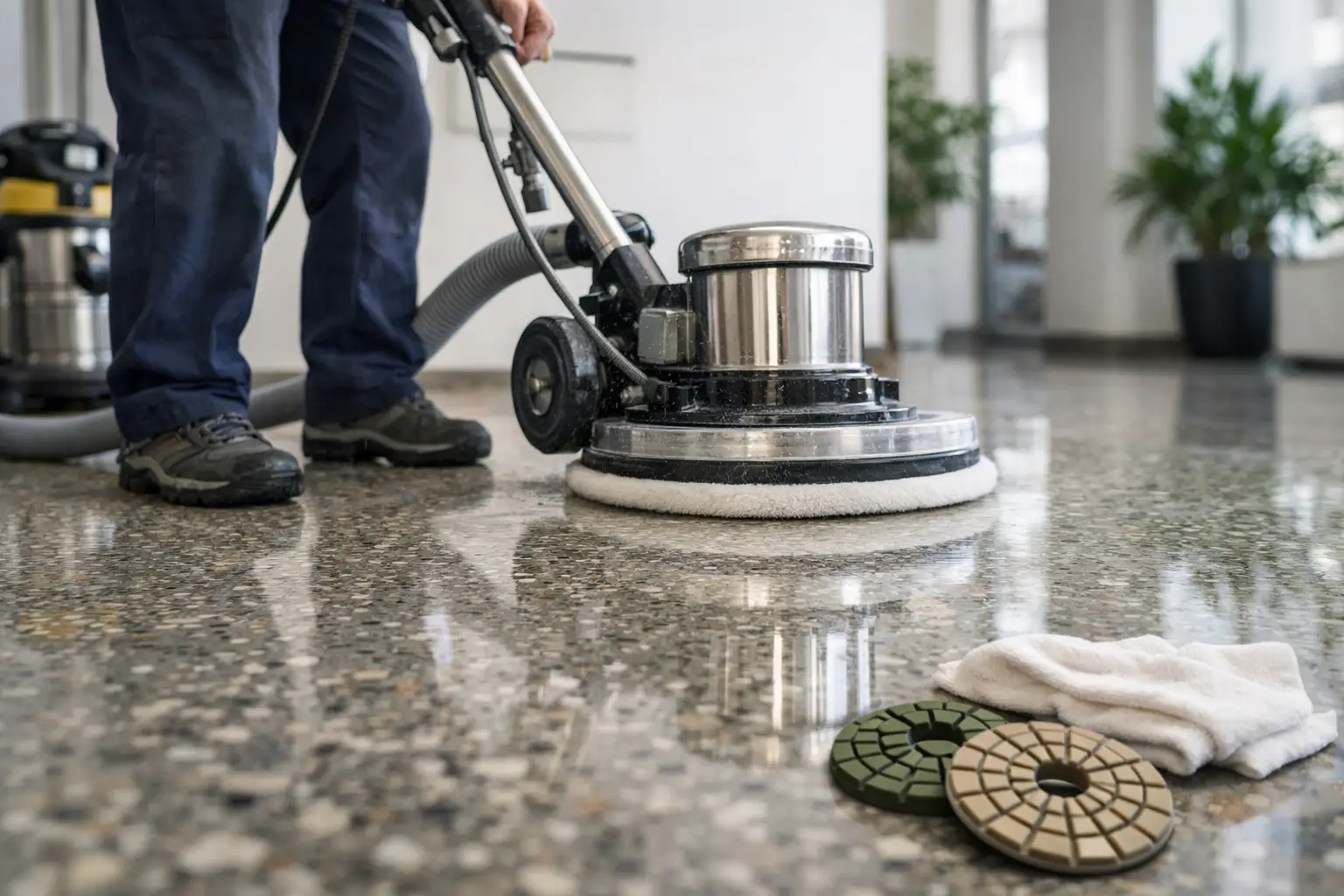
A terrazzo floor can make a room feel established the moment you walk in. When it is well maintained, it has depth, light reflection and a clean, architectural finish that few other surfaces can match. When it is worn, scratched or stained, that same floor can make the entire space look tired. Terrazzo floor restoration is what brings that surface back to life without the cost, mess and downtime of ripping it out and starting again.
Terrazzo is often chosen because it is durable, elegant and suited to both residential and commercial interiors. That durability, however, leads many owners to assume it is almost maintenance-free. It is not. Over time, foot traffic, grit, spills, incorrect cleaning products and old sealers gradually flatten the finish. In foyers, apartment buildings, kitchens, hallways and retail spaces, the wear is usually uneven, which is why the floor can look patchy even after a thorough clean.
What terrazzo floor restoration actually involves
Proper terrazzo floor restoration is far more than washing the surface and applying a shine product. A professional process is designed to correct the floor itself, not just improve its appearance for a few weeks. Depending on the condition of the terrazzo, restoration may involve deep cleaning, stain treatment, diamond grinding, honing, crack or chip repair, polishing and sealing.
The first step is understanding what kind of terrazzo is in place and what has gone wrong. Cement-based terrazzo and epoxy terrazzo do not always respond the same way. Older floors may have lippage, surface erosion or ingrained staining. Newer floors may be structurally sound but dulled by abrasion and poor maintenance. The treatment has to match the material and the level of damage.
Grinding is used where the surface is uneven, heavily scratched or coated with layers of contamination that cannot be cleaned away. Honing refines the finish and removes lighter wear. Polishing develops the final level of clarity and shine, from a soft satin look to a high-gloss result. Sealing then helps protect the restored surface from moisture penetration, staining and day-to-day soiling.
Signs your terrazzo floor needs restoration
Some terrazzo floors clearly need professional attention. Others decline gradually, and owners become used to the change. If the floor no longer reflects light evenly, has darkened traffic lanes, visible scratching or a rough feel underfoot, restoration is usually warranted.
Staining is another common trigger. Coffee, wine, oil, rust and cleaning chemical residue can all affect terrazzo, particularly if the sealer has broken down. In commercial settings, ground-in soil and moisture near entries can create a permanently dirty appearance that routine mopping will not fix. In residential properties, bathrooms and kitchens often show etching, dull spots and discolouration around splash zones.
There is also the question of safety and presentation. A heavily worn terrazzo floor can lose its refined appearance and, in some cases, become harder to clean properly. In reception areas, apartment common areas and hospitality venues, that affects more than aesthetics. It shapes the way the whole property is perceived.
Why replacement is often unnecessary
Many owners assume a badly worn floor is nearing the end of its life. In reality, terrazzo is one of the best candidates for restoration because the material itself is built to last. In many cases, the problem sits within the top layer – scratches, dullness, staining, minor surface damage or a failed coating – rather than within the entire floor system.
That makes restoration a far more economical option than replacement. You avoid demolition, disposal, material lead times and the disruption that comes with removing a hard flooring surface from an occupied property. For commercial sites, that reduction in downtime can be just as valuable as the direct cost saving. For homeowners, it means preserving the original character of the floor while still achieving a premium finish.
That said, not every floor should be treated the same way. If terrazzo has significant structural cracking, substrate movement or widespread repair failure from earlier work, restoration may need to be staged or combined with more extensive remedial work. This is where specialist assessment matters. The right outcome depends on what the floor can realistically deliver.
The value of material-specific expertise
Terrazzo sits in a category of its own. It is not marble, not porcelain and not a generic hard floor. It contains stone aggregates within a binder matrix, which means the restoration process needs to respect both the aggregate and the surrounding material. Aggressive methods can leave swirl marks, uneven gloss or exposed imperfections. Incorrect chemicals can damage the sealer or worsen staining.
A specialist approach focuses on precision. The objective is to create a clean, level, refined surface with a finish that suits the space. In a luxury residence, that may mean a richer polish that complements natural light and surrounding stone finishes. In a commercial lobby, it may mean balancing shine with practical slip resistance and maintenance demands.
This is also why quick cosmetic treatments rarely last. Topical shine products can mask wear for a short period, but they do not address scratches, porosity or embedded contamination. Once the temporary gloss fades, the floor often looks worse than before. True restoration improves the terrazzo itself, not just the coating on top.
What affects the final result
The condition of the floor before work begins has a major impact on the result. A lightly worn terrazzo floor can usually be restored efficiently and achieve an excellent finish. A neglected floor with deep staining, pitting or multiple historical repairs may still improve dramatically, but expectations should be realistic. Some flaws can be reduced rather than erased completely.
The desired finish also matters. A high-gloss terrazzo floor looks striking, but it will show wear differently from a honed finish. In busy properties, some owners prefer a lower sheen because it delivers a sophisticated appearance with easier day-to-day management. The best choice depends on traffic levels, natural light, cleaning regimes and the design intent of the space.
Maintenance after restoration is just as important as the restoration itself. Even the most beautifully polished terrazzo will deteriorate prematurely if it is cleaned with acidic products, left unsealed for too long or exposed to constant abrasive soil. Protective sealing and correct maintenance are what preserve the investment.
Terrazzo floor restoration in homes and commercial spaces
Residential and commercial terrazzo often require a different mindset. In homes, the focus is usually on appearance, detail and preserving the elegance of the interior. Owners want clean aggregate definition, a smooth finish underfoot and a floor that feels renewed rather than merely cleaned.
In commercial properties, the brief is broader. The floor must present well, withstand heavy traffic and remain practical to maintain. Entrances, lift lobbies, office foyers and retail floors often need restoration that improves visual impact while supporting ongoing use. Timing, access and minimal disruption can be just as important as the polishing process itself.
Across both settings, the common thread is value. Restoring terrazzo protects an asset that would be expensive to replace and difficult to replicate well. It gives the space back its sense of quality.
Choosing the right specialist
Terrazzo rewards experience. The difference between a basic floor service and a specialist restoration is visible in the uniformity of the finish, the clarity of the aggregate, the way repairs are handled and how well the result holds up over time. A tailored process is essential because no two terrazzo floors wear in exactly the same way.
For property owners who want a premium outcome, the goal should not be the fastest fix. It should be careful assessment, material-specific treatment and a finish that enhances the room while standing up to daily use. That is where a specialist restoration company earns its place.
A well-restored terrazzo floor does more than look polished. It changes how the entire space is read – cleaner, brighter, more refined and more valuable. If your floor still has good bones, restoration is often the smartest way to bring back the brilliance that made terrazzo worth choosing in the first place.