
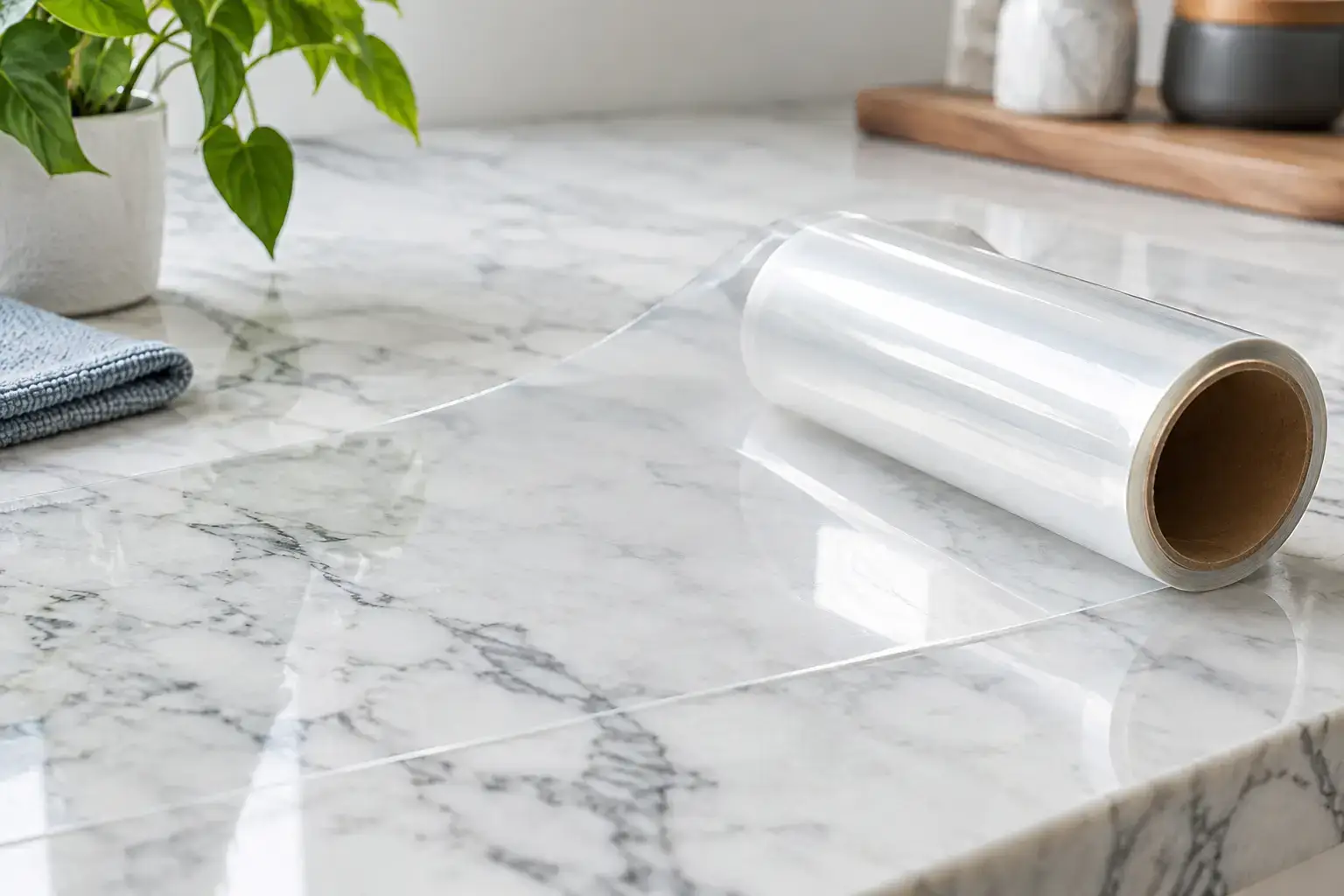
A marble benchtop can look immaculate at breakfast and show a dull, pale mark by lunch. Lemon juice, wine, vinegar and many everyday cleaners can react with calcium-based stone in seconds, leaving etching that cannot simply be wiped away. This anti etch film guide explains how protective film helps preserve refined marble and other vulnerable surfaces without sacrificing their natural elegance.
For property owners who have invested in marble bathrooms, kitchen islands, bar tops or reception counters, prevention is usually far less disruptive than repeated restoration. The right film creates a practical barrier between a delicate stone surface and the spills, splashes and daily wear that cause visible damage.
What Is Anti Etch Film?
Anti etch film is a clear, protective surface film professionally applied over polished natural stone. It is designed primarily for acid-sensitive materials, particularly marble, limestone, travertine and some terrazzo surfaces. Rather than changing the stone itself, it forms a protective layer that takes the exposure from acidic liquids, light abrasion and everyday use.
Etching is often mistaken for staining, but the two problems are different. A stain occurs when a substance penetrates or discolours the stone. Etching is a chemical reaction that damages the polished surface, typically leaving a dull, cloudy or rough patch. On dark marble, an etch mark can appear noticeably lighter. On pale stone, it may show as a dull ring or an uneven loss of sheen.
A penetrating sealer has an important role in reducing stain absorption, but it does not stop etching. This distinction matters. If a polished marble benchtop is regularly exposed to citrus, alcohol, vinegar, sauces or cleaning products, sealing alone is not a complete protection strategy. Anti etch film is specified when the aim is to shield the finish from the reaction itself.
Where Anti Etch Film Delivers the Greatest Value
The film is particularly valuable on horizontal surfaces where spills are common and quickly noticed. Kitchen benchtops, vanity tops, dining tables, bar counters and hospitality surfaces are frequent applications. It can also be a considered solution for marble coffee tables, lift lobbies and reception counters where a flawless finish supports the overall presentation of the space.
In a residential kitchen, anti etch film gives owners greater confidence using a marble island without treating it as a display piece. In commercial settings, it can reduce the visible wear that develops when staff and guests use stone surfaces throughout the day. For a Sydney apartment with an original marble vanity or a high-end office foyer, this can protect both visual appeal and asset value.
That said, film is not necessary on every stone surface. Dense granites and many engineered stones have different performance characteristics, while some textured, honed or heavily pitted surfaces may not provide the ideal foundation for a refined film finish. The suitability depends on the stone type, surface condition, location and how the area is used.
The Anti Etch Film Guide: What It Can and Cannot Do
A quality anti etch film can offer impressive protection, but it should be selected with clear expectations. It helps guard against common acidic spills, water spotting, minor scratching and everyday surface wear. It can also make routine cleaning simpler because spills remain on the protective layer rather than reaching the polished stone immediately.
It is not indestructible. A sharp knife, heavy object, intense heat, abrasive scourer or harsh chemical can still damage the film. Its purpose is to be a sacrificial, replaceable protective layer, not an excuse for careless treatment. In many cases, replacing a damaged section of film is considerably more economical and less invasive than honing and polishing etched marble again.
Appearance is another consideration. Premium film is engineered to be highly clear, but its final result relies on correct selection and precise installation. On a high-gloss black or richly veined marble, any trapped contamination, poor edge finishing or uneven application will be more apparent. The surface must be prepared to an exceptional standard before installation, and the installer must understand how the material will look under natural light, downlights and direct task lighting.
Film also changes the maintenance conversation. The stone beneath remains valuable natural stone, but day-to-day care is directed towards preserving the film. Gentle, pH-neutral cleaning products and soft cloths remain the sensible choice. Aggressive cleaners, abrasive pads and steam should be avoided unless the film manufacturer specifically confirms compatibility.
Surface Preparation Determines the Result
Protective film will not conceal deep scratches, etch marks, chips, staining or an uneven polish. In fact, applying it over these defects can make them more difficult to address later and may lock in a compromised appearance. Restoration must come first.
A specialist will assess the stone and determine whether it requires deep cleaning, stain treatment, honing, crack repair, chip repair or polishing before the film is considered. The objective is to create a clean, stable and visually consistent surface so the finished protection looks refined rather than merely functional.
For polished marble, this preparation is especially important. Honing removes the damaged layer and levels etching or scratching, while polishing rebuilds the stone’s clarity and brilliance. Once that finish has been achieved, anti etch film can help keep it looking that way through normal use.
Edges, joins, sink cut-outs and tap penetrations require particular care. These details are where poor installation is most likely to reveal itself. A professional application considers edge wrapping, water exposure, adhesion and the need for a neat finish that does not interrupt the natural lines of the stone.
Choosing Between Film, Sealing and Restoration
These treatments are not interchangeable. A sealer is designed to reduce the absorption of oils and coloured liquids. It is valuable for many porous natural stones, grout lines and outdoor applications. Restoration corrects existing surface damage and restores the intended finish. Anti etch film protects a vulnerable polished surface from future etching and light day-to-day damage.
Often, the strongest approach combines treatments in the right order. A marble benchtop may first be restored to remove etching and scratches, then protected with film in high-risk working areas. Nearby splashbacks or vertical wall panels may not need film because they receive far less contact, although they may still benefit from suitable cleaning and sealing where appropriate.
This tailored approach avoids unnecessary treatment while protecting the areas that carry the greatest risk. It also respects the character of natural stone. Some owners prefer the untouched feel of exposed marble and accept periodic restoration as part of ownership. Others want the confidence of a highly protected working surface. Neither choice is wrong, but the practical demands of the space should lead the decision.
Professional Installation Is Worth the Detail
Applying anti etch film is a finishing trade, not a simple DIY task. Large stone surfaces often involve joins, curves, cut-outs, heavy veining and difficult access. Any dust, moisture, residue or air pocket can compromise clarity and adhesion. Professional installation controls those variables and delivers the discreet finish expected in a premium interior.
At Grand Stone Restoration, the process begins with the stone rather than the film. Identifying the material, assessing its existing condition and restoring the finish where required allows protection to complement the surface instead of masking unresolved damage. This material-specific care is essential for marble, limestone, terrazzo and other premium surfaces with different sensitivities.
Before committing, ask whether the product suits your exact stone, how it will appear under your lighting, what cleaning products are safe, and how repairs or replacement sections are handled. These questions reveal whether the recommendation has been made for your surface or simply applied as a one-size-fits-all solution.
A beautifully restored stone surface deserves more than cautious use. With the right preparation and professionally installed protection, it can remain a practical part of daily life while retaining the polished elegance that made it worth choosing in the first place.