
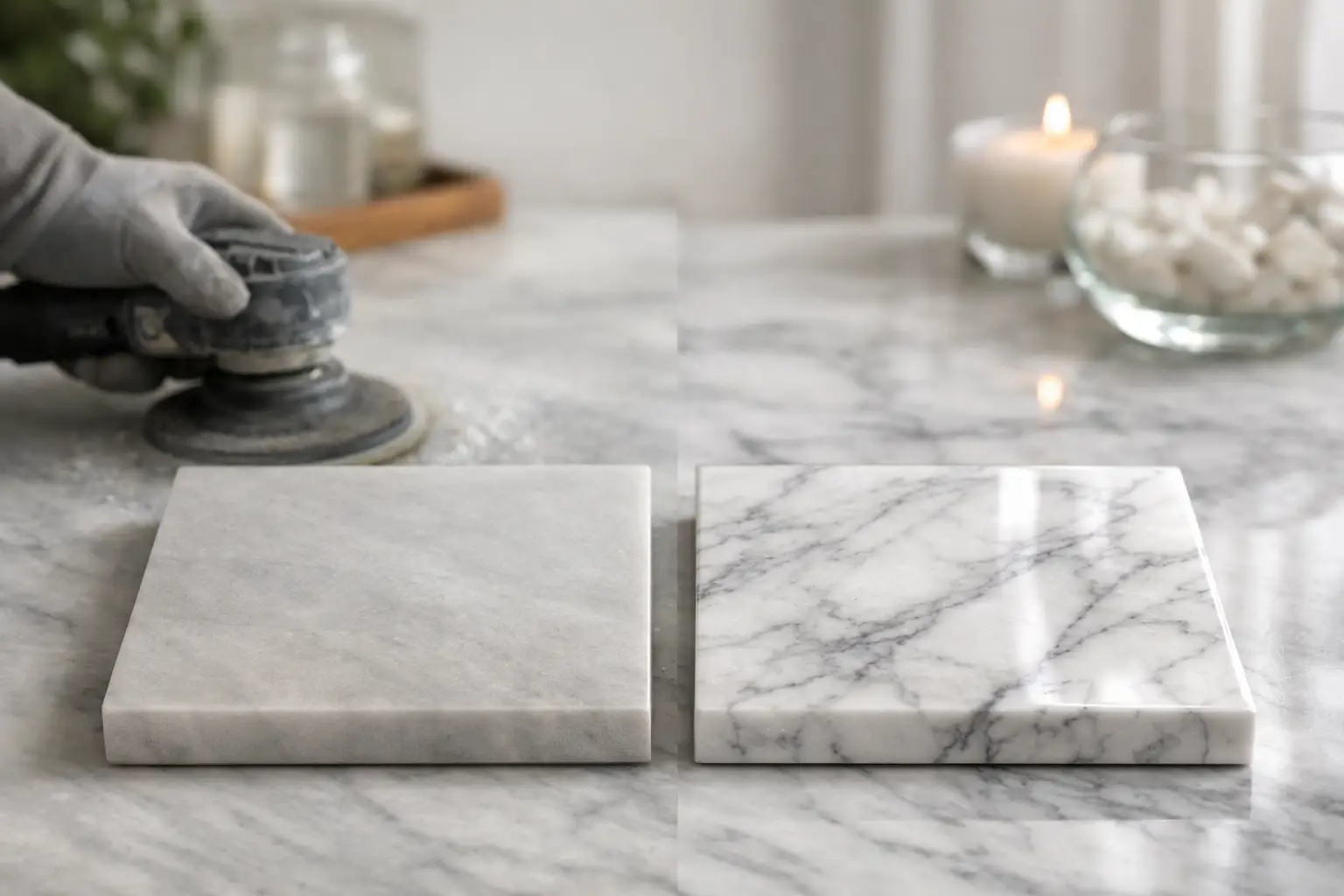
A marble surface can look clean yet still appear tired. Light catches fine scratches, acidic spills leave pale etch marks, and years of foot traffic can turn a once-refined floor dull. The choice between honing or polishing marble determines more than its level of shine – it affects how the stone looks, feels and performs in everyday use.
For Sydney homes, apartments and commercial interiors, there is no single finish that suits every marble surface. A mirror-polished hotel lobby floor has different requirements from a busy family kitchen or a softly finished marble bathroom. The right result begins with understanding what each restoration method achieves.
What honing and polishing marble actually do
Marble is a calcium-based natural stone. While valued for its veining and depth, it is also vulnerable to abrasion and acid etching. Lemon juice, wine, vinegar, some bathroom products and even certain stone cleaners can react with the surface, leaving marks that cannot simply be wiped away.
Honing and polishing are controlled mechanical restoration processes. Rather than masking damage with topical coatings, a stone specialist works progressively across the surface to refine the marble itself. The final finish depends on the abrasives used, the condition of the stone and the appearance required for the space.
Honing creates a refined, low-sheen finish
Honing removes a very fine layer from the marble to level minor scratches, etching, traffic wear and uneven sheen. It produces a smooth, satin or matte appearance rather than a high-gloss reflection.
This finish is often selected for bathroom floors, entry areas, kitchens and other practical spaces where a subtle look is preferred. Honed marble allows the natural character of the stone to remain visible without making every small scuff or water spot immediately apparent. It has a calm, contemporary elegance and can be a more forgiving choice for active households.
A honed surface is not rough or unfinished. When completed correctly, it should feel smooth, even and carefully refined. The difference is visual: light is diffused across the stone instead of reflected sharply from it.
Polishing restores brilliance and depth
Polishing takes restoration further to create a reflective, high-shine surface. It brings out the colour, movement and depth of the marble, often restoring the luxurious finish people expect from classic marble foyers, feature walls, vanities and formal interiors.
A polished finish is particularly effective where presentation matters. In hotel reception areas, office foyers, premium retail settings and high-value residences, polished marble can transform a dull surface into a defining architectural feature.
The trade-off is visibility. A highly polished floor can reveal new scratches, etch marks and residue more readily than a honed one. It may also require more considered day-to-day care, especially in kitchens or spaces exposed to acidic liquids.
How to choose between honing or polishing marble
The best finish is guided by the surface’s use, its existing condition and the atmosphere you want to create. Gloss is not automatically better, and a low-sheen finish is not a compromise when it suits the design and lifestyle of the property.
Consider the room before the shine
In a formal dining room, luxury apartment foyer or reception space, polishing may be the natural choice. It amplifies light and gives marble a statement finish that feels elegant and meticulously maintained.
In bathrooms, kitchens and busy hallways, honing is often more practical. It reduces the visual impact of minor wear and complements the relaxed sophistication many modern interiors favour. For marble flooring, slip resistance should also be assessed in the context of the area, particularly near wet zones. The finish, marble type and maintenance regime all influence the final outcome.
Look closely at the damage
Light etching, dull patches and fine surface scratches can usually be addressed through honing or polishing. Deeper scratches, chips, cracks, lippage between tiles and stubborn staining may require additional repair work before the surface can be refinished evenly.
This is why a general cleaner cannot provide the same result as a stone restoration specialist. Marble restoration requires an accurate diagnosis of the damage and a process matched to the stone. Applying the wrong product, using aggressive pads or attempting a DIY polish can create swirl marks, patchy gloss or permanent damage.
Respect the original design intent
Some marble was originally installed with a honed finish, while other surfaces were designed to be polished. Changing the finish is possible in many cases, but it should be a deliberate design decision rather than an attempt to chase shine.
A soft honed Carrara floor may suit a contemporary bathroom beautifully. A polished Calacatta vanity can give a more dramatic, high-end result. Neither is inherently superior. The right choice supports the character of the stone and the way the room is used.
The professional marble restoration process
High-quality marble restoration is methodical. The goal is not simply to make the surface look better on the day, but to create a consistent finish that holds its appearance with proper care.
The process usually begins with inspection. A specialist assesses the marble type, finish, damage, previous treatments and the presence of coatings, waxes or residues. This step determines whether the surface needs deep cleaning, grinding, honing, crack repair, polishing or a combination of treatments.
The marble is then prepared and restored with professional equipment and graded diamond abrasives. For honed marble, the process stops at the chosen satin level. For polished marble, progressively finer stages refine the surface until it develops clarity and reflectivity. Edges, corners and transitions require particular care, as these areas can easily look inconsistent when treated without specialist skill.
Once the desired finish is achieved, sealing may be recommended. A quality penetrating sealer helps reduce the absorption of liquids and makes routine cleaning easier. It does not make marble acid-proof or scratch-proof, and it will not prevent etching. Its role is protection against staining, not a substitute for correct use and maintenance.
At Grand Stone Restoration, treatment is tailored to the particular stone and setting, whether the objective is a quietly honed floor or a polished surface with renewed brilliance.
Care after honing or polishing marble
A restored marble surface deserves a maintenance routine that protects the investment. The essentials are straightforward, but consistency matters. Use a pH-neutral stone cleaner, wipe spills promptly and avoid acidic or abrasive household products. Vinegar, lemon-based cleaners, bleach and generic bathroom sprays can etch or dull marble, even when the surface has been sealed.
For floors, use clean microfibre mops and keep grit at entry points under control with quality mats. Fine sand and dirt act like abrasives underfoot, gradually reducing polish and creating fine scratches. Furniture pads also help protect marble flooring and benchtops from unnecessary damage.
Polished marble may benefit from more regular professional maintenance in high-traffic commercial settings, while a honed surface may need periodic refinement as wear becomes visible. The interval depends on usage, cleaning practices and exposure to moisture or contaminants. A residential vanity might hold its finish for years, while a busy lobby may require a planned maintenance program.
When restoration is the smarter alternative to replacement
Replacing marble is expensive, disruptive and rarely necessary for surface-level damage. Removal can affect surrounding cabinetry, waterproofing, tiles and fixtures, while finding an exact match for existing stone may be difficult or impossible.
Professional honing or polishing can revive the marble already in place, preserving its original craftsmanship and avoiding the cost of demolition and replacement. Where the stone is structurally sound, restoration is often the more economical path to a premium result.
If your marble has lost its lustre, do not assume it has reached the end of its life. A careful assessment can reveal whether a subtle honed finish or a renewed polish will bring the surface back into balance – and let its natural elegance do the work again.