
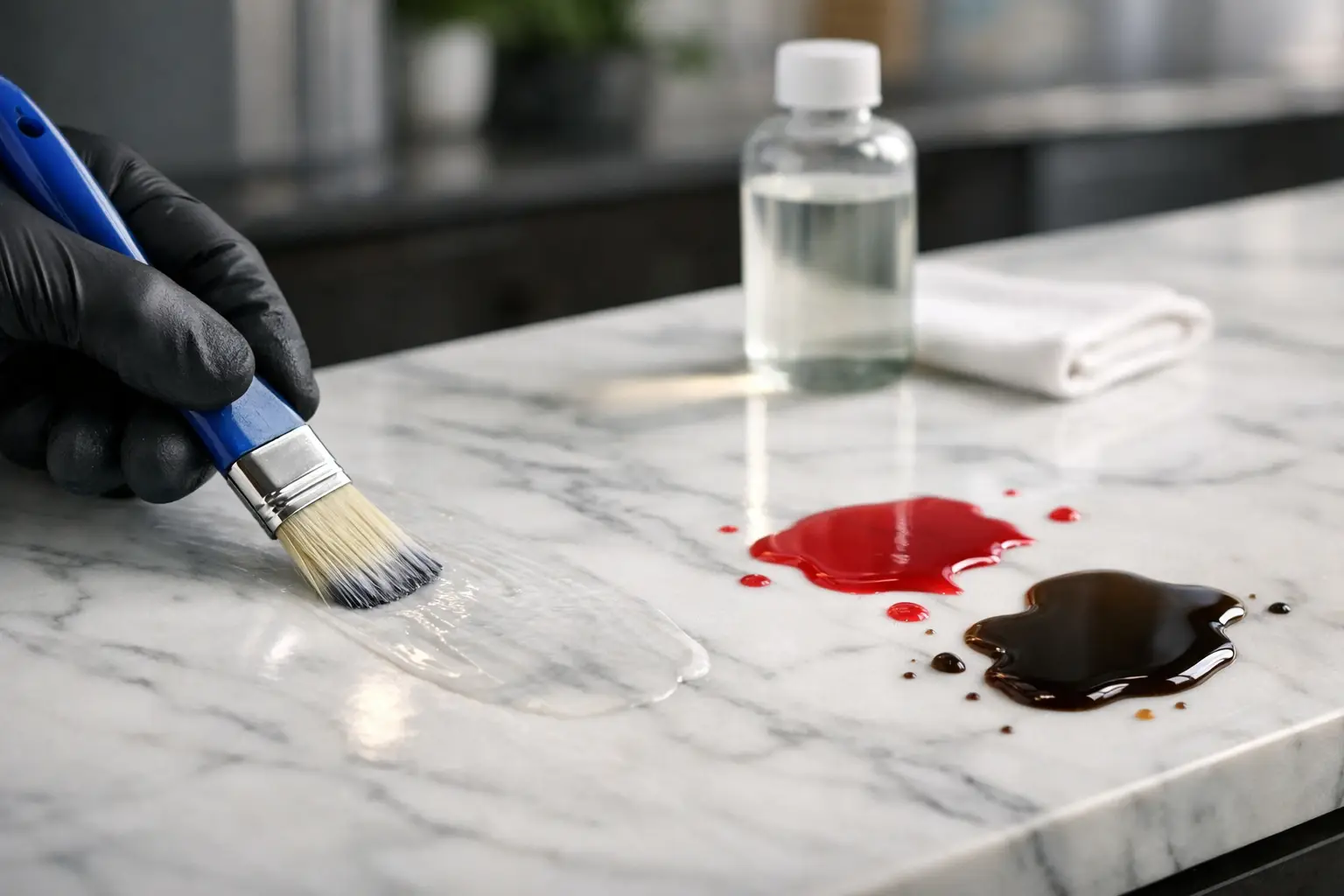
A glass of red wine tipped onto a marble benchtop can create a moment of panic. So, does marble sealing prevent stains? Yes – when the right sealer is professionally selected and applied, it substantially reduces the chance of staining. But sealing is not an invisible force field. Marble still needs prompt care, particularly around acidic foods, oils, cosmetics and strongly coloured liquids.
For Sydney homes and commercial interiors where marble is part of the visual statement, sealing is one of the most valuable protection measures available. The key is understanding what it does well, where its limits sit, and when a tired surface needs restoration before it is sealed.
Does marble sealing prevent stains completely?
No sealer can promise that marble will never mark. A quality penetrating sealer works by entering the microscopic pores in natural stone and reducing how quickly liquids can absorb. This gives you valuable time to wipe up a spill before it settles into the stone and leaves a visible shadow or dark patch.
That distinction matters. Sealing makes marble more stain-resistant, not stain-proof. If olive oil, turmeric, coffee, red wine or hair dye is allowed to sit for hours, even well-sealed marble can be affected. The longer a spill remains, the more likely it is to find a path into the surface.
Marble also has a separate vulnerability: etching. Acidic substances such as lemon juice, vinegar, wine and some bathroom products can react with the calcium in marble. Rather than soaking in like a stain, they dull or roughen the polished finish. A conventional impregnating sealer does not stop this chemical reaction.
This is why a marble surface may look marked even though it has been sealed. The issue may be etching, not staining – and the remedy is usually professional honing and polishing rather than another coat of sealer.
What marble sealers actually do
Most premium marble protection systems are impregnating or penetrating sealers. They sit below the surface rather than forming a thick visible layer over it. Their purpose is to line the stone’s pore structure and resist the absorption of water- and oil-based contaminants while allowing the stone to breathe.
Used correctly, a penetrating sealer can help prevent dark water marks around a vanity, reduce the risk of oil staining on a kitchen island and make everyday cleaning more forgiving. It preserves the natural appearance of the marble without creating the plastic-like sheen that an unsuitable topical coating may produce.
The right product depends on the marble and its setting. A pale, highly porous honed marble in a busy kitchen needs a different approach from dense polished marble on a powder-room vanity. Outdoor marble may also face rain, organic debris and changing temperatures, which affects the protection method and maintenance schedule.
A professional assessment is valuable because the wrong sealer can leave streaks, alter the surface appearance or fail to provide adequate oil repellence. Premium stone deserves more than a one-size-fits-all product from the hardware aisle.
Sealing will not prevent etching
This is the most common misconception with marble. A sealer may slow the uptake of wine, but it will not reliably prevent the wine’s acidity from etching polished marble. The resulting mark can look lighter, duller or cloudy, especially when viewed across the surface in natural light.
In kitchens, use boards and trays for food preparation and serving. In bathrooms, avoid leaving toothpaste, perfumes, cleaners or hair products on marble vanity tops. A pH-neutral stone cleaner is the appropriate choice for routine cleaning. General bathroom sprays, vinegar and abrasive powders can compromise both the finish and the sealer.
For areas repeatedly exposed to acids, such as restaurant tables, bar tops or busy kitchen benches, an anti-etch protective film may be worth considering. It is a different form of protection, designed to shield the face of the marble from the everyday wear that a penetrating sealer cannot address.
When should marble be sealed?
Newly installed marble should generally be assessed and sealed once it is clean, dry and ready for use. However, existing marble often benefits more from restoration first. Sealing over ingrained stains, soap residue, grime or a dull etched finish can lock in the appearance you are trying to improve.
For older floors, benchtops and vanity tops, the best sequence is usually deep cleaning, stain treatment where required, honing or polishing to restore clarity, then sealing once the surface is fully dry. This approach protects a renewed finish rather than merely treating a worn one.
How often marble needs resealing varies. It depends on the stone’s porosity, traffic, cleaning habits, product used and location. A low-traffic polished wall may hold protection for years, while a frequently used honed kitchen benchtop may need attention sooner. Rather than resealing on an arbitrary calendar, test the surface and inspect its condition.
A simple water test can provide an indication. Place a few drops of water on a clean, dry area and observe them for several minutes. If the water remains beaded, the sealer may still be performing well. If it quickly darkens the marble, the surface may be due for professional evaluation. This test is useful, but it does not assess oil repellence or reveal whether the finish itself has been compromised.
Signs your marble needs more than sealing
A fresh sealer will not repair damage already present. If the marble has lost its reflection, feels rough in spots, shows circular dull marks or has visible scratches, the surface needs specialist restoration. Polishing can revive brilliance on polished marble, while honing can remove light etching and establish a more even finish before protection is reapplied.
Deep stains may require a targeted poultice treatment to draw the contaminant from the stone. Chips, cracks and open seams call for careful repair work. Each issue should be treated according to the marble’s colour, finish and composition, because a repair that is technically sound but poorly colour-matched can still detract from a luxury interior.
This is particularly relevant in foyers, hotel bathrooms, retail spaces and high-value residences where marble contributes directly to the property’s presentation. Restoration is often a more considered and economical alternative to replacement, with far less disruption and a far stronger result than simply trying to conceal damage.
How to keep sealed marble looking refined
Daily care is uncomplicated, but consistency matters. Wipe spills as soon as they occur with a soft cloth, particularly oil, wine, juice, coffee and makeup. Clean with warm water and a pH-neutral stone cleaner, then dry the surface rather than allowing water to pool around taps, soap dispensers or splashbacks.
Avoid acidic cleaners, bleach, harsh degreasers, scouring pads and generic sprays that are not suitable for natural stone. Do not assume a product is safe because it is marketed for kitchens or bathrooms. Marble responds best to gentle cleaning and precise protection.
Use coasters under drinks, trays beneath oily bottles and mats where water is regularly introduced. On floors, entry mats reduce grit that can gradually scratch and dull the finish. These small habits preserve the clarity of the surface and extend the value of professional sealing.
The value of professional marble protection
Professional marble sealing is not simply applying a liquid and walking away. The surface must be correctly cleaned, dry, tested and matched with an appropriate sealer. Excess product must also be removed properly to avoid residue and uneven sheen.
At Grand Stone Restoration, this protection can be paired with cleaning, honing, polishing and repairs so the marble is restored to its intended elegance before it is protected. The result is a surface that looks renewed, performs better in daily use and retains the refined character that made marble worth choosing.
Treat sealing as part of a complete care plan, not a substitute for it. With expert restoration where needed and prompt everyday attention, marble can continue to bring lasting brilliance to the spaces where first impressions matter most.