
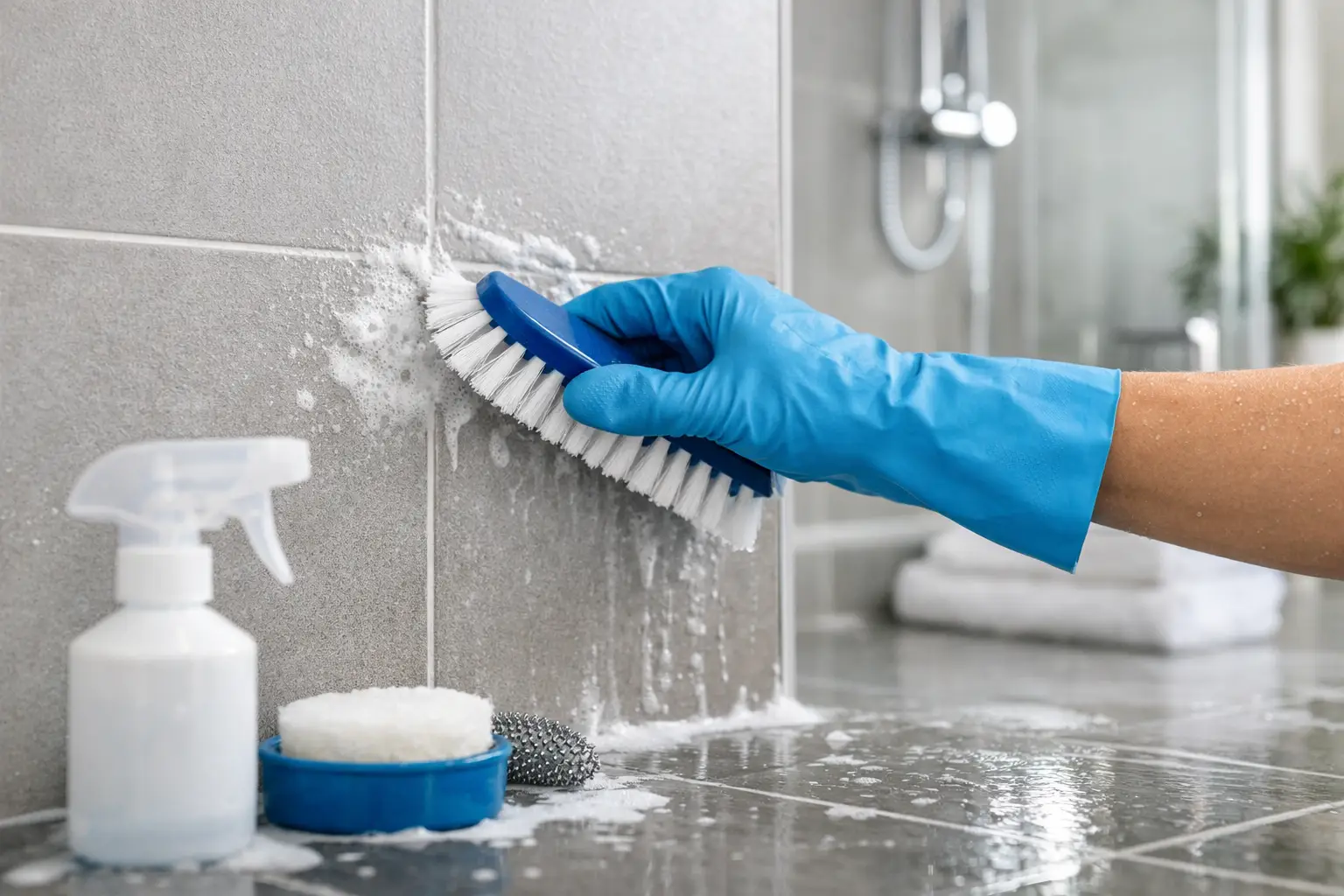
A bathroom can look clean straight after a routine wipe-down yet still carry dull tile faces, darkened grout and a persistent soap film that catches the light. Bathroom tile deep cleaning addresses the build-up ordinary cleaning leaves behind, restoring the crisp, polished appearance that makes a bathroom feel properly cared for. The right treatment is not simply about stronger products. It is about understanding the surface beneath the residue.
Why Bathroom Tiles Lose Their Finish
Bathrooms are exposed to a concentrated mix of moisture, body oils, shampoo, soap, mineral deposits and cleaning chemicals. Over time, these residues form layers that make tiles look cloudy or uneven. In Sydney homes, hard-water deposits can also leave pale spotting around showers, taps and glass edges, while poor ventilation encourages mould growth in grout lines and silicone joints.
Glazed ceramic and porcelain tiles are generally durable, but that does not make them immune to damage. Abrasive powders can wear away their sheen, while harsh acids may attack grout and leave a rougher surface that traps soil faster. The risk is greater with natural stone tiles such as marble, limestone, travertine and terrazzo. These materials can be etched or dulled by common acidic bathroom products, even when the label says they are suitable for general household use.
A bathroom floor or shower wall rarely soils evenly. Areas near the shower, vanity and toilet often require a more focused approach than the rest of the room. Treating every tile with the same product and pressure can create inconsistent results, particularly where different materials meet.
Bathroom Tile Deep Cleaning Starts With the Material
The most effective cleaning method depends on the tile, grout, finish and condition of the surface. A professional assessment identifies what has actually caused the discolouration before any treatment begins. What appears to be dirt may be soap scum, limescale, mould staining, residue from previous cleaners or damage within the tile itself.
Ceramic and porcelain tile
Ceramic and porcelain tiles respond well to carefully selected alkaline cleaners that break down soap film and oils without unnecessarily attacking the grout. Mechanical agitation may be used to lift embedded grime from textured finishes and grout joints, followed by controlled rinsing and extraction. The goal is to remove contamination rather than spread dirty water across the surface.
Natural stone tile
Marble, limestone, travertine and other calcareous stones need a more precise process. Acidic descalers and vinegar-based solutions can etch these surfaces, creating dull patches that cleaning alone cannot reverse. Depending on the stone and its finish, restoration may require pH-neutral cleaning, honing to remove etching or scratches, polishing to revive clarity, and sealing to improve resistance to future staining.
A glossy marble tile should not be treated like a matte porcelain tile, and a textured travertine floor demands different care again. This is where material-specific expertise protects the value of a premium bathroom rather than compromising it.
Grout and silicone joints
Grout is porous and commonly becomes the first visibly tired element in a bathroom. It absorbs moisture and residues, making pale grout lines look grey, yellowed or patchy. Deep cleaning can lift much of this embedded soil, but it will not always correct permanent staining, cracking or missing grout.
Silicone is different. Black mould that has penetrated silicone often cannot be fully removed with cleaning. Replacement may be the cleaner, more durable option, particularly around showers and baths where failed joints can allow water to travel behind tiles.
What a Professional Deep Clean Involves
A quality deep clean is a controlled restoration process, not a quick spray-and-scrub service. First, the tiles, grout, stone and surrounding fixtures are inspected for etching, chips, loose tiles, failed grout, existing sealers and moisture concerns. This ensures the cleaning method matches the material and does not conceal a more serious issue.
The surface is then treated with an appropriate cleaning solution and allowed sufficient dwell time to soften contaminants. Agitation is tailored to the tile finish and grout condition. For heavily soiled floors and shower areas, specialist equipment can help lift residues from pores, textures and joints while containing the dirty water.
Rinsing matters as much as the initial clean. Leftover chemicals and loosened soil can dry back onto the tile, leaving streaks or a sticky feel. A thorough process removes the suspended residue and allows the surface to dry properly before any sealing or protective treatment is considered.
Where stone has lost its lustre through etching, scratches or wear, cleaning is only the first stage. Honing and polishing may be required to create a uniform finish again. This distinction is important: a stained grout line can often be cleaned, but an etched marble tile requires restoration to bring back its original brilliance.
When Household Cleaning Is Not Enough
Regular maintenance is valuable, especially when it uses a pH-neutral product suitable for the tile type. It keeps fresh soap film from becoming a thicker, more stubborn layer. However, there is a point where repeated household cleaning delivers diminishing returns.
Professional attention is worth considering when grout remains dark after cleaning, tiles look hazy even when dry, shower walls feel rough to touch, or natural stone has dull rings and patchy shine. Other signs include recurring mould around joints, persistent odours, discoloured floor edges and residues that return soon after cleaning.
Aggressive DIY methods can make these problems worse. Steam, bleaching agents, acidic descalers and stiff abrasive pads all have a place in certain situations, but none is universally safe. High heat and excess moisture can affect some grout and sealers, while acids can permanently mark marble, limestone and terrazzo. The trade-off of a quick result is often a surface that becomes harder to maintain or more expensive to restore.
Protecting the Finish After Cleaning
Deep cleaning delivers its best value when followed by sensible maintenance. Once the bathroom is restored, use products chosen for the surface rather than relying on a one-size-fits-all cleaner. A soft microfibre cloth or non-abrasive pad is usually enough for routine care, while a squeegee on shower walls reduces water spotting and soap residue before it dries.
Ventilation also plays a major role. Running the exhaust fan during and after showers, opening windows where practical, and repairing leaks promptly all reduce the moisture that supports mould and residue build-up. In stone bathrooms, a suitable penetrating sealer may help reduce absorption and make everyday cleaning easier, though it is not a substitute for regular care or protection against acid etching.
Grout sealing can also be worthwhile after a successful clean, particularly in shower areas and busy family bathrooms. It helps slow the absorption of moisture and contaminants, but it should only be applied to clean, dry grout. Sealing over hidden soil simply locks the problem beneath the surface.
Restore Before You Replace
A tired bathroom does not always need new tiles to look refined again. In many cases, professional cleaning, grout restoration, stone honing or polishing can dramatically improve the room without the cost, mess and disruption of replacement. This is particularly valuable in apartments, heritage homes and commercial properties where matching existing materials can be difficult.
Grand Stone Restoration approaches bathroom surfaces as long-term assets, using tailored methods to revive tile, grout and natural stone while preserving their character. The result should look clean, balanced and credible, not artificially coated or temporarily disguised.
If your bathroom still looks dull after routine cleaning, treat that as a signal to investigate the surface rather than scrub harder. The right restoration process can return clarity to the tile, lift the appearance of grout and help preserve the elegant finish your space was designed to have.