
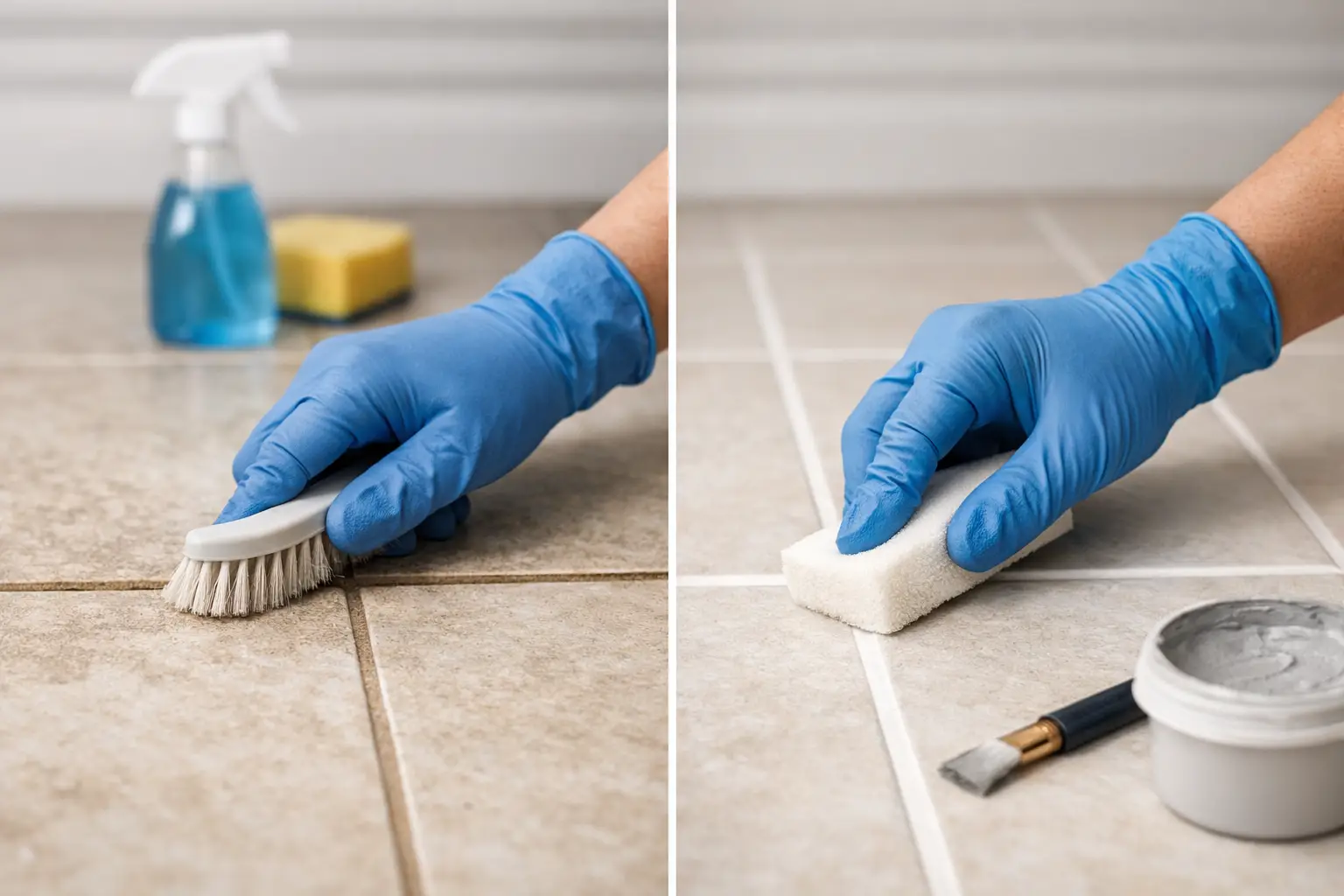
A bathroom can have premium tile, quality stone and a well-designed layout, yet still look tired because the grout has darkened, stained or become patchy. That is why grout cleaning and recolouring often delivers one of the most visible transformations in a tiled space. When grout lines are restored properly, the entire surface reads as cleaner, sharper and more refined.
For homeowners and property managers, grout is easy to overlook until it starts working against the room. In kitchens, bathrooms, laundries and commercial wet areas, grout absorbs moisture, soap residue, body oils and general grime over time. On floors, it also takes the punishment of foot traffic and embedded dirt. The result is not just a cosmetic issue. Discoloured grout can make a well-finished surface appear aged, unhygienic and poorly maintained, even when the tiles themselves are still in strong condition.
Why grout fails before the tile
Tiles are generally the most durable part of the installation. Grout is more porous, more exposed and more vulnerable to staining. In practical terms, that means the lines between the tiles often deteriorate first. White and light-coloured grout are especially prone to showing every mark, while darker grout can fade unevenly and lose depth.
The problem is rarely solved by ordinary mopping or supermarket sprays. Surface cleaning may remove loose dirt, but it does not usually extract embedded contamination or correct permanent staining. In some cases, aggressive DIY products make matters worse by weakening the grout, damaging adjacent stone or leaving a blotchy finish.
That is where specialist treatment matters. Proper restoration is not just about making grout look cleaner for a week. It is about removing built-up contamination, assessing the condition of the joints and, where needed, recolouring the grout so the finish looks intentional and consistent again.
What grout cleaning and recolouring actually involves
Grout cleaning and recolouring is a two-stage restoration process, although not every floor or wall needs both. First, the grout is professionally cleaned to remove ingrained dirt, oils, soap scum and surface staining. This step matters because recolouring over contamination will not produce a stable or even result.
Once cleaned, the grout is assessed. If the original colour can be revived and the joints are in good condition, a deep clean and sealing treatment may be enough. If the grout remains patchy, permanently stained or visually dated, recolouring becomes the smarter option.
Recolouring is not the same as painting over grout with a quick cosmetic coat. Done properly, it is a controlled process that restores uniformity while improving the overall presentation of the tiled surface. It can return grout to its original tone or shift it to a new shade that better suits the tile. That means a floor that looks busy and uneven can be made to look calmer, cleaner and more contemporary without the cost of retiling.
Where grout recolouring makes the biggest difference
Bathrooms are the most obvious candidates because moisture, steam and product build-up accelerate discolouration. Shower floors, wall joints and perimeter grout lines often show the problem first. Kitchens are next, particularly splashbacks and tiled floors where grease, food residue and frequent cleaning wear down the finish.
In commercial settings, presentation is just as important as hygiene. Grout in foyers, amenities, hospitality venues and common areas tends to age faster because of heavier traffic and more frequent use. Recolouring can be a practical way to lift the look of the space without the disruption of replacement works.
There is also a design benefit. If the tile still suits the room but the grout colour dates the installation, recolouring can modernise the entire surface. A cleaner, more balanced grout tone can sharpen tile edges, create better visual continuity and make the finish feel far more premium.
Grout cleaning and recolouring versus regrouting
Not every tired grout line needs to be removed and replaced. Regrouting is sometimes necessary when the grout is crumbling, missing, heavily cracked or failing structurally. In those situations, surface restoration alone will not solve the problem.
But many tiled areas are sound underneath and simply look worn. That is the ideal scenario for grout cleaning and recolouring. It is less invasive, more economical and far quicker than full regrouting or replacement. For residential clients, that usually means less downtime in important parts of the home. For commercial properties, it helps reduce disruption to staff, tenants or customers.
The trade-off is straightforward. Recolouring works best when the grout is intact enough to accept treatment. If the joints have broken down beyond that point, repair or regrouting may be the better long-term investment. An experienced restoration specialist will assess that honestly rather than applying a one-size-fits-all fix.
Why DIY results often disappoint
Many property owners try scrubbing, bleaching or off-the-shelf grout pens before calling a specialist. The appeal is understandable. It looks cheaper upfront and the job seems simple. The issue is that grout condition varies widely, and so do tile materials around it.
On ceramic or porcelain tile, a DIY product may achieve a modest improvement if the staining is light. On natural stone, the margin for error is much smaller. Acidic or unsuitable cleaners can etch sensitive surfaces, dull the finish or create inconsistent colour around the grout lines. Even where the tile is not damaged, the grout itself can end up uneven, streaky or prematurely worn.
Recolouring products sold for home use also tend to show application marks when used over poorly prepared grout. If the line is not fully cleaned and stable before recolouring, the finish will struggle to bond evenly. What looks acceptable from a standing height can appear patchy and amateur at close range.
In premium interiors, details matter. Clean grout lines frame the tilework. Poorly treated grout distracts from it.
The importance of material-specific care
This is especially relevant in properties that combine grout with marble, limestone, travertine or other natural stone finishes. These surfaces require a different standard of care than a basic tiled area. A restoration approach has to account for the tile material, the grout condition, the existing sealers and the intended final appearance.
That is why specialist companies approach grout as part of the broader surface, not as an isolated cleaning task. In a luxury bathroom, for example, restoring grout without considering the stone or polished tile around it can leave the space looking mismatched. The best result comes from treating the whole finish with consistency in mind.
For clients who want their interiors to look polished rather than merely passable, this distinction matters. The goal is not to make the grout look less dirty. It is to restore the elegance of the room.
How long do the results last?
It depends on the area, the level of traffic and how the surface is maintained afterwards. A guest ensuite used occasionally will naturally hold its finish longer than a busy family bathroom or a commercial washroom. The same applies to kitchen floors versus feature walls.
Professional cleaning and recolouring generally last well when the grout is properly prepared and the right products are used. Ongoing maintenance then becomes the deciding factor. Harsh chemicals, abrasive scrubbing and neglect will shorten the life of the result. Gentle routine cleaning and appropriate sealing support longer performance and better presentation.
This is one reason restoration is often more cost-effective than people expect. If the tile installation is fundamentally sound, restoring the grout can extend the life and appearance of the entire area for a fraction of replacement cost.
When to call a specialist
If grout still looks dirty after repeated cleaning, if the colour is inconsistent, or if the tiled area makes the room feel older than it should, it is worth having it assessed. The same applies if you are preparing a property for sale, refreshing a commercial space or upgrading a high-value interior without embarking on a full renovation.
In Sydney homes and commercial properties, where presentation and asset value often go hand in hand, these details carry more weight than many owners first assume. A well-restored tiled surface feels cared for. It photographs better, presents better and supports the quality of the surrounding finishes.
Grand Stone Restoration sees this often – clients assume the only path to a fresher look is replacement, when in reality the breakthrough comes from restoring what is already there with the right level of technical care.
When grout lines are clean, even and colour-consistent, the whole room settles into place. That is the quiet value of specialist restoration: not a flashy change, but a precise one that makes everything around it look better.