
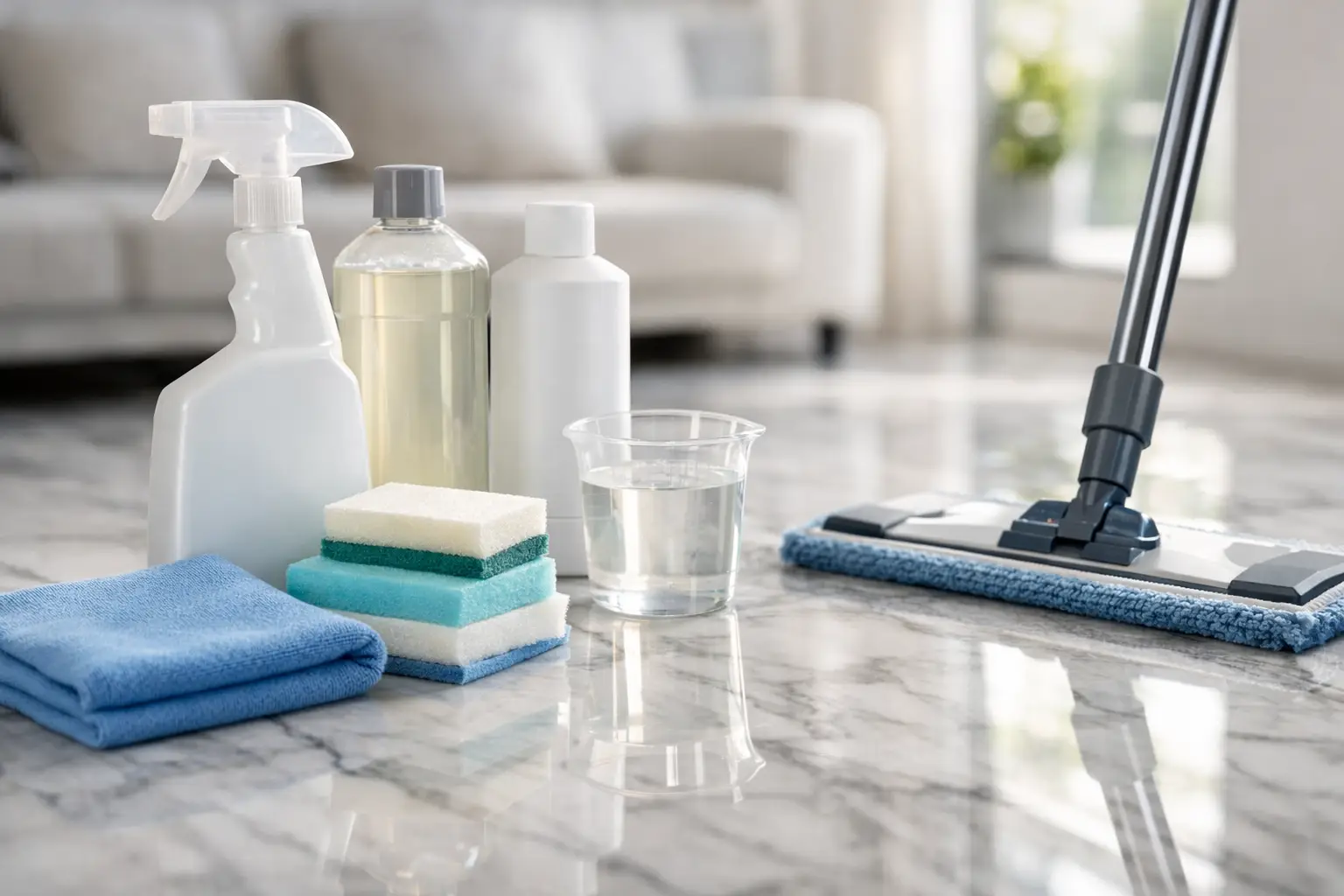
A marble floor rarely looks tired all at once. It starts with a slight loss of clarity near the kitchen island, a dull path through the entry, or a bathroom floor that no longer reflects light with the same crisp finish. Choosing the best marble floor cleaners matters because marble is not a standard hard surface. It is porous, calcium-based, and far more reactive than many owners realise.
That is where good intentions can cause expensive damage. A cleaner that performs well on porcelain or vinyl may leave marble etched, flat, patchy or prematurely worn. If the goal is to preserve elegance rather than strip it away, the product matters, but so does the method.
What makes the best marble floor cleaners different
The best marble floor cleaners are pH-neutral, residue-controlled and specifically formulated for natural stone. That sounds simple, but it rules out a surprising number of products commonly stored under the sink. Vinegar, bleach, citrus-based sprays, heavy degreasers and many supermarket floor cleaners can all be too aggressive for marble, even when diluted.
Marble reacts badly to acids. That includes obvious culprits such as vinegar and lemon, but also some bathroom cleaners, mould removers and multi-purpose sprays. Instead of lifting grime safely, they can etch the surface by chemically attacking the stone itself. Etching is not a removable film. It is surface damage, which means no amount of extra mopping will restore the lost finish.
A quality marble cleaner is designed to remove light soil, tracked-in dirt and day-to-day contamination without disrupting the stone’s finish or sealer. For premium interiors, that distinction is critical. Marble should be maintained in a way that protects both appearance and asset value.
How to assess marble cleaning products properly
Not every label tells the full story. A product may say it is suitable for stone, but that does not always mean it is ideal for polished marble floors. The better approach is to look at how the cleaner behaves in real use.
A suitable product should clean without leaving a cloudy film. It should not feel sticky underfoot once dry, and it should not create a false shine that builds up over time. That glossy residue may look acceptable for a few days, but it attracts dirt, dulls the natural character of the marble and often complicates future polishing or restoration.
Fragrance and foam are not signs of quality. In fact, heavily perfumed products can sometimes indicate unnecessary additives rather than better cleaning performance. For marble, less is often more – controlled chemistry, proper dilution and gentle application produce better long-term results than harsh products that promise instant sparkle.
The safest product profile for routine care
For most homes and commercial interiors, the safest choice is a dedicated pH-neutral stone floor cleaner diluted exactly as directed. It should be designed for regular use on sealed natural stone and applied with a clean microfibre mop. Warm water is usually sufficient alongside the product. Over-wetting the floor is not.
Marble does not benefit from a soaked mop and prolonged moisture exposure, particularly around grout joints and edges. A damp, well-wrung mop is the better standard. That keeps the surface clean without encouraging staining, residue spread or unnecessary wear.
What to avoid, even if it seems harmless
Some of the most common mistakes come from products people assume are gentle. Dishwashing liquid can leave residue. Vinegar can etch. Steam mops can force heat and moisture into the stone and joints, which is not always suitable, especially for older installations or floors with compromised sealer. Powder cleaners and abrasive pads can scratch the finish.
Even store-bought disinfectants need caution. In some settings, sanitation matters, but frequent use of strong disinfecting agents on marble can create surface issues over time. If hygiene is a concern in bathrooms, shared spaces or commercial environments, it is worth balancing cleaning needs with stone-safe chemistry rather than using the strongest product available.
Best marble floor cleaners by cleaning situation
The right cleaner depends on what the floor is dealing with. Daily dust, greasy traffic film, soap residue and acidic spills are not the same problem, so they should not be approached the same way.
For everyday maintenance, a pH-neutral stone cleaner is the strongest all-round option. It protects polished and honed marble, lifts surface soil and supports the performance of any sealer already in place.
For bathrooms, the best cleaner is still a pH-neutral stone product, but one that can handle soap scum without relying on acidic agents. Bathroom marble often looks dull because of etching and residue rather than ordinary dirt. If cleaning does not restore clarity, the issue may be damage rather than hygiene.
For kitchens, marble floors need prompt attention to oils, food spills and acidic splashes. A marble-safe degreasing stone cleaner can help, but if the floor has developed dull patches near preparation areas, those marks may be etched sections that require honing or polishing.
For commercial foyers and high-traffic entries, cleaner choice should be paired with a more disciplined maintenance routine. Fine grit acts like sandpaper under shoes. Even the best product cannot compensate for poor dirt control at the door. In these settings, regular dust mopping and entrance matting are just as important as the cleaner itself.
Why a good cleaner will not fix every marble problem
This is where many property owners spend money in the wrong place. They try multiple products, hoping one of them will bring the floor back to life, when the underlying issue is no longer surface dirt.
If marble looks dull after cleaning, the cause may be etching, abrasion, worn polish, ingrained staining or sealer failure. Cleaners maintain a surface. They do not mechanically restore it. Once the finish has been altered, the marble usually needs professional treatment such as honing, polishing, stain work or sealing.
That distinction matters because over-cleaning damaged marble often makes it worse. More product, more scrubbing and more frequent mopping can accelerate wear, especially on polished finishes. A floor that has lost its brilliance needs restoration, not stronger detergent.
A better routine for preserving marble floors
The best results come from consistency rather than intensity. Dry dust removal should happen frequently, especially in areas exposed to grit and outdoor traffic. A soft microfibre dust mop prevents abrasive particles from being ground into the stone.
Wet cleaning can then be done as needed with a stone-safe cleaner and a clean mop head. Dirty mop water should be changed regularly. Otherwise, you are simply spreading fine soil back across the surface. Spills should be wiped promptly, particularly wine, juice, coffee and anything acidic.
Protective habits also make a visible difference. Door mats, felt pads under furniture and a no-harsh-chemicals rule can significantly extend the life of the finish. In higher-end homes and presentation-critical commercial spaces, those small precautions protect a substantial investment.
When professional help is the smarter choice
If the marble has become patchy, scratched, etched or stubbornly dull, changing cleaners is unlikely to solve it. The better move is a professional assessment. A specialist can identify whether the issue is contamination, finish wear, stone damage or failed protection.
That matters because marble is not treated the same way across every site. Honed marble, polished marble, older stone, high-traffic floors and moisture-prone bathroom floors each respond differently. The right remedy may involve deep cleaning, diamond honing, polishing, sealing or even a protective treatment where etching is a recurring concern.
For Sydney properties with premium stone finishes, this is often the most cost-effective path. Restoration preserves the floor you already have, avoids the disruption of replacement and brings back the depth, clarity and refinement that made marble worth choosing in the first place. Grand Stone Restoration approaches this work with material-specific care, because luxury stone deserves more than a generic cleaning solution.
Choosing the best marble floor cleaners with confidence
The best marble floor cleaners are the ones that respect the material. They clean without etching, protect without coating over the natural beauty of the stone, and support a finish that still looks elegant years later. That usually means a pH-neutral stone cleaner, a measured cleaning method and the discipline to avoid shortcuts.
If your marble still looks flat after proper cleaning, take that as useful information rather than a frustration. The floor may be telling you it needs restoration, not another bottle from the cleaning aisle. A well-kept marble floor has a quiet kind of luxury about it, and with the right care, that standard is entirely achievable.