
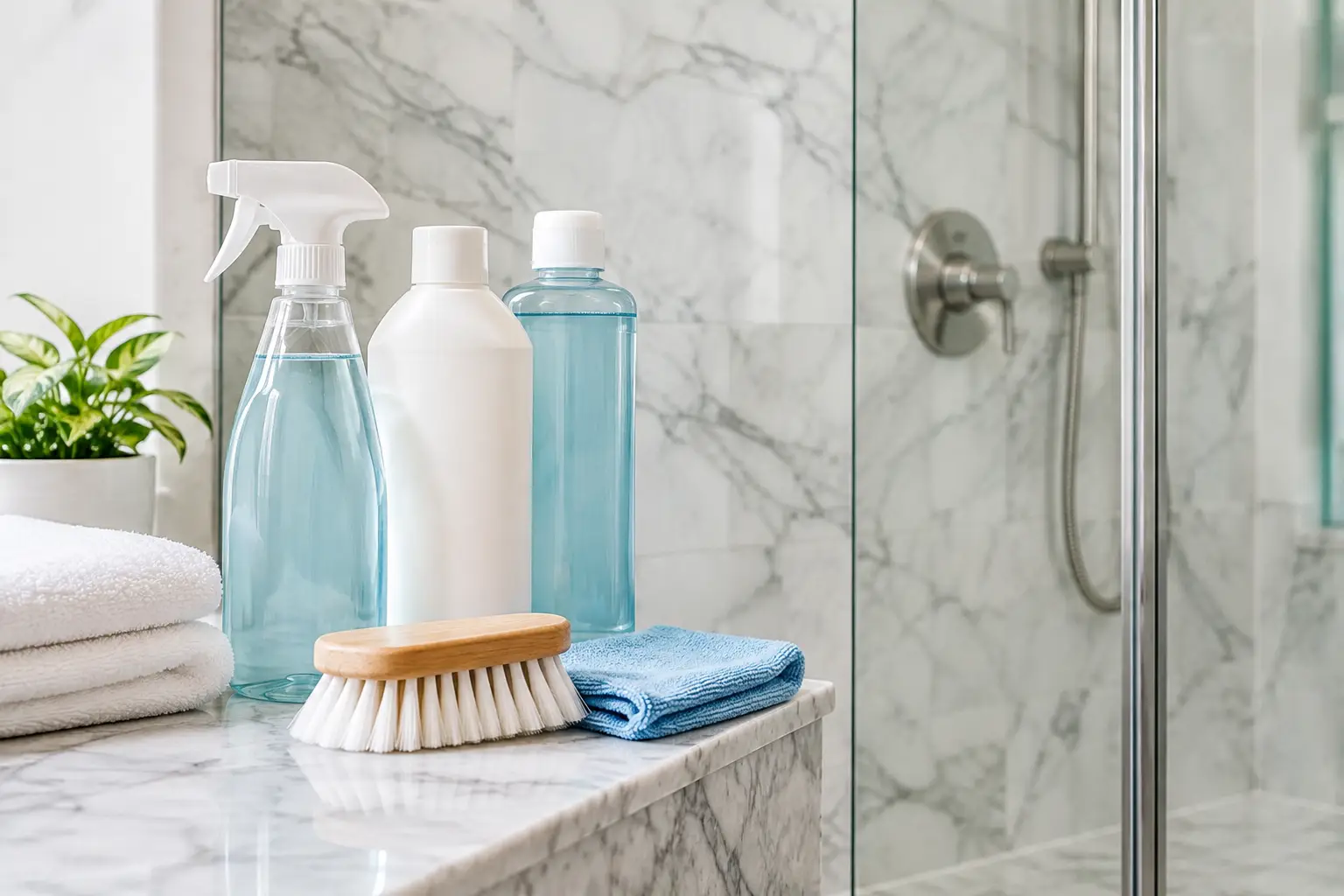
A marble shower can look extraordinary, but it is one of the least forgiving places for the wrong cleaning product. The best marble shower cleaners remove everyday body oils, soap residue and mineral marks without attacking the polished surface, dulling its reflection or compromising the sealer beneath.
Marble is calcium-based natural stone. That means common bathroom staples such as vinegar, lemon, bleach, ammonia and acidic limescale sprays can create permanent etching or a hazy finish. A clean shower should retain its depth of colour and refined sheen, not look chalky after a few months of aggressive cleaning.
What makes a marble shower cleaner safe?
For routine cleaning, look for a pH-neutral formula labelled specifically for natural stone or marble. These products are designed to lift light soiling without acid, abrasive particles or harsh alkaline agents. They are the right foundation for regular shower care, particularly on polished marble where every dull patch is noticeable.
A safe cleaner is not necessarily strong enough to remove years of soap scum, heavy hard-water build-up or etching. This distinction matters. Daily cleaning and restorative cleaning are separate jobs. Trying to force a gentle spray to remove severe mineral deposits often leads people to reach for an acidic product, which can cause far greater damage than the original stain.
7 best marble shower cleaners and when to use them
The following options represent the cleaner types and established stone-care products worth considering for marble bathrooms. Always check the current Australian label, test in an inconspicuous area and follow the dilution instructions for your particular finish.
1. A pH-neutral stone spray for daily wipe-downs
A ready-to-use pH-neutral stone spray is the most practical choice after showering or for light weekly cleaning. Products such as MB-5 Stone & More Multi Surface Spray Cleaner are formulated for natural stone and suit sealed marble walls, ledges and vanity surrounds.
Use a soft microfibre cloth rather than a rough scourer. Spray lightly, wipe the surface and dry it afterwards. The drying step is valuable in Sydney bathrooms, where humidity and hard-water spotting can quickly spoil an otherwise immaculate finish.
2. Lithofin MN Easy-Clean for regular stone maintenance
Lithofin MN Easy-Clean is widely used for routine natural-stone maintenance. It is suited to regular cleaning of marble and other sensitive stone surfaces where preserving the existing finish is the priority.
This is a sensible option for a shower that is cleaned consistently and does not have thick residue. It will not correct etching, scratches or ingrained deposits, but that is not a shortcoming. A maintenance cleaner should be gentle enough to use repeatedly without gradually degrading the surface.
3. Aqua Mix Concentrated Stone & Tile Cleaner for larger areas
For marble shower floors, tiled bathroom floors and substantial wall areas, a concentrated pH-neutral stone cleaner can offer better value and control. Aqua Mix Concentrated Stone & Tile Cleaner is designed for natural stone and can be diluted for general cleaning.
The trade-off with concentrates is accuracy. More product does not mean a cleaner marble surface. Over-concentrating can leave residue, especially in textured grout lines or around the shower drain. Measure carefully, rinse as directed and avoid allowing the solution to dry on the stone.
4. StoneTech Stone & Tile Cleaner for neutral routine care
StoneTech Stone & Tile Cleaner is another neutral cleaner intended for stone and tile surfaces. It is appropriate where the goal is to remove normal bathroom grime while keeping polished marble, honed marble and sealed grout looking even.
Neutral cleaners are especially useful on honed marble. A honed finish has a softer, matte appearance and can conceal minor etching more effectively than a polished finish, but it can still absorb contaminants if the sealer has weakened. Gentle maintenance protects the finish without creating uneven patches of sheen.
5. Granite Gold Shower Cleaner for stone-safe shower upkeep
Granite Gold Shower Cleaner is marketed for natural stone shower surfaces and targets everyday shower residue without relying on acids. Despite the brand name, it is commonly considered for marble, granite, travertine and similar sealed stone when used according to its label directions.
This type of shower-specific product can be convenient for households wanting one dedicated cleaner by the screen. However, it is still not a cure for etched marble. If the surface has lost its reflective clarity or has pale rings and splash marks, the issue is likely chemical damage rather than dirt.
6. HG Marble and Natural Stone Cleaner for light maintenance
HG offers marble and natural stone cleaning products intended for gentle upkeep. These can be useful on marble floors and bathroom surfaces that need a light clean without strong chemicals.
As with all proprietary cleaners, choose the product matched to the task. A general maintenance formula is suitable for regular washing. A product designed to remove a particular stain or deposit should only be used after confirming it is safe for calcium-based stone. The words “bathroom cleaner” or “limescale remover” alone are not enough reassurance.
7. A specialist stone-safe soap scum cleaner for stubborn residue
When soap scum is more than a light film, choose a non-acidic product specifically approved for marble and natural stone. This category is more useful than a generic supermarket descaler because it addresses oily residue without exposing the marble to vinegar, phosphoric acid, citric acid or hydrochloric acid.
Read the label closely before use. Some powerful cleaners are safe on ceramic tile yet unsafe on the marble inserts, niches, thresholds or mosaic details within the same shower. If you cannot verify compatibility, do not apply it. A professional assessment is considerably less costly than repairing widespread etch damage.
Clean marble shower surfaces without creating new marks
A sound cleaning method is as important as the product. First, rinse loose residue from the marble with warm water. Apply a small amount of a pH-neutral cleaner, allow only the label-recommended contact time, then agitate gently with a soft microfibre cloth or non-abrasive white pad. Rinse thoroughly and dry the surface with a clean towel or squeegee.
Avoid steel wool, green scouring pads, melamine sponges and abrasive cream cleansers. They can scratch polished marble or leave fine abrasion that turns a high-end surface cloudy under bathroom lighting. Take extra care around natural veins, repaired chips and edges, where damage is more visible.
For shower glass adjacent to marble, do not spray acidic glass cleaner broadly across the area. Apply it carefully to a cloth and keep it off stone, grout and silicone joints. This small adjustment prevents accidental overspray from creating drip-shaped etch marks on a marble hob or wall.
Why soap scum and hard water need different treatment
Soap scum is generally a combination of soap, body oils and minerals. A stone-safe neutral cleaner may remove light build-up, particularly when used frequently. Hard-water deposits are different: they are mineral scale, and conventional products dissolve them with acid. That chemistry is precisely why they are dangerous on marble.
If hard-water spotting is persistent, the answer may be improved ventilation, a squeegee after each use, softer water treatment or a professional stone-safe cleaning process. For severe build-up, a restoration specialist can select methods that protect the stone and assess whether the real issue is failed sealing, etching or surface wear.
When cleaning is no longer enough
No bottle will polish away etch marks, remove deep scratches or restore the reflective brilliance of worn marble. Etching is a physical change to the stone surface. It often looks like a pale, dull or slightly rough patch, especially around taps, shampoo niches and shower floors.
Professional honing and polishing can refine the damaged layer and bring back an even finish. Depending on the condition of the marble, sealing may then help reduce absorption and make daily care more manageable. Sealing is not a shield against acids, but it remains a valuable part of long-term protection against staining and moisture-related grime.
For high-value marble bathrooms across Sydney, Grand Stone Restoration assesses the stone type, finish and extent of damage before recommending a tailored restoration approach. This avoids the guesswork that can turn a minor bathroom issue into an expensive replacement project.
The best habit is simple: use a pH-neutral stone cleaner regularly, remove water from the surface before it dries, and treat any dulling or persistent marks as a signal to stop experimenting. Marble rewards careful maintenance with the lasting elegance that made it worth choosing in the first place.