
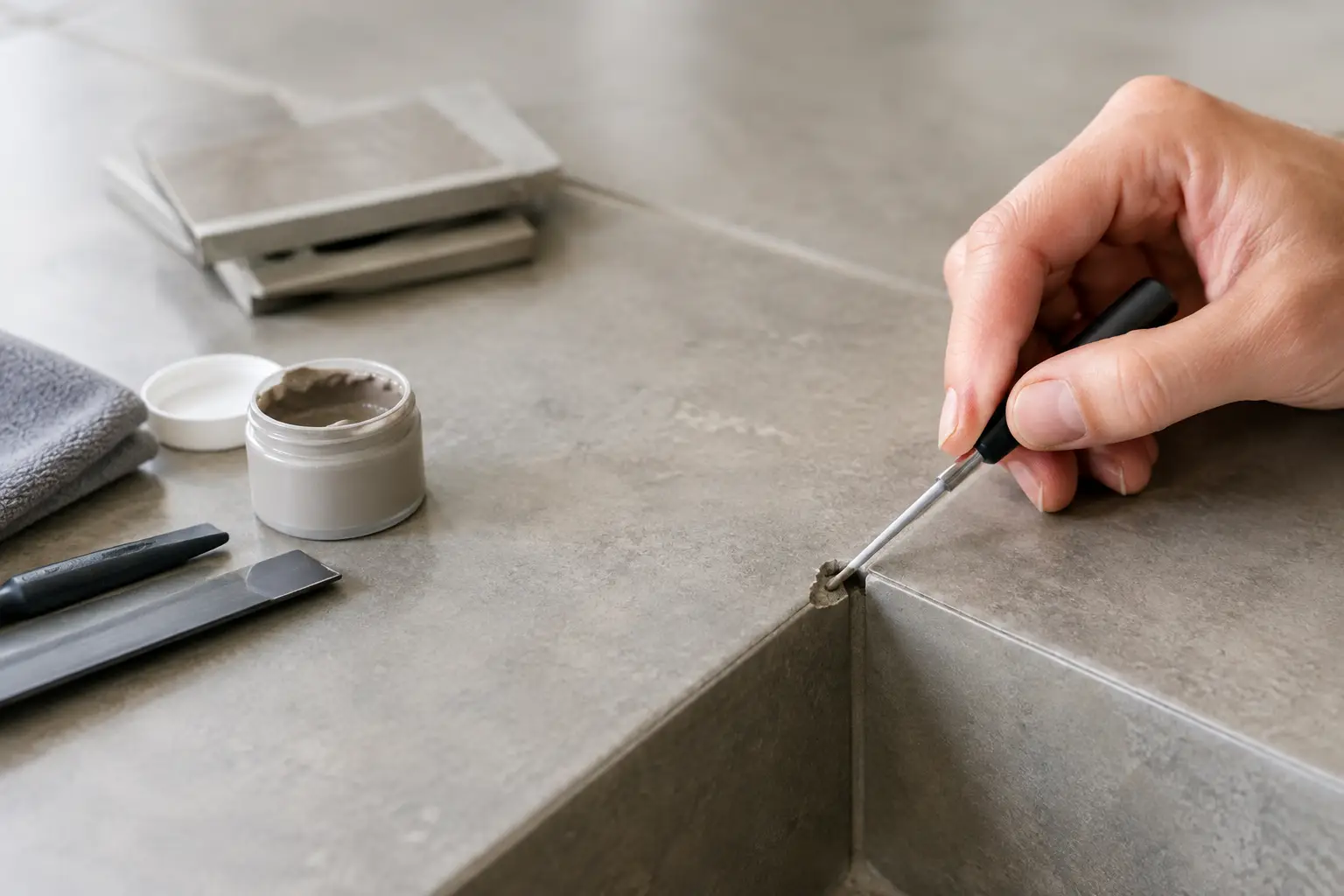
A chip in an otherwise immaculate floor, bathroom wall or stone feature can draw the eye every time you enter the room. The good news is that can chipped tiles be repaired is usually a question with a positive answer – but the quality and durability of the result depend on the tile material, the depth of damage and the repair method used.
A small impact chip does not automatically mean removing a whole tile or embarking on a disruptive renovation. In many cases, a carefully matched repair can restore the surface’s visual continuity and protect the exposed area from further wear. For premium interiors and presentation-critical commercial spaces, however, an off-the-shelf filler is rarely the right standard. Successful restoration requires a close assessment of the material, finish and surrounding surface.
Can chipped tiles be repaired without replacement?
Yes, many chipped tiles can be repaired in place. Ceramic, porcelain, natural stone, terrazzo and engineered stone surfaces can often be rebuilt with a suitable resin or repair compound, then colour-matched and refinished to reduce the visibility of the damage. This is particularly valuable where replacement tiles are unavailable, discontinued or difficult to blend with an aged installation.
The key distinction is between a cosmetic chip and a structural problem. A small chip at the edge of a porcelain tile, for example, may be an excellent candidate for a precision repair. A tile that is cracked through its body, loose underfoot or affected by movement in the substrate may require removal and replacement instead. Repairing the visible break without addressing the cause simply delays a larger failure.
For natural stone tiles such as marble, limestone, travertine and granite, professional repair is often preferable to replacement. Each stone tile has unique veining, tonal variation and surface character. Even a tile from the same original batch may not blend perfectly once the installed floor has developed patina, been honed or polished, and been exposed to daily use.
What determines whether a chip is repairable?
The size, position and depth of the damage matter. A shallow chip in a low-traffic wall tile can usually be filled and blended effectively. A deep chip on the leading edge of a stair tread, in a busy foyer or beside a shower drain receives more impact, moisture and cleaning exposure, so it needs a stronger, more carefully prepared repair.
Material also changes the approach. Glazed ceramic tile has a coloured body beneath a surface glaze. If that glaze has chipped away, the exposed section can look dramatically different from the face of the tile. Porcelain is denser and often carries its colour more consistently through the body, although patterned or glazed porcelain still requires detailed colour matching.
Natural stone is different again. Marble and limestone can be filled, honed and polished, but their finish must be matched to the surrounding area. A glossy repair on a honed floor, or a dull repair on a polished marble bathroom wall, will remain noticeable even when the colour is close. Textured outdoor tiles, slate and sandstone require their own treatment to preserve grip and natural character.
The underlying cause should never be overlooked. Chips caused by a dropped object are usually isolated incidents. Repeated chipping along movement joints, doorways or tiled edges can point to inadequate support, impact from furniture or movement beneath the tiles. In wet areas, damage around cracked grout or failed silicone may also signal moisture issues that need attention before cosmetic work begins.
The difference between a quick patch and a refined repair
DIY tile repair kits can have a place for a minor, inconspicuous chip in a utility area. They are inexpensive and may prevent a rough edge from catching dirt. Their limitations become clear on glossy tiles, large-format porcelain, feature walls and luxury stone surfaces, where colour mismatch, an uneven profile or the wrong sheen can make the repair more visible than the original chip.
Professional restoration is a layered process rather than simply applying filler. The damaged area is first cleaned and stabilised so the repair material bonds properly. A technician then selects or tints a resin-based compound to suit the substrate, rebuilding the missing section in controlled stages where necessary. Once cured, the area is shaped, levelled and finished to sit naturally with the surrounding tile.
Colour matching is where specialist workmanship makes the greatest difference. A tile is rarely one flat colour. It may contain flecks, veining, shadows, glaze variation or a subtle shift in tone under different lighting. On natural stone, the repair may need several pigments and a final honing or polishing process to integrate it into the broader surface rather than leave a plainly coloured spot.
The finish is equally important. Depending on the tile, this may involve recreating a polished sheen, a satin honed appearance, a matt surface or a lightly textured profile. The objective is not merely to fill a void. It is to return the surface to a condition that feels considered, durable and visually coherent.
When replacement is the better option
There are situations where replacement is more appropriate than repair. A tile with a crack running across it may continue to move and break apart. A hollow or loose floor tile can fail under traffic, while damage that extends into waterproofing in a shower requires more extensive investigation. Large losses at exposed corners may also be difficult to disguise if the tile has a highly reflective glaze or an intricate printed pattern.
Replacement can be straightforward when spare tiles are available and the surrounding grout can be matched. Yet even then, it should be done with care. Removing one tile risks damaging adjacent tiles, particularly in older installations where adhesives are firm and replacement stock is fragile. On natural stone floors, the new tile may need honing, polishing or sealing to align with the existing finish.
For commercial properties, the decision often comes down to downtime as well as appearance. An in-situ repair can be completed with far less disruption than removing tiles, reapplying adhesive, waiting for cure times and reinstating grout. In a lobby, retail space or hospitality venue, that reduced interruption can make restoration the more economical option.
Protecting a repaired tile for the long term
A well-executed repair should be treated as part of a broader maintenance plan. Grout deterioration, harsh cleaning chemicals and unprotected stone can undermine the appearance of the surrounding surface, making even an excellent chip repair stand out unnecessarily.
For stone tiles, sealing may help limit the absorption of moisture and stains, depending on the stone type and location. Polished marble and limestone benefit from cleaning methods that avoid acidic products, which can cause etching and dullness. Porcelain and ceramic are generally less porous, but abrasive cleaners can still damage glaze and leave the surface looking tired.
High-impact areas deserve practical protection. Felt pads beneath furniture, sensible care when moving heavy items and suitable entry mats can reduce the chance of new chips. Where a tiled edge is exposed to repeated knocks, a specialist can advise whether a repair alone is sufficient or whether a more protective detail is warranted.
Why specialist assessment matters for stone and tile
The same chip can demand completely different repair methods depending on whether it appears in a porcelain kitchen floor, a marble ensuite, a sandstone terrace or a terrazzo foyer. Treating all surfaces as ordinary tile risks an inferior result and, in some cases, additional damage.
Grand Stone Restoration approaches repairs with material-specific expertise, assessing not only the chip itself but also the surface finish, surrounding wear, grout condition and likely cause. This allows the treatment to be tailored to the property rather than forcing a generic repair onto a high-value surface.
If the damaged tile is in a prominent area, take clear photographs in natural and artificial light before attempting a home repair. A specialist assessment can establish whether a discreet in-situ restoration will preserve the elegance of the surface, or whether replacement is the more dependable investment. The right choice should leave your space looking cared for, not merely patched.