
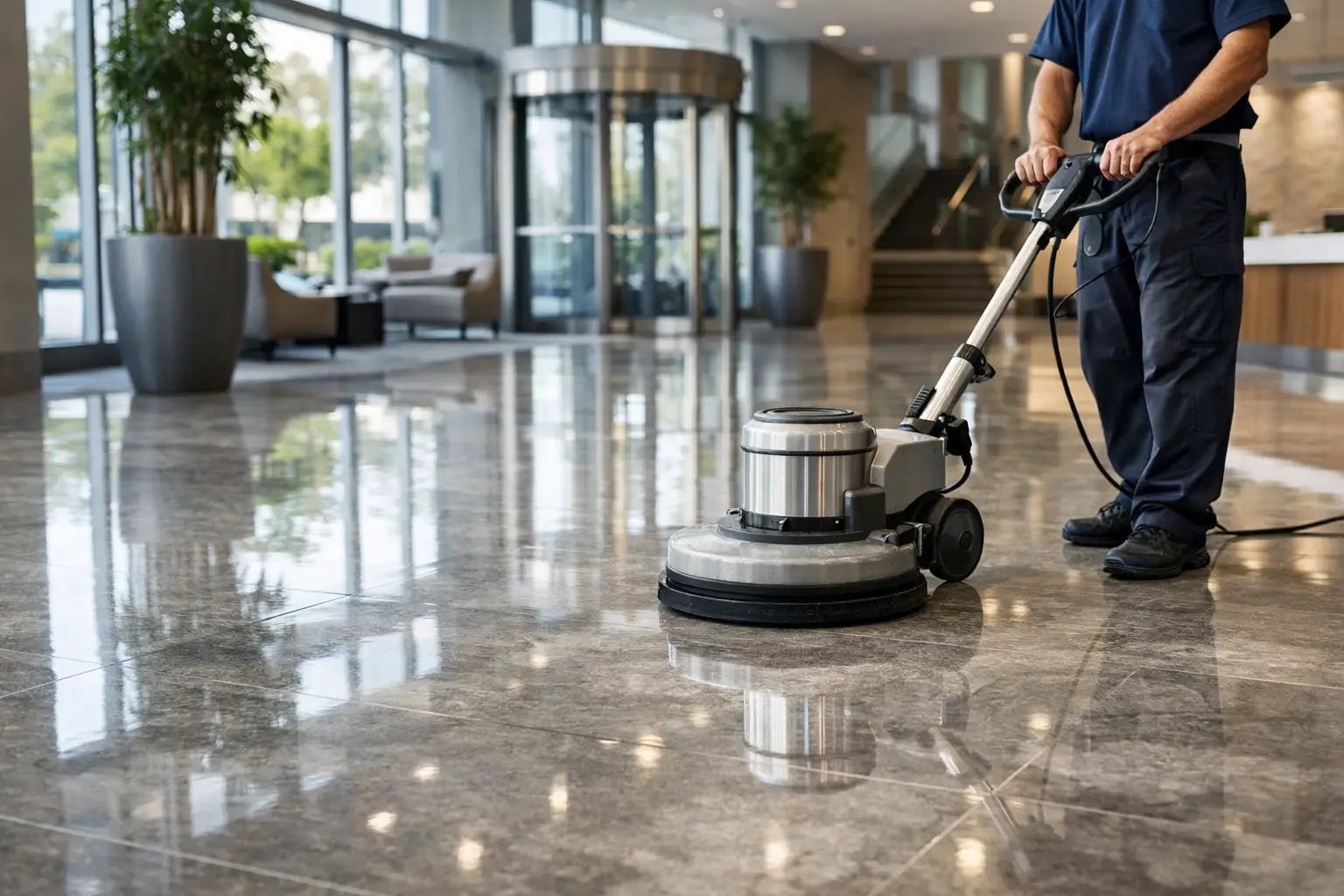
A foyer floor begins telling visitors what to expect before they reach reception. When marble has lost its reflection, terrazzo is scarred by grit, or limestone appears patchy beneath overhead lighting, the entire entrance can feel neglected. Professional commercial foyer floor polishing restores the clarity, colour and refined finish that presentation-critical buildings require – without the expense, waste and disruption of replacing an otherwise sound surface.
For office towers, hotels, retail precincts, strata buildings and premium residential developments, polishing is not simply a cleaning exercise. It is a material-specific restoration process that corrects wear, renews the surface and helps protect a significant property asset.
Why Foyer Floors Lose Their Finish
A commercial foyer carries more than foot traffic. Fine sand and grit from shoes act like an abrasive underfoot, gradually scratching polished stone. Moisture near entrances can leave mineral deposits or encourage staining, while poorly chosen cleaning products may dull the surface or damage protective sealers.
The pattern of wear is rarely even. Doorways, lift approaches, reception paths and turning points often become noticeably duller than surrounding areas. On marble and limestone, acidic spills or unsuitable chemicals can also create etching – pale, rough marks where the stone itself has been chemically affected. No amount of routine mopping can polish away etched or scratched stone.
High-gloss floors can make these problems particularly visible. Strong foyer lighting catches every scuff, drag mark and uneven reflection. Even a high-quality stone floor can appear tired when its finish no longer reflects light consistently.
Commercial Foyer Floor Polishing Is a Restoration Process
The right approach begins with identifying the material, its existing finish and the cause of deterioration. Marble, terrazzo, granite, limestone, travertine and engineered stone all respond differently to abrasion, moisture and chemical exposure. A process that produces excellent results on granite may be inappropriate for soft, acid-sensitive limestone.
A specialist will first assess whether the floor needs deep cleaning, honing, polishing, repairs, sealing or a combination of treatments. Minor surface dullness may respond well to polishing after a thorough clean. Heavier scratching, lippage between tiles, etching or ingrained traffic patterns usually require honing first. This uses progressively refined abrasives to level and refine the surface before the final polish is developed.
Polishing then brings back the desired degree of reflectivity. That does not always mean a mirror-like finish. A luxury hotel lobby may call for high clarity and brilliance, while an office or strata foyer may benefit from a satin finish that still looks elegant but is more forgiving of daily traffic. The best result is one that suits the stone, the architecture and the operational demands of the space.
Honing, polishing and cleaning are not interchangeable
Cleaning removes surface soil and residues. It is essential, but it does not remove scratches embedded in the stone. Honing corrects physical damage and evens the surface, typically reducing or removing etch marks, scratches and worn traffic lanes. Polishing refines that prepared surface to create depth, clarity and sheen.
Confusing these services can lead to disappointing outcomes. Applying a topical shine product over a scratched or etched floor may create a temporary gloss, yet it can highlight imperfections, attract dirt or wear unevenly. Professional restoration addresses the surface condition first, rather than disguising it.
The Value of Restoring Rather Than Replacing
Replacing a foyer floor can involve demolition, noise, dust, waste disposal, new materials and extended access restrictions. It may also create difficulties where matching stone is unavailable, especially in older buildings or architect-designed interiors.
Where the stone remains structurally sound, restoration is usually the more considered investment. It can revive the existing material, retain the original design intent and avoid the cost of a full replacement project. Chips, open joints and damaged grout can often be repaired as part of the wider treatment, producing a far more cohesive result.
There are limits. Deep cracks, severely loose tiles, major substrate movement or extensive structural failure may require replacement work before polishing can be considered. A proper assessment should be candid about those conditions. The objective is not to polish every problem away, but to recommend the treatment that delivers a durable, high-quality outcome.
Protecting a Polished Commercial Entrance
Once a floor has been restored, its longevity depends on how it is protected and maintained. Sealers can help reduce the absorption of water-based and oil-based contaminants in porous stone and grout. They do not make stone invulnerable, nor do they prevent scratches, but the right sealer makes everyday spills easier to manage and supports a cleaner appearance.
Entry matting is equally important. Effective matting captures abrasive debris before it reaches the stone, particularly during wet weather. It should be long enough for visitors to take several steps, regularly vacuumed and kept dry. A small mat placed directly inside the door provides limited protection for a high-traffic foyer.
Daily maintenance also deserves attention. Use a neutral-pH cleaner formulated for natural stone, clean mop heads and minimal water. Avoid acidic cleaners, bleach, harsh degreasers and abrasive pads unless a stone specialist has confirmed they are suitable. These products can compromise the finish, leave residues or cause irreversible etching on calcareous stones such as marble, travertine and limestone.
Plan restoration around building operations
Commercial work needs to respect the way a property functions. A foyer may have peak arrival periods, security requirements, after-hours access rules and tenants who rely on uninterrupted entry. Professional planning considers these practical realities before work begins.
Depending on the size and condition of the floor, restoration may be staged by zone or scheduled outside business hours. Dust control, slip management, curing times for sealers and safe pedestrian access all need to be managed carefully. The fastest approach is not always the best one if it compromises the finish or creates avoidable disruption.
For Sydney facilities managers, seasonal conditions can also influence timing. Wet periods bring more grit and moisture into entrances, while major events or tenancy changes may leave little room for visible works. Building a restoration programme around these pressures helps maintain a consistently polished appearance rather than waiting until the floor has become visibly worn.
Choosing the Right Finish for Your Property
A premium foyer does not need to look identical to every other foyer. The desired finish should complement the stone and the setting. Polished marble can create a striking sense of light and luxury, particularly in reception spaces with controlled cleaning and strong matting. Honed limestone offers a quieter, architectural elegance, though it needs careful maintenance due to its softer, more absorbent nature.
Terrazzo is highly durable and can be restored to an impressive sheen, making it a strong choice for busy public areas. Granite generally withstands traffic well and may retain a polish for longer, but it can still become dull through abrasion, residue build-up or poor maintenance. The material may be hard, but it is not maintenance-free.
The most successful commercial foyer floor polishing work balances visual ambition with realistic use. A finish that looks exceptional on the day of restoration should also be practical to maintain through the weeks and months that follow.
When to Arrange an Assessment
Do not wait for a floor to look severely damaged before seeking advice. Early intervention can often reduce the amount of honing required and preserve more of the original stone surface. It is worth arranging an assessment when you notice dull pathways, visible etching, uneven gloss, persistent staining, scratching, damaged grout or a floor that no longer responds to regular cleaning.
Grand Stone Restoration applies material-specific methods to restore commercial stone floors with precision, from surface preparation and repairs through to polishing and protective sealing. The aim is not a short-lived shine, but an entrance that reflects the quality of the property behind it.
A well-restored foyer gives visitors confidence before a word is spoken. With the correct treatment and a sensible maintenance plan, that first impression can remain as enduring as the stone beneath it.