
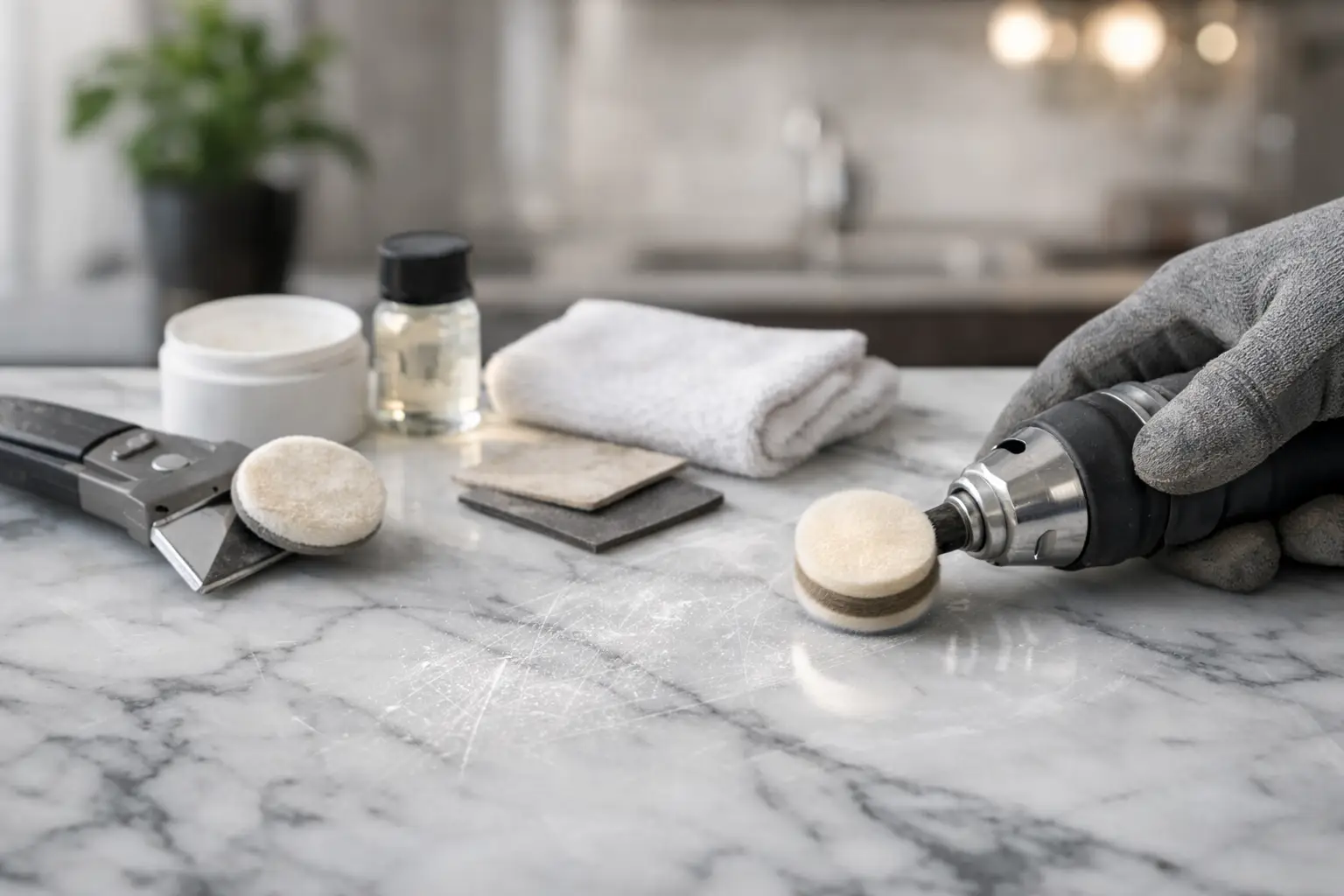
A marble vanity can look tired long before it is worn out. Fine scratches catch the light, deeper marks interrupt the polished reflection, and a once-luxurious floor can begin to appear flat and neglected. So, can scratched marble be repaired? In most cases, yes. The right restoration process can remove or greatly reduce scratches, refine the surface and restore the elegant finish that makes marble such a valuable feature.
The key is treating the actual damage, not simply applying a temporary shine. Marble is a calcite-based natural stone with a comparatively soft surface. It needs a material-specific approach that protects the stone while producing an even, refined result.
Can Scratched Marble Be Repaired Without Replacement?
Professional marble restoration is often a far more practical alternative to replacement. Replacing a marble floor, benchtop or bathroom wall may involve demolition, matching difficulties, new installation costs and significant disruption to the property. Restoration works with the existing stone, preserving its natural character while correcting the visible wear.
Whether a scratch can disappear completely depends on its depth, the marble variety and the finish of the surface. Light scratches in a polished marble floor are commonly removed through careful honing and polishing. Moderate scratches may require a more progressive restoration sequence to level the surrounding surface. Deep gouges, chips or cracks can usually be repaired, but may need colour-matched resin filling before the stone is honed and polished.
A skilled technician will assess the marble before proposing a treatment. This matters because an overly aggressive process can alter the surface profile, soften edges or create an obvious patch. Premium restoration is about achieving consistency across the repaired area, not merely making one mark less noticeable.
What Causes Scratches on Marble?
Marble scratches more easily than many property owners expect. Grit tracked in from outside is a frequent culprit on floors, especially around entryways and in busy foyers. When footwear moves abrasive particles across the stone, those particles can create fine lines and gradually dull the finish.
Benchtops and vanities face different risks. Dragging ceramic pots, metal accessories, appliances or decorative objects across marble can leave scratches. In bathrooms, abrasive cleaning pads and powdered cleaners can mark the surface. A scratched finish can also be confused with etching, which is chemical damage caused by acidic products such as lemon juice, vinegar, wine or some bathroom cleaners.
The distinction is important. A scratch is a physical abrasion, while an etch is a dull or lighter mark caused by acid reacting with the marble. Both can affect the appearance of the stone, and both are often addressed through professional honing and polishing. However, the treatment must suit the source and depth of the damage.
How Professional Marble Scratch Repair Works
There is no single polish that safely fixes every marble surface. Professional restoration follows a controlled sequence, selected according to the stone’s condition and the finish required.
Inspection and finish matching
The process begins with an inspection of the marble, its existing finish and the extent of the scratches. Polished marble requires a crisp, reflective finish, while honed marble has a softer, low-sheen appearance. The repair needs to blend with the intended finish, otherwise the treated section can look inconsistent beside the surrounding stone.
Technicians also identify any associated issues, including etching, stains, chips, lippage between tiles, cracked grout or failed sealant. Addressing these at the same time can produce a more complete transformation and avoid repeating work later.
Honing to remove surface damage
Honing uses specialist diamond abrasives to carefully refine the marble surface. For light scratches, only a fine level of honing may be needed. Deeper scratches require a more measured progression through different abrasive grades, gradually levelling the affected surface without taking away more material than necessary.
This is the stage that removes the damage rather than disguising it. It also explains why household creams and off-the-shelf polishing products rarely deliver a lasting repair. They may add temporary gloss, but they do not reliably level scratches or correct uneven wear across the stone.
Polishing or refining the final sheen
Once the surface has been honed, the marble is polished to restore its natural brilliance, or refined to a honed finish where that is preferred. A quality polish should look even across the full area, with clarity and depth rather than a plastic-looking coating.
On large floors or commercial spaces, the restoration process may also correct traffic lanes where the centre of a walkway has become noticeably duller than the perimeter. This creates a more balanced, presentation-ready finish for homes, lobbies, retail spaces and hospitality interiors.
Repairing deeper marks and chips
Where a scratch has become a gouge or is accompanied by a chip, a specialist may use a durable colour-matched repair compound. The material is carefully filled, cured and refined with the surrounding stone. The goal is to minimise the visual interruption while ensuring the repair performs appropriately in the location.
No reputable specialist should promise that every deep repair will be entirely invisible at every angle. Natural marble has veining, movement and colour variation, and light can reveal even highly skilled repairs in certain conditions. However, a well-executed repair can make damage far less noticeable and restore the surface’s overall elegance.
When DIY Marble Repair Can Make Damage Worse
A small superficial mark may tempt an owner to try a DIY remedy. The risk is that many common methods are designed for harder materials or are too abrasive for marble. Scouring pads, abrasive powders, acidic cleaners and untested polishing compounds can turn a contained scratch into a wider dull patch.
Wax-based products create another problem. They can temporarily deepen colour or add shine, but may attract dirt, wear unevenly and complicate later professional restoration. Marble does not benefit from being coated over when the real issue is surface damage beneath the coating.
DIY repair is particularly risky on high-value benchtops, bookmatched wall panels, heritage stone and expansive polished floors. These surfaces require careful control of pressure, abrasives and finish matching. The cost of correcting an unsuccessful attempt can exceed the cost of an initial professional repair.
Sealing Helps Protect Marble, But It Does Not Stop Scratches
After restoration, sealing is often recommended to improve resistance to stains and moisture penetration. This is especially valuable on kitchen benchtops, dining surfaces, bathroom vanities and porous marble tiles. A quality impregnating sealer works below the surface rather than forming a thick visible layer.
However, sealing does not make marble scratch-proof or acid-proof. It will not prevent a sharp object from abrading the stone, and it cannot stop acidic spills from etching an unprotected polished finish. For vulnerable areas, practical habits remain essential: use felt pads beneath accessories, avoid dragging objects, clean spills promptly and use pH-neutral stone cleaners.
For marble dining tables and selected benchtops, protective anti-etch film can also be worth considering. This is a different solution from sealing, offering a physical protective layer where frequent exposure to food, drink or everyday use makes etching a recurring concern. Its suitability depends on the surface, desired appearance and how the marble is used.
Choosing the Right Finish for Your Marble
Repairing scratches is also an opportunity to reconsider the finish. A high-polish finish brings out marble’s colour, veining and reflective luxury, making it a popular choice for formal entries, bathrooms and statement benchtops. It can, however, show etching and fine scratches more readily in strong light.
A honed finish offers a more understated appearance with less reflectivity. It is often favoured in contemporary kitchens, high-traffic floors and spaces where a softer, architectural look is preferred. Honed marble can still scratch and stain, but fine wear may be less visually obvious than on a mirror-polished surface.
The best choice depends on the marble itself, the room’s lighting, the level of use and the standard of presentation you want to maintain. An experienced restoration specialist can provide guidance based on the stone’s condition rather than applying the same finish to every project.
Restore the Marble You Already Own
Scratches do not automatically mean a marble surface has reached the end of its life. With correct honing, polishing, repair and protection, worn stone can regain the depth, smoothness and lasting shine that replacement rarely delivers without considerable expense and disruption.
For Sydney property owners and managers, Grand Stone Restoration assesses each marble surface individually, from delicate bathroom vanities to high-traffic commercial floors. A precise restoration approach preserves the material, improves the presentation of the space and helps protect the investment already beneath your feet or at the centre of your home.