
A pale quartz benchtop can look immaculate at installation, then slowly lose its crisp, refined finish beneath coffee rings, cooking residue and daily wear. This engineered stone maintenance guide is designed to prevent that gradual decline and help Sydney property owners protect the value, hygiene and visual impact of their surfaces.
Engineered stone products are prized for their consistent colour, contemporary appearance and practical performance. Yet “low maintenance” does not mean maintenance-free. The resin-bound surface reacts differently to heat, chemicals and abrasion than marble, granite or porcelain. The right care is simple, but it must be consistent.
What Makes Engineered Stone Different
Engineered stone is typically made from mineral material, often quartz, combined with resins and pigments. This produces a dense, non-porous surface that is highly resistant to ordinary staining and does not generally need the routine sealing associated with many natural stones.
That density is an advantage in kitchens, bathrooms, reception counters and commercial amenities. Spills are less likely to penetrate the surface, and everyday cleaning is straightforward. However, the resin component can be affected by excessive heat, harsh chemicals and repeated abrasive cleaning. A surface can become dull, marked or discoloured even when it has never suffered a dramatic accident.
Care requirements also vary between brands, colours and finishes. A polished white benchtop may reveal residue and fine scratches more readily than a textured dark surface. Matte and concrete-look finishes can retain grease in their texture if cleaning products are not thoroughly rinsed away. The manufacturer’s care instructions should always take priority where they differ from general advice.
Daily Care That Preserves the Finish
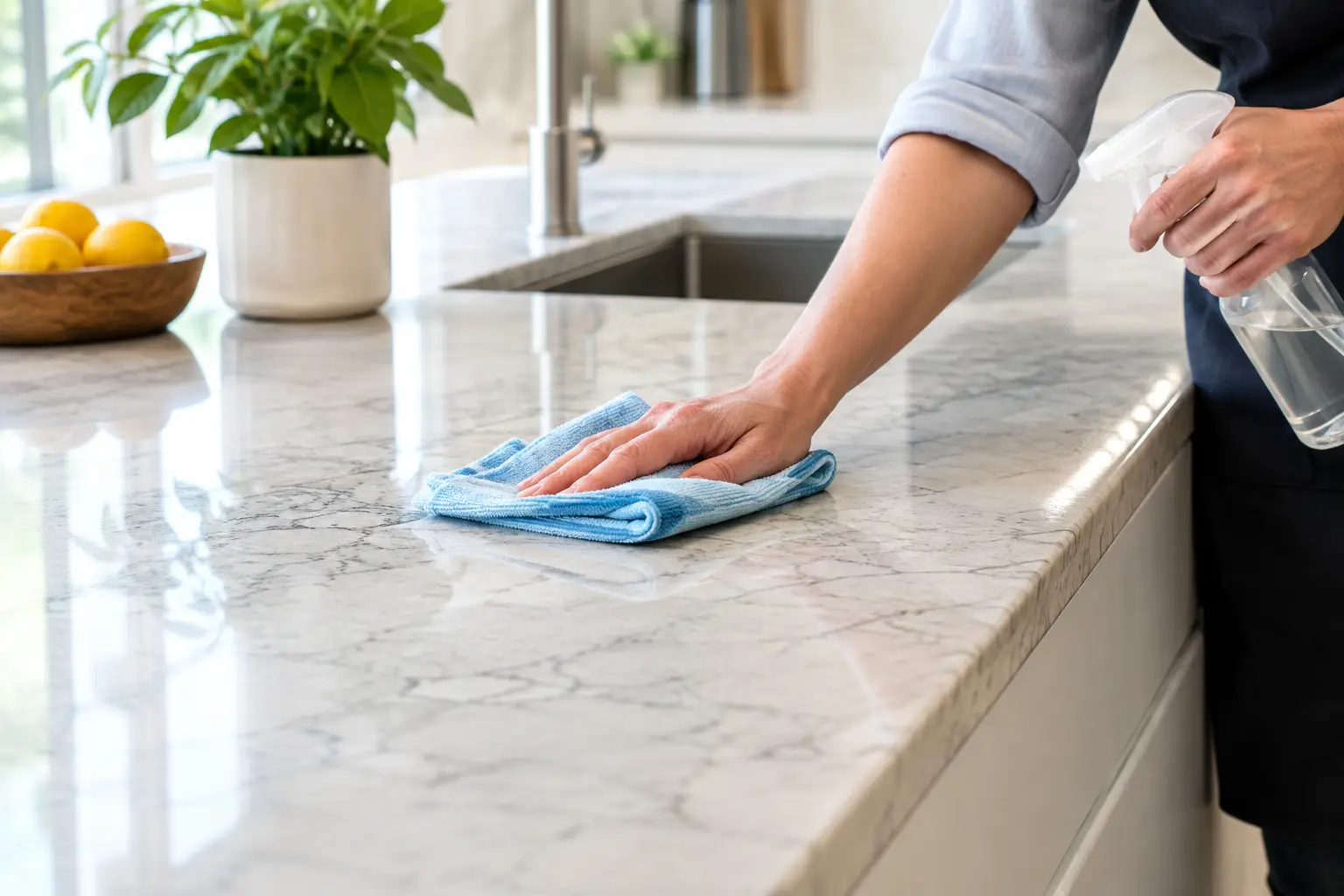
For most engineered stone benchtops, a soft microfibre cloth, warm water and a small amount of pH-neutral detergent are enough. Wipe the surface after preparing food, then rinse the cloth and wipe again to remove detergent residue. Finish with a dry, clean microfibre cloth if you want to avoid water marks and restore a more polished appearance.
This modest routine matters most around cooktops, sinks and coffee stations. Oils, soaps and food residue can leave a hazy film that is often mistaken for permanent dullness. On commercial counters, frequent light cleaning is preferable to allowing residue to build up and then attacking it with a stronger product.
Clean spills promptly, particularly turmeric, red wine, tea, coffee, coloured sauces, makeup and ink. Engineered stone is non-porous, but prolonged contact with strongly coloured materials can still leave a visible mark, especially on lighter surfaces or where the finish has already been compromised.
The Engineered Stone Maintenance Guide to Avoiding Damage
Most preventable damage comes from three sources: heat, harsh chemistry and friction. None is difficult to manage, but each can leave marks that ordinary cleaning will not correct.
Heat Is Not Harmless
Do not place hot pots, roasting dishes, air-fryer baskets or appliances that release concentrated heat directly onto the benchtop. Thermal shock can damage the resin matrix, while heat exposure may cause discolouration, cracking or a change in sheen. A quality trivet is a small precaution that protects a costly surface.
Be particularly careful with slow cookers, electric frying pans and portable induction units. Their heat may be lower than an oven dish, but prolonged contact can concentrate warmth in one area. Position appliances on a heat-resistant mat and allow them to cool before moving them across the surface.
Keep Abrasives Out of the Cleaning Cupboard
Scouring pads, steel wool, abrasive creams and harsh scrubbing powders can leave fine scratches or create uneven sheen. So can repeated use of gritty cleaning tools. Once a polished surface has been microscopically abraded, it catches light differently and may look cloudy from certain angles.
Use a soft cloth or non-scratch sponge instead. For stubborn dried residue, soften it first with warm water and a mild cleaner, then lift it carefully with a plastic scraper held flat to the surface. Do not use blades, knives or metal scrapers.
Be Selective With Chemicals
Avoid oven cleaner, paint stripper, drain cleaner, strong degreasers, highly alkaline products, acidic cleaners and products containing solvents or bleach unless the stone manufacturer specifically permits them. These products can attack the resin, leaving pale patches, loss of gloss or persistent streaking.
Bathroom cleaning deserves extra care. Toilet cleaners and mould treatments can splatter onto vanity tops, while aerosol products can settle as a fine chemical film. Apply these products directly where required rather than spraying broadly across the room, and wipe any overspray immediately.
Kitchens: The Habits That Make the Biggest Difference
Engineered stone should not be used as a chopping board. Knives may not seriously harm every surface on first contact, but repeated cutting can score the finish and blunt expensive blades. Use a timber or quality plastic board for food preparation.
Keep acidic foods and strong dyes off the benchtop where practical. Lemon juice, vinegar and wine are less problematic for engineered stone than they are for marble, but leaving anything to dry on the surface is never good practice. The issue is often not a single spill but repeated exposure combined with inadequate rinsing.
Under-bench leaks also deserve attention. Water itself may not penetrate the slab, yet persistent moisture can affect joins, cabinetry, silicone and the areas around sinks. If you notice swelling cabinetry, a dark line at a join or movement around the sink cut-out, arrange an inspection before a minor issue becomes a repair project.
Bathrooms, Laundries and Commercial Surfaces
Vanity tops and laundry benches face a different mix of risks: hair colour, cosmetics, perfume, detergent, whitening products and chemical cleaners. Wipe bottles before storing them and use trays beneath frequently used products. This protects the surface and makes daily cleaning faster.
In commercial settings, presentation is part of the property’s value. Reception desks, café counters and communal kitchen benchtops should be cleaned with approved products by trained staff. A generic cleaner supplied in bulk may be efficient for vinyl or tiles but unsuitable for an engineered stone feature surface.
Facilities managers should also document the surface type and approved cleaning method. This helps prevent well-intentioned contractors from using aggressive products or tools that cause irreversible visual damage.
When Marks Are More Than Surface Grime
A dull patch does not always mean the whole benchtop needs replacement. It may be a film of detergent, mineral residue around a sink, superficial abrasion or chemical damage limited to one area. The correct remedy depends on the cause, not just the appearance.
Avoid DIY sanding, grinding, polishing or cutting of engineered stone. Existing engineered stone can be cleaned and cared for safely, but any work that disturbs the material may create hazardous silica-containing dust. Australia’s restrictions on engineered stone make specialist assessment particularly important for repairs, alterations and restoration work.
A qualified stone restoration professional can identify whether a mark can be cleaned, whether a chip or joint requires repair, and whether a damaged finish has realistic restoration options. Results depend on the product, colour, finish and type of damage. In some cases, targeted work can significantly improve the surface; in others, a replacement section may be the sounder option.
Protecting the Investment Over Time
Unlike porous natural stone, engineered stone does not usually benefit from conventional penetrating sealers. Applying an unsuitable coating can create streaks, alter the surface feel or make future cleaning more difficult. Protection is better achieved through good habits, heat management and prompt spill removal.
Periodically inspect joins, silicone edges, sink areas and high-use zones. Look for chips, cracking, persistent staining, dull patches or lifting at the edges. Early attention preserves both the surface and the cabinetry beneath it, particularly in premium kitchens and high-traffic commercial interiors.
For properties where finish quality matters, professional advice is worthwhile before damage becomes conspicuous. Grand Stone Restoration assesses surfaces according to their material, condition and intended use, with restoration recommendations tailored to the practical realities of the space.
A well-maintained engineered stone surface should feel effortless rather than fragile. Treat it with measured care, keep damaging heat and chemicals at a distance, and seek specialist guidance when its original brilliance no longer returns with ordinary cleaning.