
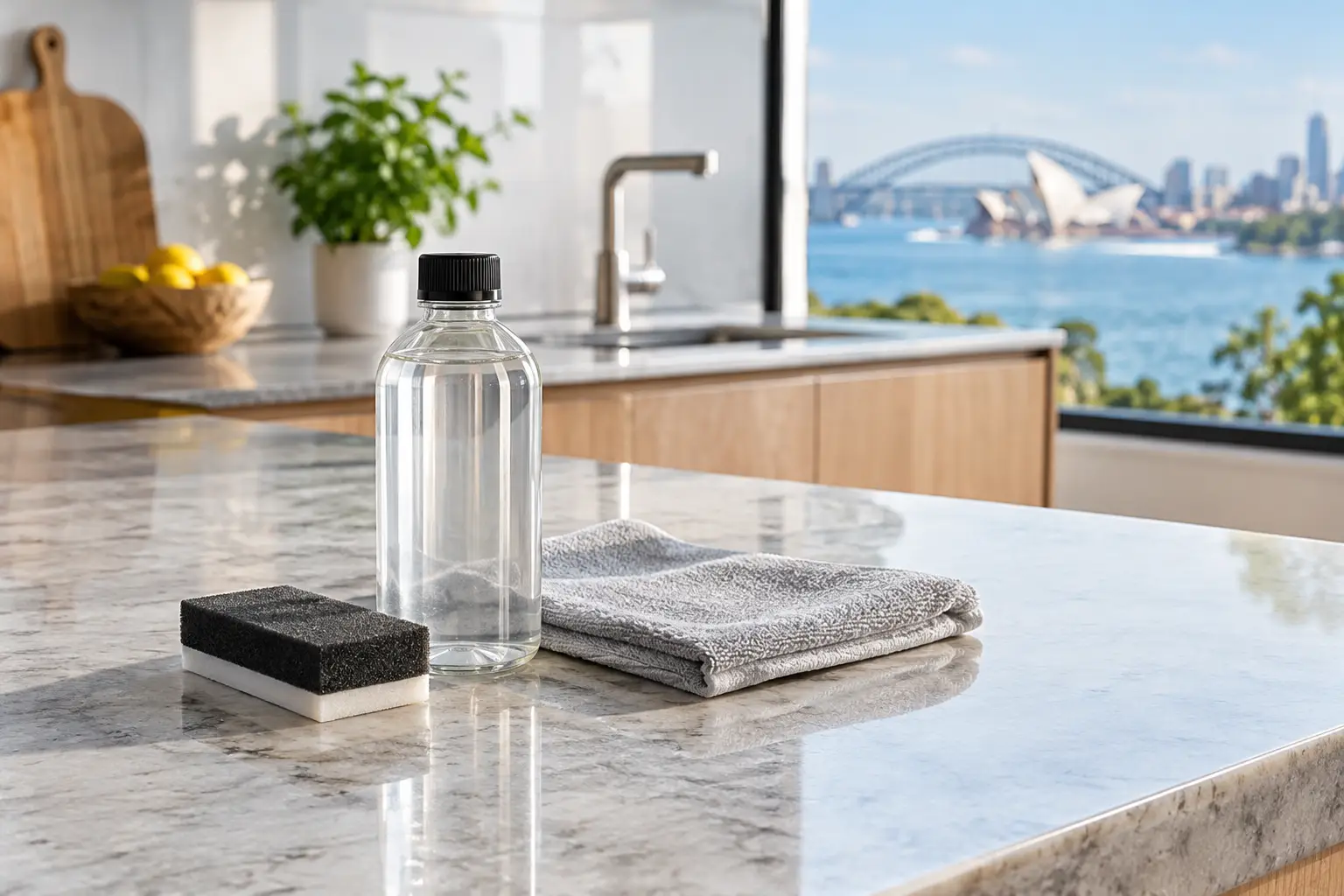
A beautiful stone benchtop should invite use, not concern. Food safe stone sealers are designed to reduce the risk of liquids, oils and food stains penetrating porous natural stone, while preserving the refined finish that makes marble, granite and limestone so desirable in the first place. But the phrase deserves closer attention: a sealer is not automatically suitable for every kitchen surface, and a premium result depends as much on the stone, preparation and curing process as the product itself.
For Sydney homes, apartments and hospitality spaces where stone is a prominent feature, the right protection can make daily care easier and help preserve a high-value surface for years. The wrong product, or a rushed application, can leave residue, alter the appearance or provide far less protection than expected.
What does “food safe” actually mean?
When people ask for a food safe sealer, they usually want confidence that a treated benchtop can remain a practical surface around food preparation. In this context, the term generally refers to a sealer that, once fully cured as directed, is suitable for incidental food contact.
That is different from saying the sealer is safe to consume, that it will make an unhygienic surface sanitary, or that every product carrying similar language meets the same standard. The product data, intended use and curing instructions matter. A professional will assess these details before recommending a treatment for a kitchen island, pantry benchtop, splashback or commercial food-service area.
The distinction is especially relevant with natural stone. Marble, limestone, travertine and some sandstones are porous to varying degrees, meaning they can absorb liquids below the visible surface. A penetrating sealer helps limit that absorption. It does not form a substitute for sensible food handling, regular cleaning or a chopping board for direct preparation.
Why kitchen stone needs the right protection
A stone benchtop can be both durable and vulnerable. Granite is commonly more resistant to staining than marble, but it can still have open pores, natural fissures or absorbent sections. Honed marble offers a soft, elegant appearance, yet its matte surface can show oils and darkened patches quickly if left unprotected. Limestone and travertine require even more considered care.
The daily culprits are familiar: olive oil around the cooktop, turmeric, red wine, citrus, vinegar, coffee and cooking fats. Some cause stains by absorbing into the stone. Others, particularly acidic ingredients, chemically etch calcium-based stones such as marble and limestone. Sealing assists with staining resistance, but it cannot stop acid etching.
This is where accurate advice protects both the surface and the owner’s expectations. A food safe penetrating sealer may give valuable time to wipe away a spill before it enters the stone. It will not prevent lemon juice from dulling polished marble. Where etching is a persistent concern, a restoration specialist may recommend a different care approach or an anti-etch protective film for suitable areas.
Food safe stone sealers: penetrating versus topical products
For most natural-stone kitchen benchtops, a high-quality impregnating or penetrating sealer is the preferred option. Rather than sitting as a visible coating across the surface, it works beneath the stone’s pores to repel water and oil. The natural colour, texture and polish are retained, without creating a thick film that may scratch, peel or become cloudy with wear.
Topical sealers and coatings have their place, particularly on certain floors or heavily worn commercial surfaces. On a food-preparation benchtop, however, they require careful product selection. A surface film can change slip, sheen and tactile feel. It may also wear unevenly around sinks, cooktops and high-use edges. If it is not designed for the setting, it can leave a finish that looks artificial rather than beautifully restored.
There is no one-size-fits-all answer. A pale honed marble island, a black granite bar and a textured sandstone entertaining area have different absorption rates, visual requirements and exposure to food, moisture and sunlight. The sealer must suit the material, not simply the room.
Engineered stone is a separate consideration
Engineered stone products, including quartz-based benchtops, are usually far less porous than natural stone and often do not need conventional sealing. Applying a sealer where it is not required can leave streaks or a hazy residue that compromises the factory finish.
That does not mean engineered stone is maintenance-free. Resins and finishes can still be affected by harsh chemicals, heat, abrasion and unsuitable cleaners. Before any treatment, the surface should be correctly identified. This is particularly important in properties with a mix of marble, granite, porcelain and engineered stone throughout the kitchen and adjoining living spaces.
The application process determines the result
Even the finest sealer cannot perform properly on a surface that is dirty, damp or coated with old residues. Professional preparation begins with identifying the stone and examining its condition. Existing stains, etch marks, scratches, chips, grout residues and previous coatings can all influence the treatment plan.
The stone is then cleaned with products suited to its composition and allowed to dry thoroughly. Moisture trapped in the pores can interfere with sealer penetration. Depending on the surface, restoration may be needed before sealing. Honing can remove light etching and scratches, while polishing restores clarity and brilliance to a polished finish. Sealing over damage does not repair it – it simply protects the surface in its current state.
Once ready, the sealer is applied evenly and allowed to dwell for the specified period so it can penetrate. Excess material must be removed carefully. This step is vital: leaving excess sealer on the surface can create dull patches, smears or a sticky residue that attracts dirt. The treated stone then needs its full cure time before normal use and food exposure.
At Grand Stone Restoration, sealing is approached as the final protective stage of a broader restoration process, not as a quick wipe-on service. That attention to preparation is what helps a restored surface retain its natural elegance while gaining practical, lasting protection.
How to tell when a stone benchtop needs sealing
The simplest indication is a water test. Place a few drops of water on a clean, dry area of the stone and observe them for several minutes. If the water beads and remains on the surface, the existing protection may still be performing well. If the stone darkens as the water absorbs, it may be time for assessment and resealing.
This is only a guide. Water repellence does not always reflect oil repellence, and a surface can have localised wear around the sink, cooktop or most-used preparation zones. Darker patches, recurring oil marks and faster absorption are all signs worth investigating.
How often sealing is needed depends on the stone, sealer quality, finish, cleaning habits and level of use. A busy family kitchen or commercial serving area will generally need more frequent review than a low-use stone vanity. Resealing on a fixed annual schedule without checking the surface can be unnecessary, while waiting until deep stains appear can make restoration more involved.
Care after sealing
A sealed stone surface still benefits from disciplined everyday care. Use a pH-neutral stone cleaner or a soft cloth with clean water for routine wipe-downs, then dry the surface rather than allowing puddles to sit. Avoid abrasive powders, strong degreasers, bleach, acidic cleaners and supermarket products marketed as universal cleaners. They can dull the stone, weaken protection or damage sensitive finishes.
Wipe spills promptly, especially wine, oils, tomato-based sauces and acidic foods. Use trivets for hot cookware and chopping boards for knives, even on a well-protected granite or engineered-stone benchtop. These habits preserve the finish and prevent damage that no sealer is designed to stop.
For marble and limestone, it is wise to keep acidic food preparation away from exposed stone where possible. A timber board, tray or dedicated preparation zone is a small adjustment that protects a significant investment.
Choosing protection with confidence
Food safe stone sealers are a valuable part of caring for natural stone, but they should never be chosen on a label alone. The most successful result comes from matching the right penetrating product to the specific stone, restoring any existing damage first, applying it precisely and allowing adequate curing time.
If your benchtop is staining, looking dull or absorbing water unevenly, a specialist assessment can clarify whether it needs cleaning, restoration, sealing or simply better ongoing care. The aim is not to cover the stone’s character, but to preserve its brilliance and make it more enjoyable to live with every day.