
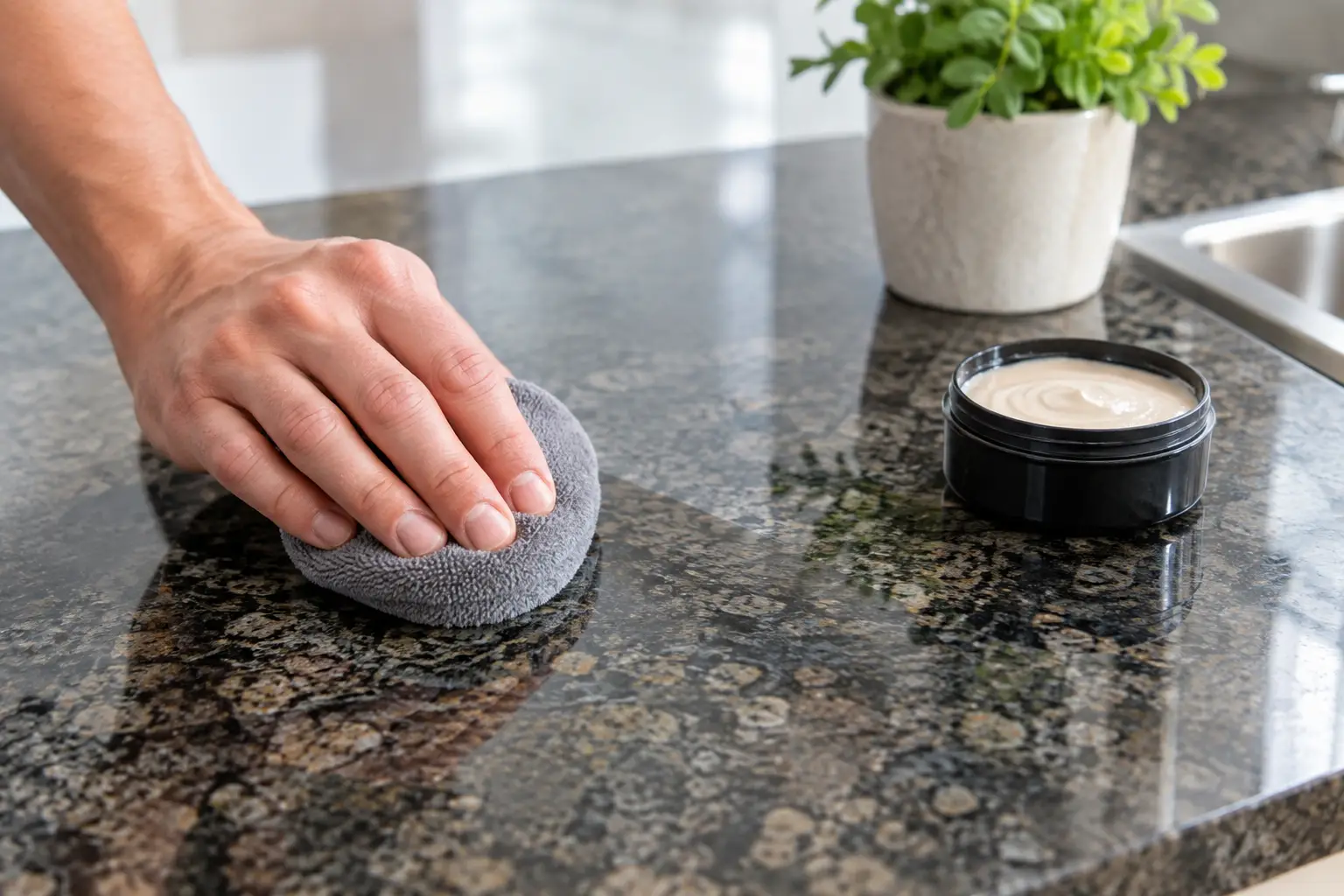
A dull patch on an otherwise glossy granite benchtop is hard to ignore. It catches the light differently, makes a premium kitchen feel worn, and often becomes more noticeable after every clean. Effective granite benchtop dull spot repair is not a matter of applying more polish. It begins with identifying why that small area has lost its clarity, then restoring the surface evenly without creating a visible repair boundary.
Granite is valued for its strength, natural movement and enduring elegance, but it is not invulnerable. Heat, abrasive cleaning, food residue, worn sealers and everyday preparation can each affect the finish in different ways. The right treatment protects the stone’s original character while returning the benchtop to a refined, consistent shine.
Why a granite benchtop develops dull spots
A dull spot does not always mean the granite itself is damaged. In many Sydney kitchens, the apparent loss of shine is caused by a film left behind by cleaning sprays, dishwashing liquid, oils or hard-water minerals. These residues can build up in frequently used zones near the sink, cooktop or food-preparation area, creating a cloudy or smeared appearance that ordinary wiping does not remove.
Where the dullness remains after professional-grade cleaning, the finish may have been physically altered. Repeated use of abrasive cream cleansers, scourers or powders can create fine scratches that scatter light. The stone may still feel smooth to the touch, yet it no longer reflects light with the same depth as the surrounding polished surface.
Some natural granites also contain softer minerals, veins or resin-filled areas. These sections can wear differently from the denser body of the slab. A benchtop exposed to strong cleaners, acidic spills or prolonged moisture may show uneven lustre in these areas first. This is why a treatment that works beautifully on one granite can be unsuitable for another.
A failed or uneven coating can also be mistaken for dull stone. If a topical product has been applied in the past, it may wear away in patches or trap contaminants at the surface. Adding another coat over the top rarely creates a convincing finish. It often makes the difference between the repaired area and the rest of the benchtop more obvious.
Granite benchtop dull spot repair starts with diagnosis
The visible mark is only part of the assessment. A stone restoration specialist will examine the dull area under direct light, check whether it is a residue, scratch pattern, heat-related change, coating issue or a variation within the stone itself, and compare it with nearby sections of the slab.
This matters because granite is a broad category, not a single material. Some varieties are exceptionally dense and highly polished; others are more porous or contain minerals that react differently to moisture and mechanical polishing. The age of the benchtop, its fabrication method, edge profile, existing sealer and previous cleaning habits all influence the safest repair method.
A sound assessment also considers scale. A small mark from a harsh cleaner may be corrected locally. If the same loss of lustre appears across the main preparation zone, polishing only one patch can leave an obvious halo. In that situation, treating the wider section, or sometimes the full benchtop surface, produces a more natural and premium result.
The professional restoration process
Professional repair is controlled, measured work. The goal is to refine the affected surface just enough to remove the source of dullness, then blend its reflectivity with the surrounding granite.
Deep cleaning and residue removal
The first stage is to remove oils, soap film, mineral deposits and any incompatible surface products. This reveals the true condition of the granite. If clarity returns after cleaning, more aggressive work is unnecessary – an important outcome for preserving the life of a high-value benchtop.
Honing away fine surface damage
Where light scratching or abrasion has dulled the finish, the affected area may need careful honing. Using suitable diamond abrasives and controlled moisture, the technician refines the compromised surface. This is a precision process: insufficient honing leaves the defect visible, while excessive honing can flatten the polish or alter the texture around a resin-filled vein.
Polishing for an even reflection
Once the surface has been correctly prepared, polishing restores its depth and clarity. The objective is not merely to make the repaired spot shiny. It is to match the level of gloss, colour richness and light reflection across the benchtop so the repair does not announce itself every time sunlight reaches the kitchen.
On darker granite, this blending stage is particularly important. Black, charcoal and deep brown stones show streaks, drag marks and variations in gloss more readily than lighter materials. Experience with stone-specific compounds, pads and polishing sequences makes a substantial difference to the final finish.
Sealing and protection where appropriate
After restoration, an impregnating sealer may be recommended to assist with stain resistance. A quality sealer penetrates beneath the surface rather than sitting on top like a glossy coating. It does not make granite maintenance-free, and it will not prevent scratching, but it can give you more time to clean up oils, wine, sauces and other common kitchen spills.
Whether sealing is needed depends on the granite and its condition. Dense stone may require little or no additional protection, while a more absorbent variety can benefit from a tailored sealing programme. A specialist should test rather than assume.
What not to do with a dull granite patch
The temptation to fix a dull spot quickly is understandable, particularly before an inspection, sale campaign or special occasion. However, several common methods can turn a manageable surface issue into a more extensive restoration job.
Avoid abrasive powders, cream cleaners and scouring pads. Even products marketed for kitchens can contain ingredients that leave micro-scratches or a stubborn film on polished stone. Vinegar, lemon juice and other acidic household remedies are also poor choices. Granite is generally more acid-resistant than marble, but mineral content varies, and acidic cleaning is not a reliable way to restore shine.
Furniture polish, cooking oil and silicone-based shine products should also stay off the benchtop. They can create a temporary darker appearance, attract grime and complicate later professional work. Likewise, do not apply a generic stone sealer simply because the finish looks dull. A sealer addresses absorption, not every cause of reduced gloss.
For day-to-day cleaning, use a pH-neutral stone cleaner or a small amount of mild detergent with a soft microfibre cloth, then dry the surface rather than allowing water to sit. This simple routine helps prevent residue from disguising the natural brilliance of the stone.
Repair or replacement: the practical value of restoration
Replacing a granite benchtop involves more than selecting a new slab. There can be removal risks, plumbing disconnection, templating, fabrication lead times, splashback work and potential disruption to cabinetry. For a localised dull patch, replacement is rarely the proportionate first response.
Professional restoration can often correct visible wear while preserving the original slab, its unique natural pattern and the kitchen’s existing design. It is a cost-effective way to maintain a luxury surface without the inconvenience of a full renovation.
That said, restoration has limits. Deep cracks, extensive heat fractures, severe resin failure or major structural movement may require repair work beyond polishing, and in some cases replacement may be the more sensible long-term choice. Honest advice should distinguish between a cosmetic improvement and a lasting repair.
When to call a stone restoration specialist
Seek an assessment if the patch remains dull after gentle cleaning, feels rougher than the surrounding stone, appears larger over time, or has developed beside a sink, hot appliance or damaged seam. Early attention usually gives the technician more options and reduces the chance of an uneven finish spreading through repeated DIY attempts.
For premium kitchens, the standard should be more than a benchtop that looks acceptable from a distance. It should have an even, elegant finish that complements the rest of the room. Grand Stone Restoration applies material-specific restoration methods to revive granite surfaces with the care, precision and lasting protection they deserve.
A dull spot does not have to become the defining feature of an otherwise beautiful benchtop. With the right diagnosis and craftsmanship, the original polish can again look considered, consistent and at home in the space you have invested in.