
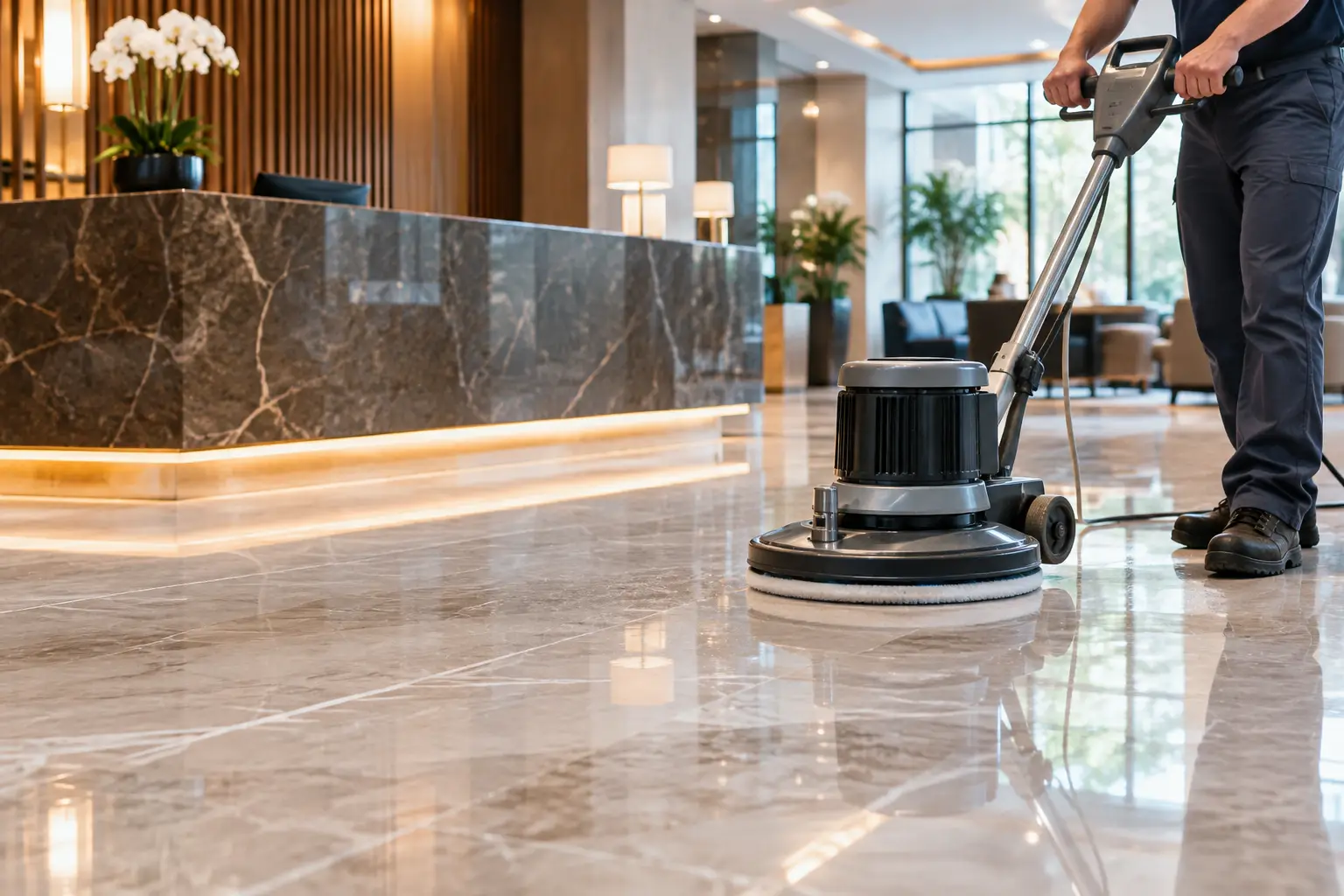
A hotel lobby can receive hundreds of guests before breakfast service has finished. Every suitcase wheel, wet shoe, cleaning chemical and hurried check-in leaves its mark on floors, benchtops and bathroom surfaces. Hotel stone restoration addresses that gradual decline, returning marble, terrazzo, limestone, granite and tile to a finish that reflects the standard of the property rather than the wear of daily operation.
For hotels, stone is not simply a building material. It is part of the guest experience. A polished foyer floor, crisp stone vanity and clean grout lines signal care, quality and confidence. When those surfaces become etched, stained, scratched or uneven, even an otherwise well-managed space can appear tired.
Why hotel stone surfaces lose their finish
Natural stone is durable, but it is not indestructible. Marble and limestone are especially vulnerable to acidic products, including some bathroom cleaners, beverage spills and descaling agents. These substances can etch the surface, leaving pale, dull marks that are often mistaken for stains. The issue is not something a stronger cleaner can fix. In many cases, stronger products make the damage worse.
High-traffic areas create a different problem. Fine grit tracked in from entrances acts like sandpaper beneath shoes and luggage. Over time, polished stone loses clarity and develops traffic lanes, particularly near reception desks, lifts, buffet areas and main entry points. Wet areas may also suffer from soap residue, mineral deposits, discoloured grout and compromised sealers.
Engineered stone, porcelain tile and granite each respond differently again. A treatment suitable for honed marble may be unsuitable for a textured outdoor paver or a Caesarstone vanity. That is why material identification matters before any restoration work begins. The best outcome comes from matching the method to the stone, the location and the operational demands of the hotel.
Hotel stone restoration is more than a surface clean
Professional restoration is a controlled process designed to correct damage rather than conceal it. Depending on the surface, it may involve deep cleaning, honing, diamond polishing, chip repairs, grout restoration, sealing and protective coatings. The aim is to remove or reduce the visible causes of deterioration while creating a finish that is practical for the space.
Honing is often the right response to etching, light scratches and uneven sheen on marble, limestone or travertine. It carefully refines the surface to remove damage and restore an even appearance. Polishing then develops the desired level of reflectivity, from a soft satin finish through to a high-gloss result where appropriate.
A glossy floor is not always the right answer. In a busy entrance, a highly polished finish may look exceptional but may require more frequent maintenance and careful consideration of slip resistance. In guest bathrooms, a honed finish can offer understated elegance while making day-to-day marks less obvious. A specialist should advise on the balance between visual impact, safety, upkeep and the identity of the property.
Repairs also form an important part of the process. Small chips around benchtop edges, cracks in stone tiles and worn grout can distract from an otherwise premium interior. Addressing them early helps preserve the surface and may prevent moisture from reaching vulnerable areas beneath tiles or through open joints.
Where restoration makes the greatest difference
The most visible results are often achieved in spaces where guests pause, look down or touch the surface. The lobby is an obvious example, but it is not the only one. Stone restoration can elevate reception counters, lift surrounds, bar tops, restaurant floors, guest bathroom vanities, spa areas and premium suite bathrooms.
Back-of-house areas deserve attention as well, particularly where stone or tile flooring supports staff movement and wet cleaning routines. Restoring grout and applying the right protective treatment can improve hygiene, simplify maintenance and support a consistently professional standard across the property.
Outdoor stone calls for its own approach. Sydney hotels with courtyards, pool surrounds, terraces or entry pathways need treatments that account for weather exposure, drainage, organic growth and slip resistance. Outdoor sandstone, travertine and textured tiles should not be polished like an indoor marble foyer. They may need deep cleaning, stain treatment, joint repairs and a breathable sealer that protects without creating an unnatural surface film.
The value of restoring rather than replacing
Replacing stone can be disruptive, expensive and difficult to schedule around guest occupancy. It may involve demolition noise, dust control, waste removal, replacement-material lead times and the challenge of matching new stone to existing surfaces. Where the substrate remains sound, restoration is often the more economical and refined choice.
Restoration retains the original material and can bring back much of the depth, colour and lustre that attracted the owner to it in the first place. It is particularly valuable for older marble, terrazzo and natural stone installations where full replacement would alter the character of the space or create mismatched sections.
There are limits. Stone with severe structural cracks, extensive movement, deep contamination or widespread failure may require partial replacement. A responsible assessment should make that distinction clearly. The goal is not to promise a new surface where the material cannot support it, but to recommend the most effective path to a durable, high-quality result.
Planning work around hotel operations
A restoration project needs to respect the fact that hotels do not stop operating. The right scope considers guest access, noise, curing times, odours, safety barriers and cleaning schedules before equipment reaches the floor.
For a large lobby, the work may be staged in sections so reception and guest pathways remain functional. For bathrooms or suites, restoration can be coordinated with room-release schedules. Specialist machinery with dust-control systems helps maintain a cleaner work environment, but containment and site protection still matter in presentation-critical spaces.
It is also essential to allow adequate time for sealers and coatings to cure. Rushing a surface back into service can compromise the finish. The most practical programme is not always the shortest one. It is the one that protects the result while minimising disruption to guests and staff.
Protection after the restoration work
Restoration creates the opportunity to reset the maintenance approach. Stone sealers can help resist the penetration of water-based spills, oils and grime, but they are not a licence to leave spills untreated. They also do not stop etching on acid-sensitive stone. Marble, for instance, still needs pH-neutral cleaning products and prompt attention to wine, juice, citrus and bathroom products.
In areas where etching is a recurring concern, an anti-etch film may be worth considering for selected benchtops, vanities or tables. It is not suitable for every application, and its appearance and use requirements should be assessed carefully, but it can provide valuable protection in demanding hospitality settings.
Daily care should be simple enough for housekeeping teams to apply consistently. Dry soil removal, pH-neutral cleaners, clean mop heads and prompt spill management make a meaningful difference. Avoid abrasive pads, vinegar-based products and generic acidic cleaners on natural stone. They may appear effective in the moment, yet can leave long-term dullness that requires professional correction.
Choosing a specialist for hotel stone restoration
Hotel surfaces demand more than a general cleaning service. Look for a restoration provider that understands the distinctions between marble, limestone, granite, terrazzo, porcelain, engineered stone, tile and grout. The contractor should assess the existing finish, identify the cause of damage and explain what can realistically be achieved before work begins.
Experience with commercial staging is equally valuable. A quality restoration team plans for site protection, access, safety and the practical needs of a live hospitality environment. It should also be able to recommend a finish that complements the design intent of the hotel, whether that means mirror-polished marble, refined honed limestone or clean, revitalised tile and grout.
Grand Stone Restoration brings this material-specific approach to Sydney hotels and hospitality spaces, with tailored treatment methods designed to revive valuable surfaces without unnecessary replacement.
A restored stone surface does more than brighten a room. It gives guests a quiet but unmistakable impression that the property is cared for at every level, from the lobby underfoot to the details they see up close.