
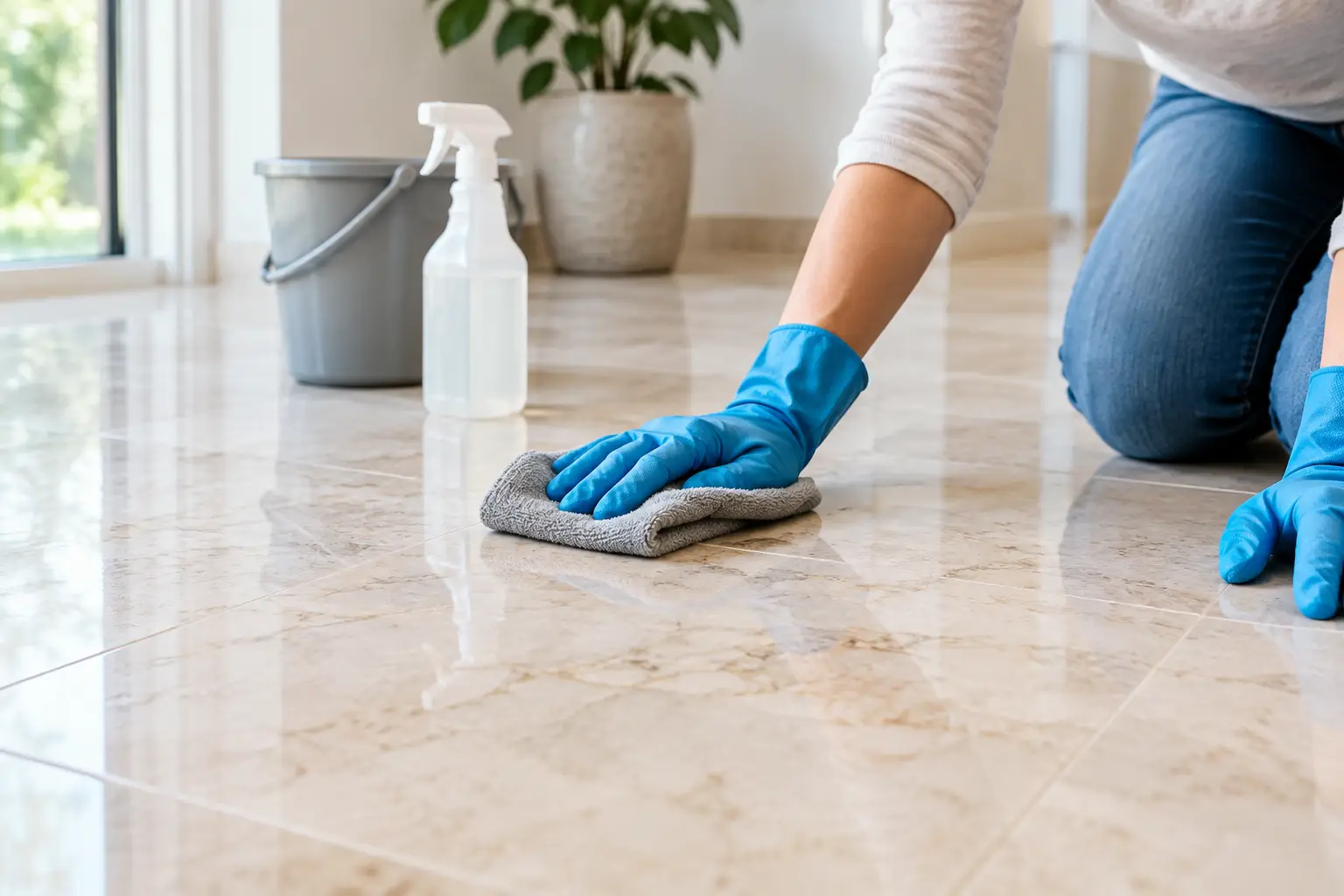
Limestone floors reward careful maintenance with a soft, elegant finish that suits everything from refined Sydney residences to high-traffic foyers. They are not, however, a surface to treat like ceramic tile. Knowing how to clean limestone floors correctly protects the stone’s natural character, avoids dull patches and helps preserve the value of an expensive installation.
Limestone is a calcium-based natural stone. That means common household products, particularly anything acidic or overly alkaline, can react with its surface. The result may be etching, a loss of sheen, patchy colour or marks that look like stains but are actually physical damage to the stone. The right approach is gentle, consistent and tailored to the condition of the floor.
Why limestone needs specialised care
Limestone is naturally porous, with fine pits, veins and colour variation that give it its distinctive appeal. Those same characteristics allow moisture, oils, dirt and coloured spills to penetrate if the stone is unsealed or its sealer has worn away. Honed limestone, with its smooth matte appearance, can disguise minor wear better than polished limestone, but it is still vulnerable to chemical damage and ingrained grime.
Acid is the most common problem. Vinegar, lemon-based cleaners, bathroom spray, descalers and many off-the-shelf floor products can etch limestone on contact. Etching changes the stone itself; it cannot simply be wiped away. Abrasive powders, stiff brushes and steam cleaning can also create unnecessary wear, particularly around grout lines and on softer varieties of limestone.
A premium floor should never be maintained with a one-product-fits-all mindset. A cleaner that is acceptable for porcelain, vinyl or granite may be completely unsuitable for limestone.
How to clean limestone floors safely
For routine care, start by removing loose grit before adding any moisture. Fine sand brought in on shoes behaves like sandpaper underfoot, gradually dulling the surface and wearing down protective sealer. Use a clean, soft microfibre dust mop or a vacuum with a hard-floor setting and a brush attachment. Avoid a vacuum head with aggressive wheels or stiff bristles that can mark the stone.
Once dry debris is removed, mop with clean warm water and a pH-neutral cleaner made specifically for natural stone. Follow the dilution directions carefully. More product does not produce a cleaner floor – it often leaves a residue that attracts dirt and creates a lifeless film over the limestone.
Use a well-wrung microfibre mop rather than saturating the floor. Limestone does not benefit from excess water sitting on its surface, especially near edges, joins and damaged grout. Work in manageable sections, changing the mop water when it becomes cloudy. If the cleaner instructions call for rinsing, make a final pass with fresh water and dry the floor with a clean microfibre cloth or towel mop.
For most well-maintained residential floors, this process is sufficient weekly, with dry mopping as needed between washes. In commercial entrances, hospitality spaces or busy family homes, grit removal may need to be daily. Frequency depends on foot traffic, pets, nearby outdoor areas and whether people enter directly from the street.
Treat spills immediately, without rubbing
Blot spills promptly with an absorbent white cloth or paper towel. Rubbing can push liquids deeper into the pores and spread the affected area. Follow with a small amount of pH-neutral stone cleaner, then wipe with clean water and dry.
Oil, red wine, coffee, cosmetics and food can leave stains if they penetrate the stone. A fresh spill may lift with careful cleaning, but an older mark can require a specialist poultice treatment. Avoid experimenting with bleach, vinegar, acetone or supermarket stain removers before identifying the stain and checking that the product is safe for limestone. An incorrect treatment can leave an etched or bleached patch that is more difficult to restore than the original mark.
What not to use on limestone
The products below can permanently compromise the appearance or finish of limestone and should stay off the floor:
- Vinegar, lemon juice and acidic bathroom or kitchen cleaners
- Bleach, ammonia and highly alkaline degreasers
- Cream cleansers, scouring powders and abrasive pads
- Soap-based floor cleaners that leave a sticky residue
- Steam mops and excessively wet mopping methods
Even products marketed as “natural” or “eco-friendly” are not automatically stone-safe. Citrus oils and plant-derived acids, for example, may still be unsuitable. Read the label for a clear statement that the cleaner is pH-neutral and appropriate for calcareous natural stone.
When a floor looks dull after cleaning
A limestone floor that remains dull, cloudy or uneven after proper cleaning is not necessarily dirty. It may have a build-up of unsuitable cleaning products, worn sealer, etching from acidic exposure, traffic-related abrasion or fine scratching. These problems require different solutions.
A surface coating or residue may respond to professional deep cleaning. Etched or scratched limestone may need honing, where specialists use controlled abrasives to refine the surface and restore a consistent finish. Depending on the desired look, the stone can then be finished to a soft honed lustre or a more reflective polish. Sealing follows once the stone is clean, dry and properly prepared.
This distinction matters. Applying more sealer over ingrained dirt or an uneven finish can lock in the problem rather than solve it. Likewise, attempting to polish a damaged floor with a DIY product often creates patchiness because limestone needs the correct machinery, abrasives and technique to achieve an even result.
Protect limestone between professional treatments
Prevention is the most cost-effective part of limestone care. Place quality entry mats inside and outside doorways to reduce abrasive grit, but choose mats with a breathable, non-rubber backing so moisture is not trapped against the stone. In dining areas, use felt pads beneath furniture and clean spills before they have time to absorb.
Ask guests and household members to avoid walking across the floor in wet or dirty shoes, particularly after rain. In apartment buildings and commercial settings, regular maintenance of entry zones makes a substantial difference to the condition of the stone further inside.
Sealer provides valuable resistance to moisture and staining, but it is not an invisible shield against every spill, scratch or acid exposure. It also does not prevent etching. The correct resealing interval depends on the limestone type, finish, location, cleaning routine and traffic level. A kitchen, lobby or outdoor entertaining area may need attention more often than a low-traffic formal room.
A simple water test can indicate whether protection may be declining. Place a few drops of water on a discreet, clean area and observe them briefly. If the water darkens the stone rapidly rather than sitting on the surface, the sealer may be losing effectiveness. This is a prompt for a professional assessment, not a reason to apply a random sealer over the top.
Outdoor limestone requires a different approach
Outdoor limestone is exposed to weather, organic growth, pollution and more persistent dirt. Algae, mould and leaf tannins can be difficult to remove safely, while high-pressure washing can erode softer stone, blast out joints and leave a visibly streaky finish. The right method depends on whether the limestone is honed, textured, tumbled or split-faced, as well as the drainage and surrounding landscaping.
For exterior floors, sweep regularly and address organic debris before it decomposes and stains. Use only stone-appropriate cleaning products, maintain drainage and avoid allowing pot plants to sit directly on the limestone, where trapped moisture can cause dark marks or mineral deposits. If the surface has become slippery, stained or blackened, professional cleaning is usually safer and more effective than escalating DIY chemicals.
When to call a limestone restoration specialist
Professional help is worthwhile when cleaning no longer restores a consistent appearance, when marks remain after spills are removed, or when the floor feels rough, looks etched or has lost its original refinement. It is particularly valuable for large open-plan floors, heritage stone, premium bathrooms, reception areas and commercial spaces where uneven results are immediately visible.
Grand Stone Restoration assesses the stone itself before recommending cleaning, honing, polishing, repair or sealing. This material-specific approach protects the qualities that make limestone desirable while addressing the actual cause of deterioration, rather than masking it temporarily.
A limestone floor does not need harsh products to look exceptional. With gentle routine care and timely specialist restoration where needed, its natural warmth and quiet elegance can remain a defining feature of the property for years to come.