
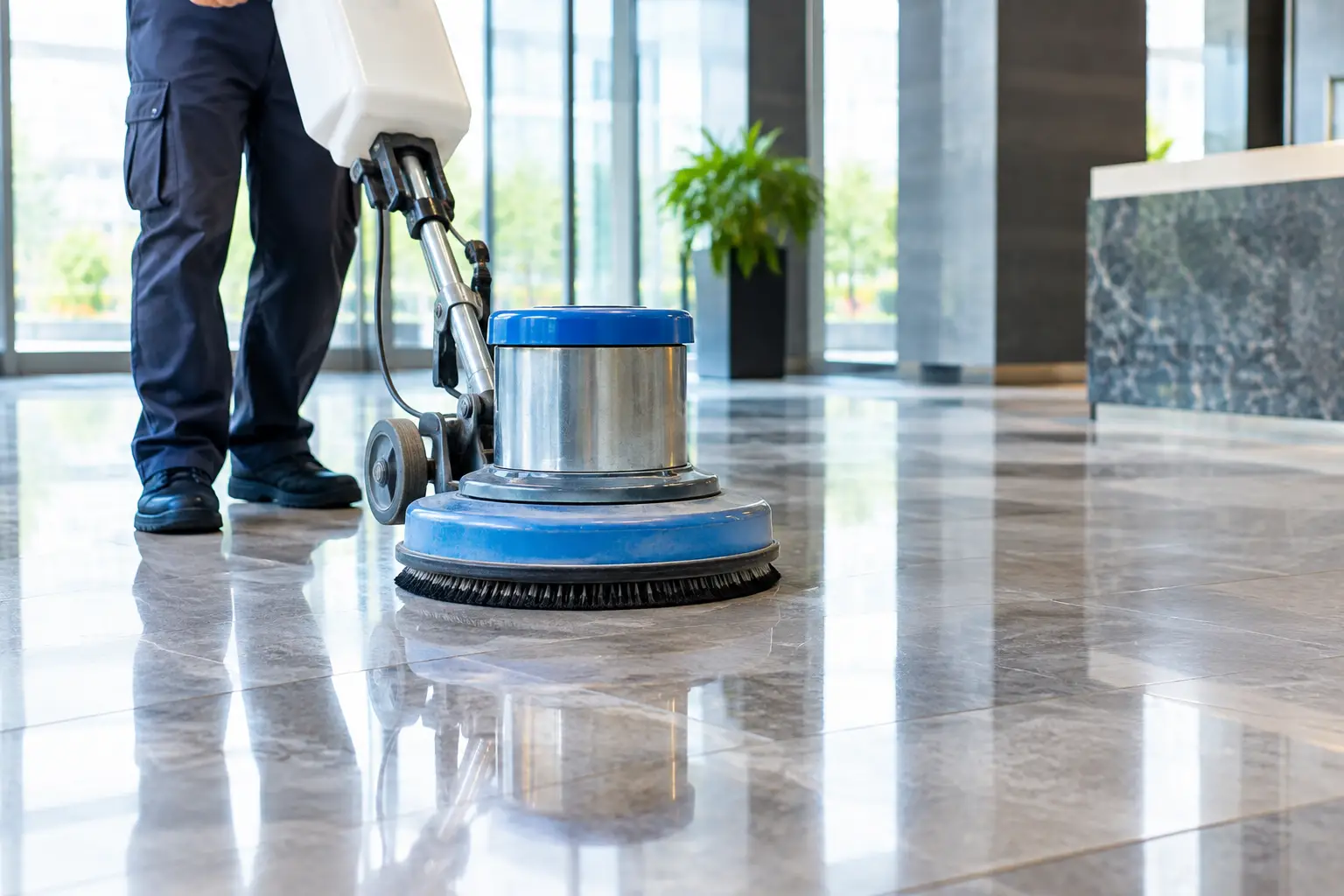
A stone floor in a hotel lobby, office foyer or premium retail space is part of the first impression before a visitor speaks to reception. Yet heavy foot traffic, wet weather, trolley wheels and unsuitable cleaning products can quickly turn a refined surface dull, scratched or patchy. This commercial stone floor maintenance guide sets out how facilities teams can preserve the elegance, safety and long-term value of natural stone floors without treating every material the same.
Start with the Stone, Not the Cleaning Product
Commercial stone maintenance begins with accurate identification. Marble, limestone, travertine and terrazzo are calcium-based surfaces. They can etch when exposed to acidic products, including some common bathroom cleaners, descalers and food spills. Granite is generally harder and more resistant, but it is not immune to staining, loss of lustre or damage from aggressive chemicals. Sandstone is porous, often used in outdoor and entry areas, and needs a different approach again.
Engineered stone and porcelain-look tiles can also appear alongside natural stone in the same building. A maintenance contractor who uses one chemical and one machine setting across every area risks creating expensive problems.
Before establishing a cleaning programme, confirm the floor type, finish and previous treatments. Honed stone has a soft matte appearance that can conceal fine scratching better than a high-polish finish, but it still needs protection from staining and chemical damage. Polished marble delivers exceptional brilliance, though it reveals traffic lanes, etching and wear more readily. The correct standard is not always the shiniest possible result. It is the finish that suits the stone, the setting and the level of daily use.
Commercial Stone Floor Maintenance Guide: Daily Care
The most valuable maintenance work is often the least dramatic. Removing abrasive grit before it is walked into the surface prevents gradual scratching and premature dullness. In Sydney commercial properties, windblown sand, street dust and moisture at entrances can be particularly damaging during wet periods.
Use effective walk-off matting at every external entrance and keep it clean enough to work properly. Mats that are saturated with dirt simply transfer grit back onto the floor. Vacuum or dust mop high-traffic areas daily, paying particular attention to doorways, lift lobbies, reception paths and areas around café counters.
For wet cleaning, use a pH-neutral cleaner formulated for the specific stone type and dilute it precisely as directed. More chemical does not mean a cleaner floor. Excess solution can leave a residue that attracts dirt, makes polished stone look hazy and undermines the appearance of grout lines.
Mops should be clean and changed regularly. A dirty mop redistributes contaminated water across the floor, particularly in larger foyers and common areas. Use clean water for rinsing where required, and avoid leaving standing water on natural stone or around open grout joints.
Spills need prompt attention, especially coffee, wine, citrus, oils and acidic drinks. Blot rather than scrub. Scrubbing with abrasive pads can create a visibly different patch in a polished surface, while acidic spills can leave a dull etched mark on marble or limestone even after the liquid is removed.
Protect High-Traffic Zones Before They Show Wear
A commercial floor rarely wears evenly. The centre of an entrance, the route from lifts to reception and the area in front of service counters receive a far greater load than the surrounding floor. If maintenance only begins once these zones look tired, restoration becomes more involved and the difference between worn and unworn sections can be obvious.
Inspect traffic lanes monthly under good lighting. Look for reduced reflection, fine scratches, darkened grout, uneven sheen, loss of slip resistance or isolated stains. These signs do not necessarily mean the floor has failed. They indicate that cleaning alone is no longer enough and a targeted maintenance treatment may be due.
Furniture and equipment also deserve attention. Fit chairs, display units and movable fixtures with clean, suitable protective pads. When shifting planters, temporary barriers or heavy equipment, use appropriate protection beneath them. A single dragged item can score a polished stone floor deeply enough to require professional honing.
Avoid the Shortcuts That Damage Stone
Many avoidable stone problems start with products chosen for speed rather than suitability. Acidic cleaners can etch calcareous stone. Strong alkaline degreasers may affect sealers, grout and certain finishes. Bleach can discolour or weaken adjacent materials, while abrasive powders and scourers can permanently alter the sheen.
Steam cleaning also requires caution. While it may seem like a chemical-free solution, excessive heat and moisture can affect some sealers, grout and adhesive systems. Its suitability depends on the stone, the installation and the existing finish.
Do not assume a sealer makes the floor invulnerable. Penetrating sealers are designed to reduce the absorption of liquids and make spills easier to remove. They do not stop scratches, prevent acid etching or replace regular cleaning. Surface coatings can offer useful protection in appropriate environments, but they must be selected and maintained correctly to avoid peeling, uneven wear or a plastic-looking finish.
Plan Professional Restoration as Preventive Maintenance
A specialist stone maintenance programme is more cost-effective when it is planned before widespread damage appears. Periodic deep cleaning can remove embedded soil that routine mopping leaves behind. Professional honing can reduce scratches, etching and uneven wear, restoring a consistent finish without replacing the floor. Polishing then refines the surface to the required level of clarity and shine.
The right interval depends on traffic, stone type, cleaning practices and the standard expected in the space. A busy hospitality venue may need professional attention several times a year. A quieter executive suite may only need annual assessment and occasional restoration. Outdoor sandstone entries face different pressures again, including weather exposure, organic growth and moisture.
Restoration should be carried out in a way that respects business operations. For commercial sites, this may mean staging work after hours, isolating small sections at a time or scheduling treatments around quieter trading periods. A skilled restoration team can match the treatment to the floor rather than applying a generic polish that masks problems briefly and creates further inconsistency later.
Keep Grout and Edges in the Maintenance Plan
Stone floors are judged as a whole surface. Even beautifully polished marble can look neglected when surrounding grout is dark, stained or broken down. Grout requires routine cleaning with products suited to its condition, then repair or recolouring where it has become uneven. In tiled stone installations, failed grout can also allow moisture and contaminants to reach vulnerable areas beneath the surface.
Edges, thresholds, stair nosings and transitions between stone and carpet or timber deserve the same scrutiny. These are common points for chipping and cracking because they carry concentrated impact. Addressing small chips early can preserve a clean line and prevent a minor defect becoming a larger repair.
Build a Practical Record for Your Site
For larger properties, document the stone types, installed locations, sealers or coatings applied, cleaning products approved and dates of professional treatments. This gives facilities teams continuity when staff or contractors change. It also prevents an unsuitable product being introduced because the floor merely looks like another tile or hard surface.
A simple inspection record should note stains, slip concerns, damaged grout, chips and changes in sheen. Photographs taken from the same positions can be useful when monitoring traffic lanes over time. The aim is not unnecessary administration. It is early intervention, consistent presentation and a clearer basis for maintenance decisions.
For presentation-critical commercial spaces, stone care is asset protection as much as cleaning. A tailored programme preserves the quiet luxury of the original material, limits costly disruption and keeps the floor worthy of the property it represents. When dullness, etching or surface damage begins to compromise that standard, a specialist assessment can restore the finish with far less upheaval than replacement.