
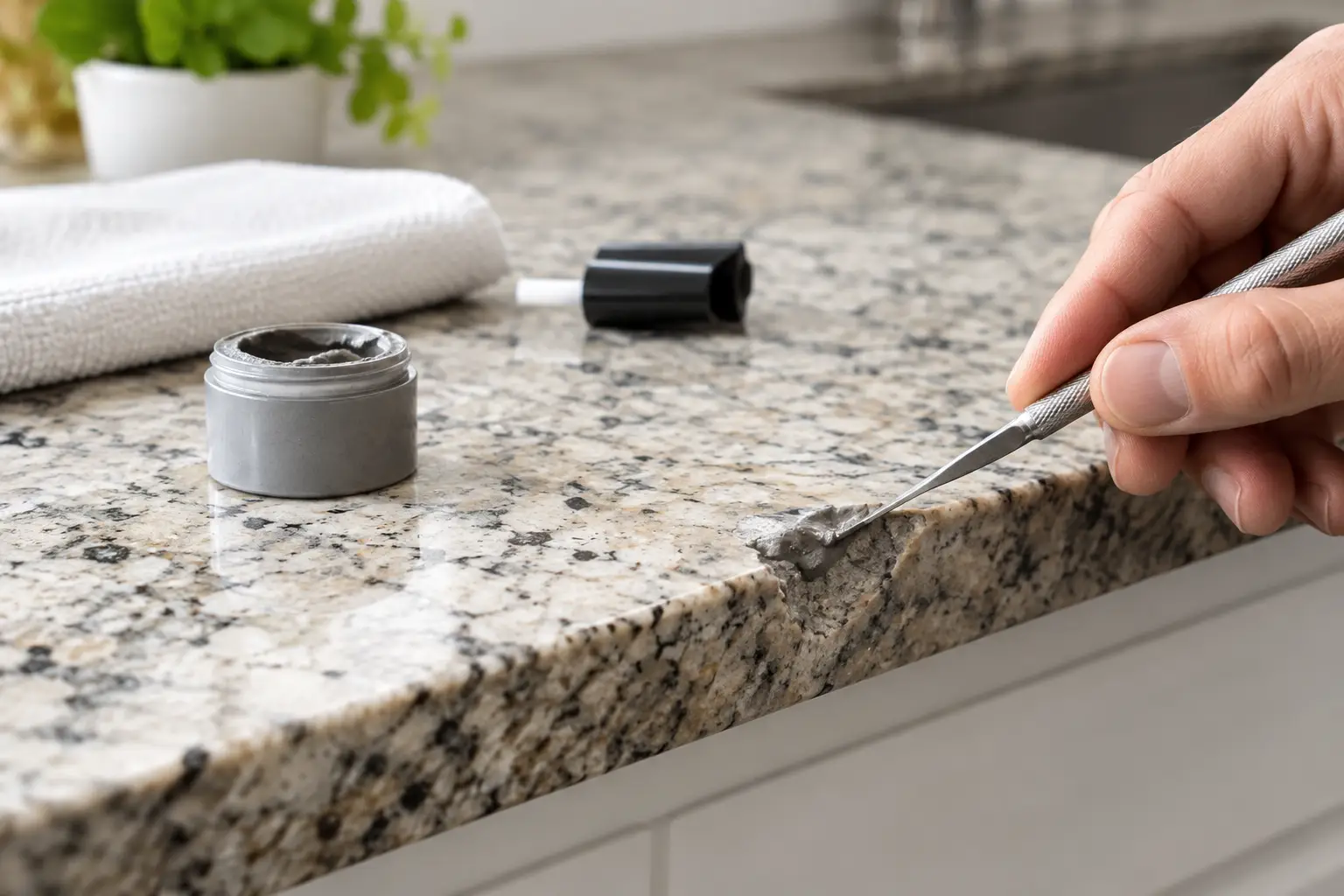
A chip in a granite benchtop can catch the light from across the kitchen. On a dark polished surface, it may appear as a pale dot; on a light granite, it can leave a sharp shadow along an otherwise refined edge. Knowing how to fix chipped granite starts with identifying whether the damage is a small cosmetic blemish or a sign that the stone needs skilled restoration.
Granite is exceptionally hard, but it is not indestructible. Dropped cookware, a knocked bottle, impact around an undermount sink or an existing weak point at an edge can remove a fragment of stone. The right repair can restore the profile, blend the colour and protect the exposed area from further damage, often without the cost or disruption of replacing the slab.
Assess the chip before choosing a repair
The location, depth and condition of the missing stone determine the repair method. A pin-sized chip in a low-visibility area is very different from a broken front edge on a kitchen island or damage beside a sink cut-out. Granite repairs are not simply about filling a hole. They need to recreate the stone’s shape and visual character while producing a durable bond.
A minor chip is usually shallow, stable and smaller than a five-cent piece. It may be suitable for a carefully applied resin repair. A larger chip, particularly one that runs along an arris or exposed edge, needs more considered rebuilding and shaping. If the granite is cracked, moving, loose around a join, or chipped near a sink and water is reaching the substrate, do not treat it as a simple surface repair.
Also confirm the material. Natural granite has mineral variation and crystalline depth that require custom colour matching. Engineered stone products can look similar but have a different composition and may need a different repair process. A repair product marketed broadly for stone will not always deliver an invisible or long-lasting result on either surface.
When a DIY granite chip repair can work
For a very small, clean chip away from a high-impact edge, a quality two-part stone epoxy can be a practical option. The objective is not to coat the entire surface. It is to fill only the missing section, level it accurately and avoid leaving a glossy blob or a dull patch around the repair.
Before beginning, protect the surrounding benchtop and ensure the area is dry. Clean the chip with a pH-neutral stone cleaner, then allow it to dry fully. Household sprays, oil-based cleaners and silicone residue can interfere with adhesion. Avoid acidic cleaners, abrasive powders and harsh scourers, which can mark the polished finish or contaminate the repair area.
For a basic small-chip repair, you will generally need:
- A colour-tintable, two-part epoxy formulated for natural stone
- Fine artist tints or pigments suitable for the resin system
- A razor blade or small applicator for placing and levelling the material
- Low-tack masking tape, clean cloths and appropriate personal protective equipment
Mix only a small amount of epoxy, following the manufacturer’s ratio exactly. Colour matching is the critical step. Granite is rarely one flat colour: it can contain black, grey, cream, rust, gold or translucent mineral flecks. Aim to match the dominant base tone first. On a visibly patterned slab, a single-colour filler may still be apparent even if the repair is smooth.
Apply the epoxy in thin, controlled layers rather than overfilling the chip at once. Press the material into the void to remove air pockets, then leave it just proud of the surface if the product instructions allow. Once cured, a blade can be used with great care to bring the repair flush. Keep the blade flat to the stone and work slowly. Aggressive sanding can create a dull halo that is more noticeable than the original chip.
How professionals fix chipped granite edges
An exposed edge is where amateur repairs most often disappoint. It is highly visible, repeatedly touched and vulnerable to another impact. A professional repair begins by stabilising and cleaning the damaged area, then building the missing profile with a high-strength, colour-matched resin system.
The technician does not simply fill the break. They shape the material to follow the benchtop’s original edge detail, whether it is square, eased, bevelled, bullnosed or mitred. This makes a substantial difference to the finished appearance and the way the repaired edge feels under the hand.
Colour matching may involve combining several pigments and, where necessary, recreating the fine movement or speckling within the granite. The repair is then refined through staged finishing so its sheen sits naturally alongside the surrounding surface. On polished granite, that may mean restoring clarity and lustre without flattening the stone’s natural texture. On honed granite, the goal is a consistent soft finish rather than an overly shiny patch.
This level of work is particularly valuable on island benches, reception counters, vanity tops and premium commercial surfaces where presentation matters. A well-executed repair can preserve a costly slab and avoid the risk of damaging splashbacks, cabinetry or neighbouring stone during replacement.
Avoid these common mistakes
Super glue is not a granite repair solution. It can discolour, become brittle and leave a shiny stain around porous or textured sections of stone. Likewise, generic putties and hardware-store fillers may dry to a colour that bears little resemblance to the granite, especially once viewed in natural light.
Do not sand, grind or cut granite indoors without suitable dust controls and professional equipment. Stone dust can contain respirable crystalline silica, and dry grinding can also damage the surrounding polish in seconds. A chip repair should not create a larger restoration problem.
It is also tempting to apply a sealer over a fresh repair to hide it. Sealer does not conceal poor colour matching, nor does it rebuild missing stone. It is a protective treatment, not a filler. Once the repair has fully cured, a stone specialist can advise whether sealing is appropriate for the particular granite and its use.
Chips near sinks, joins and cooktops need closer attention
Damage around a sink cut-out deserves prompt assessment. This area carries significant weight, is exposed to moisture and often has thinner stone sections. A chip may be accompanied by a hairline crack extending from the cut-out corner, particularly if the sink has shifted or the support beneath it is inadequate.
Similarly, chips along joins may indicate movement in the cabinetry, failure of the original adhesive or impact to a vulnerable mitred edge. Filling the visible gap alone will not resolve the underlying issue. The stone may need to be re-secured before any cosmetic restoration is completed.
Near cooktops, consider heat exposure. Some resins are suitable for normal benchtop conditions but are not designed for direct or sustained high heat. A specialist can select a repair material appropriate to the location and advise on practical protection, such as avoiding hot cookware directly on the repaired area.
Protect the repair and the rest of the benchtop
Once granite has been repaired, sensible daily care helps retain its polished elegance. Use a chopping board rather than striking or cutting directly on the surface, and do not rest heavy cookware on vulnerable edges. Wipe spills promptly with a soft cloth and use a pH-neutral cleaner rather than acidic or abrasive products.
Granite is more resistant to staining and etching than marble, but its performance varies with the specific stone, finish and quality of any existing sealer. If water no longer beads on the surface or darkens the granite as it absorbs, the slab may benefit from professional cleaning and a tailored sealing treatment. This protects the stone as a whole, not merely the repaired section.
For Sydney homes and commercial interiors where stone is a defining design feature, professional restoration is often the more economical choice than replacement. Grand Stone Restoration can assess chipped granite, restore damaged edges and bring the repaired area back into harmony with the surrounding finish.
A chip does not have to become the detail everyone notices. Address it early, choose a repair method that respects the granite’s colour and profile, and give a high-value surface the craftsmanship it deserves.