
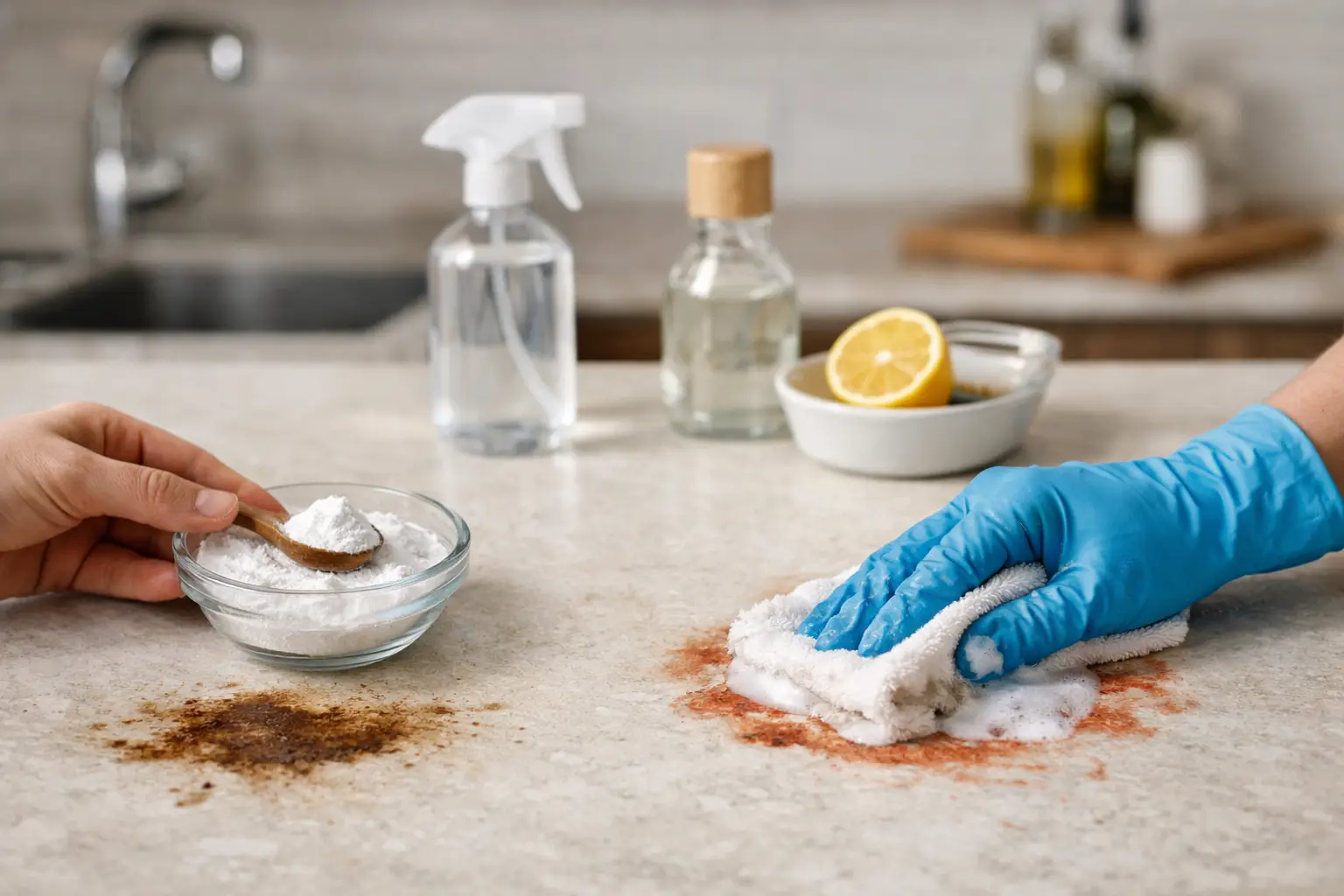
A turmeric splash beside the cooktop, a red wine ring near the island or a dark patch around the sink can change the appearance of an otherwise exceptional kitchen very quickly. Kitchen stone stain removal is not a one-method task: the safest and most effective treatment depends on the stone itself, the source of the mark and how far it has travelled below the surface.
For premium benchtops and splashbacks, the goal is not simply to make a mark less noticeable. It is to restore an even, refined finish without creating etching, dull patches or permanent surface damage in the process.
Why kitchen stone stains need a tailored approach
Natural stone is not a single material. Marble, limestone, travertine, granite, terrazzo and sandstone have different mineral compositions, porosity levels and surface finishes. Engineered stone also varies between products, with resin binders and quartz content affecting how it reacts to cleaning agents.
That distinction matters because a product that appears harmless on granite may damage polished marble. Acidic cleaners, vinegar, lemon juice and many supermarket descalers can react with calcium-based stones such as marble and limestone. Instead of lifting the mark, they can create a pale, dull or rough patch known as etching.
A stain is also different from a surface mark. Staining occurs when a substance is absorbed into the stone or its pores. Etching is a chemical change to the surface. Scratches are physical damage. A dark area around a sink may be absorbed oil, but it can also be moisture trapped beneath a failed sealant line. Correct diagnosis is where quality restoration begins.
Identify the stain before choosing a treatment
The appearance and location of a stain provide useful clues. Dark, shadowy patches are commonly caused by cooking oils, grease, cosmetics or moisture. Brown or orange discolouration may indicate rust, particularly near metal fixtures or older water sources. Red wine, coffee, berries and spices can leave coloured organic stains, while white mineral deposits around taps are often hard-water residue rather than absorption.
A new spill sitting on a sealed surface may only require gentle cleaning. A mark that remains after cleaning, returns after drying or appears to sit beneath the polish is more likely to need specialised treatment. This is particularly common with porous natural stone and older benchtops where the original sealer has worn away.
Do not assume a stubborn mark means replacement is necessary. In many cases, targeted stain extraction followed by honing, polishing and resealing can return a kitchen surface to a far more uniform and elegant condition at a fraction of replacement cost.
Safe first steps for fresh spills
When a spill occurs, act promptly but avoid panic cleaning. Blot liquid with a clean, absorbent cloth or paper towel. Do not rub aggressively, as this can spread pigments and push oils further into the stone. Rinse the area with clean water, then use a pH-neutral stone cleaner if needed and dry thoroughly with a soft cloth.
For routine care, pH-neutral cleaning is the right foundation for most kitchen stone surfaces. It removes everyday residue without stripping protective treatments or reacting with sensitive minerals. Avoid abrasive cream cleansers, scouring pads, bleach-based products and acidic household remedies unless a stone specialist has confirmed they are suitable for your exact material.
It is tempting to treat every stain with bicarbonate soda, vinegar or a heavy-duty degreaser found under the sink. These shortcuts can be costly on premium stone. Bicarbonate soda can be mildly abrasive on highly polished finishes, while vinegar can etch marble almost immediately. The risk is not merely cosmetic: once the gloss has been altered, stain removal alone will not restore the original brilliance.
Kitchen stone stain removal for common materials
Marble, limestone and travertine
These calcium-based stones bring unmistakable luxury to a kitchen, but they require measured care. Their natural porosity makes them vulnerable to oil, wine, citrus, tomato sauce and strongly coloured foods. Polished marble can also etch from acidic ingredients even where no visible stain remains.
Professional treatment may involve a purpose-selected poultice to draw an absorbed stain from the pores. The process takes time and sometimes requires more than one application, especially with old oil stains. If etching or uneven sheen is present, the affected area may then need honing and polishing to blend the finish with the surrounding stone.
Granite and dense natural stone
Granite is generally more resistant than marble, but it is not stain-proof. Unsealed or poorly sealed granite can absorb oils and dark liquids, especially around seams, cut-outs and sink edges. Some varieties also contain minerals that react unpredictably to strong chemicals.
The correct approach depends on the finish and the nature of the contamination. A specialist can determine whether the mark is within the stone, sitting on its surface or related to degraded sealant. Once the stain has been addressed, a suitable penetrating sealer can improve resistance to future spills without leaving an artificial coating on the surface.
Engineered stone benchtops
Engineered stone products such as Caesarstone and Silestone are typically less porous than many natural stones, yet they are not immune to staining, resin discolouration, heat damage or chemical marks. Harsh oven cleaners, paint removers and strong solvents can damage the resin component, leaving a permanent-looking haze or loss of colour.
For engineered stone, gentle pH-neutral maintenance remains the safest starting point. Persistent marks should be assessed before stronger products are used. In some cases, what looks like a stain is actually surface damage that requires professional refinement rather than a cleaning solution.
When a poultice is not enough
Poultice treatment is valuable for certain absorbed stains, but it is not a universal cure. It will not repair etching, cracks, chips, deep scratches or a worn, uneven polish. Nor will it always resolve discolouration caused by heat, dye transfer or chemical damage to engineered surfaces.
This is where professional assessment saves time and prevents further damage. A stone restoration specialist can test a discreet area, identify the stone type and select a treatment sequence that may include deep cleaning, stain extraction, honing, polishing, repair and sealing. The right process addresses both the visible problem and the condition that allowed it to develop.
For example, removing an oil stain from a marble island without resealing the surface leaves it exposed to the next cooking spill. Polishing a dull etched section without blending the surrounding finish can create an obvious patch. Premium results come from treating the entire surface system, not simply attacking one mark.
Prevention that protects the finish
Good sealing is one of the most practical defences against kitchen staining. A quality impregnating sealer helps slow the absorption of liquids into porous stone, giving you more time to wipe up spills. It does not make stone invincible, and it does not prevent etching from acids, but it is an essential part of long-term protection.
Use boards or trivets beneath oil bottles, wine decanters and acidic foods. Keep wet metal cans and cast-iron cookware off natural stone, as they can leave rust marks. Around sinks, ensure silicone joints are sound and wipe standing water from benchtops, particularly where stone meets tapware or joins.
A simple maintenance routine also makes a visible difference. Clean regularly with an appropriate stone cleaner, dry the surface after use and arrange professional maintenance when the finish begins to look flat, scratched or uneven. Timely care preserves the depth of colour and light reflection that make stone such a valuable feature in a kitchen.
Restore the surface, not just the stain
A beautifully restored kitchen benchtop should not look as though it has been spot-treated. It should look balanced, clean and naturally luminous across the full surface. That requires an understanding of how each stone responds to moisture, abrasion, chemicals and polishing compounds.
For Sydney homeowners and commercial kitchens where presentation matters, Grand Stone Restoration provides material-specific treatment for stained, etched and dulled stone surfaces. The focus is always on achieving a refined result while protecting the long-term value of the stone.
If a mark has survived careful cleaning, or your benchtop has lost the polished finish it once had, pause before trying another household remedy. A professional assessment can reveal whether the surface needs stain extraction, restoration or renewed protection – and help your kitchen retain the elegance it was designed to deliver.