
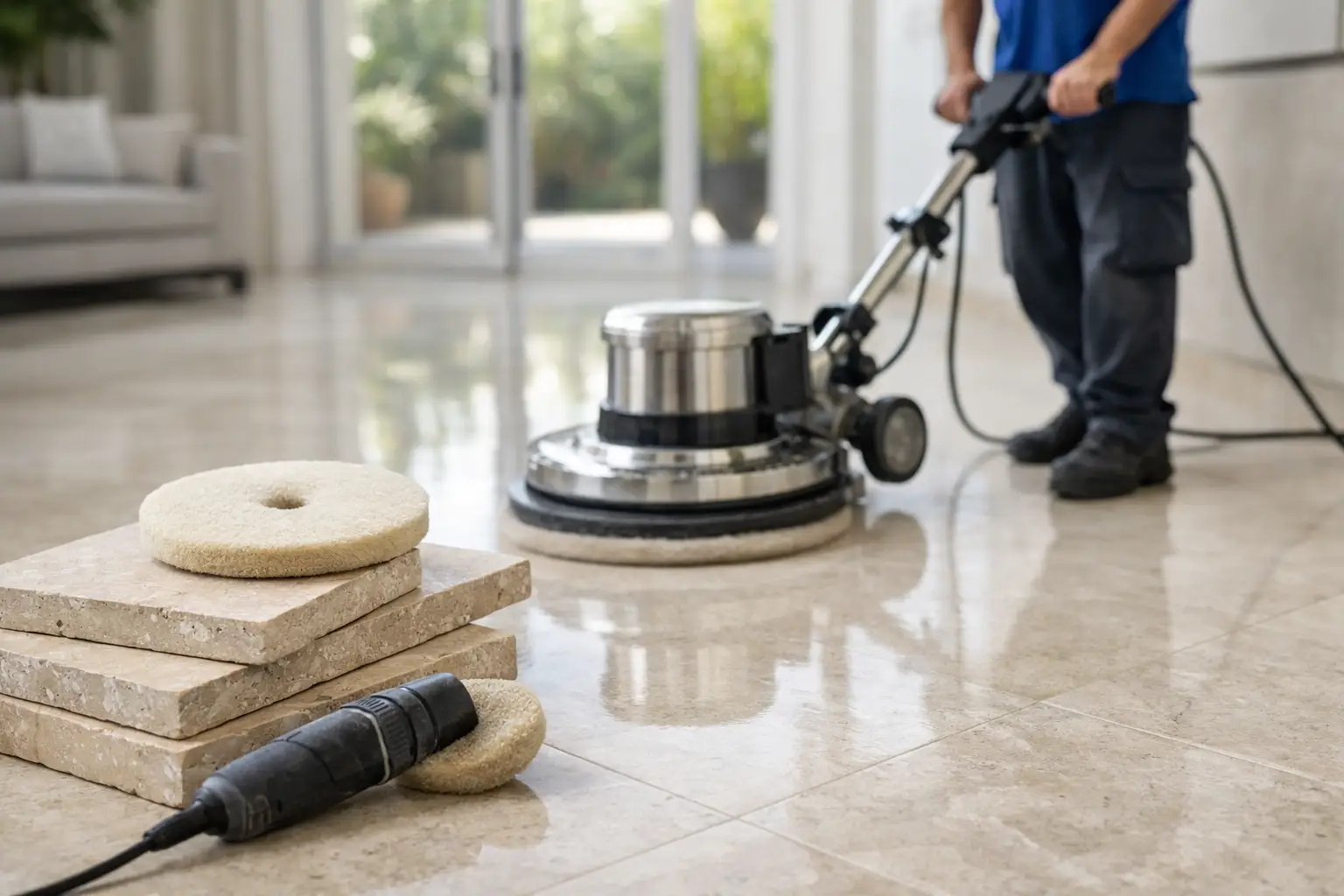
Limestone can look quietly luxurious one day and tired the next. Foot traffic, acidic spills, ingrained dirt and poor maintenance habits flatten its natural character faster than many owners expect. That is why limestone polishing services Sydney property owners rely on are not simply about adding shine – they are about restoring refinement, correcting wear, and protecting a valuable surface from further decline.
Limestone is a softer, more porous natural stone than granite, and it behaves very differently under use. In residential interiors, it often loses clarity in kitchens, bathrooms, hallways and open-plan living areas. In commercial settings, foyers, retail floors and hospitality spaces show traffic patterns, dull patches and edge wear quickly. Once that finish drops away, the whole room can feel less cared for, even when everything else is immaculate.
What limestone polishing actually does
Professional polishing is a restoration process, not a cosmetic shortcut. The aim is to refine the stone surface, remove or reduce visible damage, and bring the finish back to the level that suits the material and the space. Depending on the condition of the limestone, that may involve deep cleaning, honing, minor repairs, polishing and sealing.
Honing is often where the real transformation begins. This process removes a very fine layer of stone to level out etching, light scratches and surface inconsistency. Polishing then refines that honed surface to enhance smoothness, light reflection and visual depth. With limestone, the desired result is not always a high-gloss finish. In many homes and premium commercial interiors, a soft matte or satin surface is the better choice because it feels more natural and can be easier to live with.
That is where material-specific knowledge matters. Limestone has variation in density, composition and finish preference. A method that works beautifully on marble can produce the wrong result on limestone. Professional assessment determines how much restoration is appropriate and what finish will look elegant rather than overworked.
Why limestone loses its finish so quickly
Many owners assume dull limestone just needs a stronger cleaner. In practice, aggressive products often make the problem worse. Limestone contains calcium carbonate, which reacts to acidic substances. Common bathroom products, food spills, citrus, vinegar and some commercial cleaning chemicals can etch the surface, leaving pale or patchy marks that ordinary cleaning cannot remove.
Traffic is another major factor. Grit brought in from outside acts like an abrasive underfoot, especially in entryways and common areas. Over time, the stone develops worn lanes, edge dullness and uneven sheen. In kitchens and bathrooms, moisture and soap residue can also mask the finish and contribute to a tired appearance.
Sealing helps with stain resistance, but it does not stop etching or prevent wear altogether. That is why polished limestone still requires a considered maintenance approach. Restoration and protection work best together, rather than as separate afterthoughts.
Limestone polishing services Sydney homes and businesses need most
The right service depends on what the stone is showing. Some floors need straightforward refinement after years of gradual wear. Others need a more involved restoration to address scratches, lipping, stains, chips or widespread etching. A proper specialist will treat the stone according to its condition, not force every surface into the same process.
Honing for etched or uneven limestone
If the surface is blotchy, lightly scratched or marked by acidic damage, honing is often the most effective solution. It evens out the finish and removes shallow imperfections so the floor or wall can be brought back to a clean, consistent appearance. For many limestone surfaces, a honed finish is also the most sophisticated result, particularly in contemporary interiors where understated elegance matters more than mirror shine.
Polishing for clarity and refinement
Polishing improves smoothness and visual richness after honing or cleaning. On some limestone, the goal is a gentle luminosity rather than a reflective gloss. The finish should suit the stone itself, the amount of traffic it receives and the owner’s expectations around maintenance.
Repair before polishing
Cracks, chips and edge damage should be dealt with before the finishing stages. If they are ignored, they stand out even more once the surrounding stone is restored. Skilled repair work allows the final finish to read as cohesive, not patchy.
Sealing for ongoing protection
After restoration, sealing helps the limestone resist everyday staining and makes routine maintenance more manageable. It is not a substitute for careful cleaning, but it is an important part of preserving the restored surface.
Why professional restoration is usually better than replacement
Replacing limestone is expensive, disruptive and often unnecessary. Removal, disposal, sourcing matching material and reinstalling can quickly escalate into a major project. In many cases, the stone itself is structurally sound – it is simply worn on the surface.
Professional restoration addresses the visible damage without the upheaval of replacement. That means less disruption to households, less downtime in commercial settings and a far more economical path to a premium finish. It also preserves the original material, which matters when the limestone is part of a carefully designed interior or a larger continuous floor.
There are limits, of course. If the stone is badly fractured, poorly installed or deeply compromised by moisture issues, replacement may need to be considered. But those cases are the exception, not the rule. Most dull, etched or scratched limestone responds extremely well to specialist restoration.
Choosing the right finish for your limestone
Not every limestone surface should be polished to the highest possible shine. This is one of the most important conversations in any restoration project. A glossy finish can look impressive in the right setting, but it may highlight wear more quickly in busy areas. A honed or satin finish often provides a more natural appearance and can be better suited to the stone’s character.
For residential clients, the decision usually comes down to design style, traffic levels and maintenance expectations. In commercial spaces, presentation and practicality both matter. A hospitality venue may want a richer, more refined look, while an office foyer might prioritise consistency and ease of upkeep.
A quality restoration specialist will explain the trade-offs clearly. The best finish is not the one that sounds most luxurious on paper. It is the one that performs well in the real space and still looks exceptional months down the track.
What to expect from a specialist service
A true stone restoration provider approaches limestone with technical care, not generic cleaning equipment and a one-size-fits-all polish. The process should begin with assessing the type of limestone, the existing finish, the pattern of damage and the end result the client wants to achieve.
From there, treatment is tailored. That may involve controlled grinding or honing, stain treatment, crack or chip repair, polishing, sealing and recommendations for ongoing care. In experienced hands, the restored surface looks refined and even, with a finish that complements the property rather than calling attention to the work itself.
This is especially important in premium homes and presentation-critical commercial spaces. Stone sits at eye level, underfoot and across major focal points. If the finish is uneven, over-polished or poorly repaired, it undermines the quality of the broader environment. Precision is what separates a genuine restoration result from a temporary improvement.
Protecting limestone after polishing
Once limestone has been restored, maintenance habits matter. Use pH-neutral products designed for natural stone. Avoid acidic bathroom and kitchen cleaners, and deal with spills promptly. Mats at entrances can reduce grit abrasion, while felt pads under furniture help limit scratching.
Periodic professional maintenance is also worth considering, particularly in high-use properties. A surface does not need to become heavily damaged again before attention is given. Lighter maintenance at the right time can preserve the finish longer and reduce the need for more intensive restoration later.
For owners who want premium results without unnecessary replacement, limestone restoration offers a smart balance of aesthetics, asset care and value. Grand Stone Restoration sees this every day across stone surfaces that looked beyond help until the right process brought back their depth, elegance and presence.
If your limestone has lost its clarity, the answer is rarely harsher cleaning or covering it up. The right restoration work can return the surface to the standard the space deserves – calm, polished and built to last.