
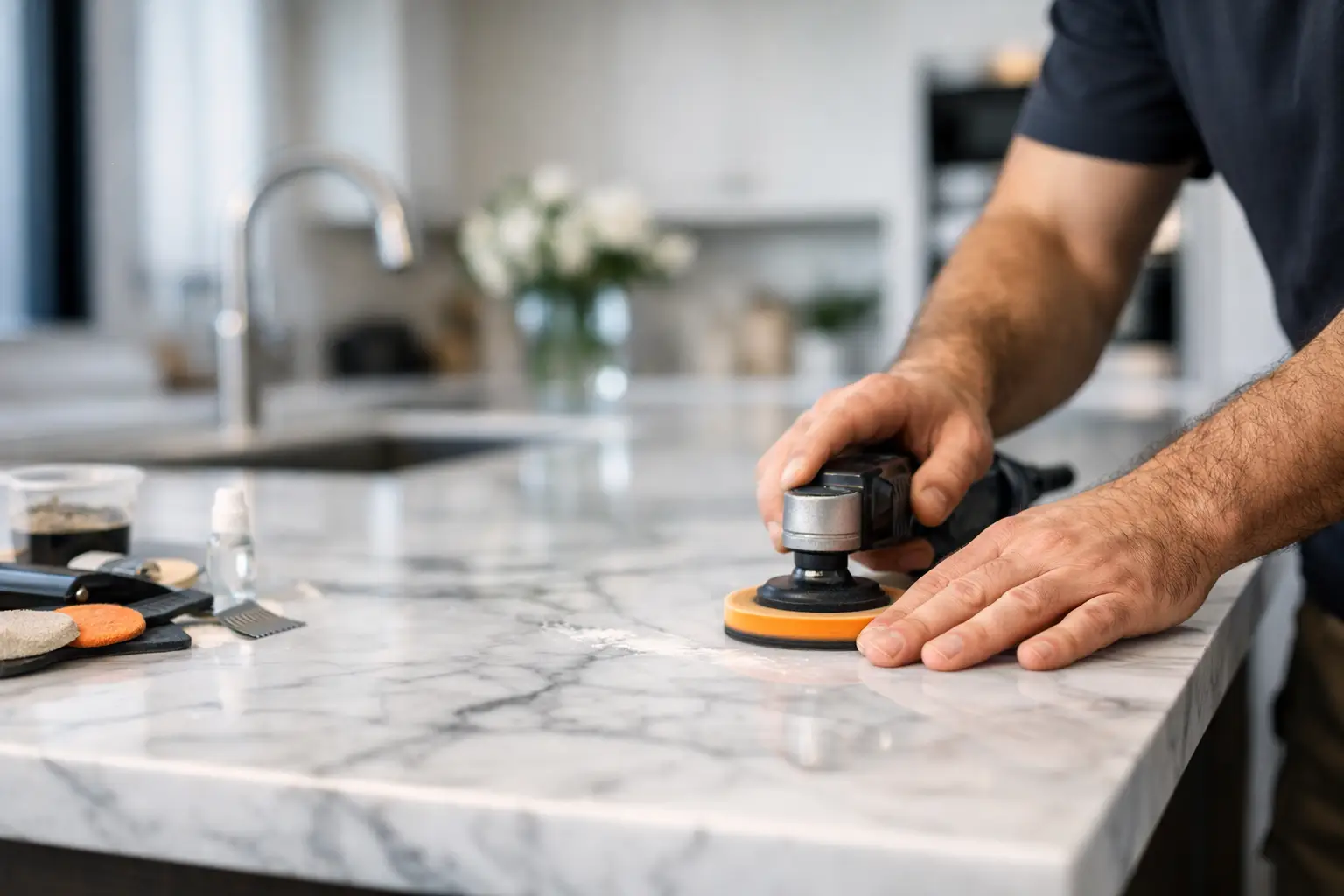
A marble benchtop rarely fails all at once. What usually happens is more frustrating – a ring from lemon juice near the sink, a dull patch where daily prep happens, a chip on the edge, then fine scratches that catch the light every morning. If you are searching for marble benchtop repairs Sydney property owners can rely on, the real question is not simply whether the stone can be fixed. It is how well it can be restored, how long the result will last, and whether repair is the smarter option than replacement.
For most quality marble benchtops, professional restoration is the more sensible path. Marble is a premium natural stone, but it is also softer and more reactive than many people expect. It can etch, stain, lose its polish and suffer impact damage in busy kitchens, bathrooms, bars and commercial spaces. That does not mean the slab is finished. In many cases, specialised repair and refinishing can bring back clarity, smoothness and shine while preserving the original surface.
What causes marble benchtop damage?
Marble has elegance that engineered materials try to imitate, but it comes with its own maintenance demands. Acidic products are one of the biggest culprits. Citrus, vinegar, wine, harsh cleaners and some bathroom products can leave etching marks that look like cloudy patches or dull spots. These marks are not surface dirt. They are chemical reactions that alter the finish of the stone itself.
Scratches are another common issue, especially on polished marble in high-use kitchens. Grit, cookware, serving pieces and day-to-day abrasion slowly wear down the surface. Chips often appear on corners and exposed edges where impact is concentrated. Then there is staining, which depends on how porous the marble is, whether it has been sealed properly, and how long spills have been left in place.
In apartment kitchens and premium homes, damage is often aesthetic rather than structural. In hospitality venues, offices and retail fit-outs, wear can be more widespread because the benchtop is used harder and cleaned more often. The repair approach should reflect that difference.
Marble benchtop repairs Sydney properties often need
Not all marble damage requires the same treatment. A specialist will assess both the visual issue and the condition of the stone beneath it. That matters because a quick cosmetic fix can look acceptable at first, then fail under use or leave the finish uneven.
Etch mark removal and refinishing
Etching cannot be wiped away or covered with household products. The affected section generally needs to be honed or polished back to an even finish so the damaged layer is removed and the surrounding surface blends naturally. The goal is not just to make the mark less obvious. It is to restore consistency across the benchtop so the repair disappears into the whole slab.
Chip and crack repairs
Small chips along edges can often be rebuilt with colour-matched repair compounds, then shaped and refined to follow the original profile. Fine cracks may also be repairable, depending on depth, movement and location. A clean chip on a straight edge is usually more straightforward than damage near a sink cut-out or unsupported overhang, where stress is greater.
Scratch removal and polishing
Light scratching may be corrected with surface refinishing. Deeper scratches need a more measured approach, especially on polished marble where reflected light reveals every inconsistency. The finish must be rebuilt carefully so the repaired section does not sit flatter, glossier or duller than the rest of the benchtop.
Stain reduction and sealing
Some stains can be lifted or reduced significantly, but results depend on what caused the mark and how long it has been there. Oil, rust, dye and organic stains all behave differently. Once the stone has been treated, sealing can help reduce future absorption, although sealers do not make marble stain-proof or etch-proof.
When repair is better than replacement
Replacement sounds simple until the practicalities arrive. Matching marble is difficult, especially if the original slab has unique veining or has aged in tone over time. Removing a benchtop can also affect cabinetry, splashbacks, plumbing fixtures and adjoining finishes. The disruption is considerable, and the cost often climbs well beyond the slab itself.
Repair makes more sense when the marble is fundamentally sound and the damage is localised or surface-based. That includes dullness, etching, chips, light cracks, minor staining and wear patterns from regular use. A well-executed restoration preserves the character of the original stone and avoids the upheaval of a full replacement project.
That said, there are limits. If a slab is badly broken, structurally unstable, severely stained through its full depth or poorly installed, repair may only be a temporary answer. A reputable specialist will say so plainly. Good restoration work is not about selling repair at any cost. It is about choosing the treatment that delivers the best long-term result.
Why marble repairs need a specialist
Marble is not a material for general surface repair methods. It responds differently to abrasives, fillers, polishing systems and protective treatments than granite, porcelain, engineered stone or laminate. Even within marble itself, density, colour, veining and finish all affect how a repair should be carried out.
This is where specialist restoration matters. Professional repair is as much about finish control as damage correction. The surface needs to be level, the gloss or honed sheen needs to match, and the repaired area should sit comfortably within the surrounding stone under both direct and angled light. On a premium kitchen island or reception counter, poor blending is obvious straight away.
Experienced technicians also know when to stop. Over-polishing one section can create a patch that looks new in the wrong way. Aggressive grinding can alter edge profiles or thin vulnerable areas. The best results come from controlled, material-specific restoration rather than broad, one-size-fits-all treatment.
What to expect from a professional restoration process
A proper assessment comes first. The technician should identify whether the problem is etching, staining, wear, impact damage or a combination of issues. From there, the benchtop may be cleaned, repaired, honed, polished and sealed according to the stone’s condition and the finish you want to maintain.
If the marble has a polished finish, the process usually focuses on restoring reflectivity while keeping the appearance natural and even. If it is honed, the aim is a refined matte surface without patchiness. Edge work is especially important because that is where visual and tactile defects stand out most.
For clients who want to reduce future etching in vulnerable areas, additional protective options may also be worth considering. The right protection strategy depends on how the benchtop is used. A family kitchen, an executive office kitchenette and a hospitality bar all place different demands on marble.
Protecting the finish after repair
A restored marble benchtop can look exceptional, but maintenance still matters. Use pH-neutral stone-safe products, wipe spills promptly and avoid acidic or abrasive cleaners. Chopping boards, trays and simple habits around oils, wine and citrus make a genuine difference.
Sealing is valuable, but it needs to be understood correctly. It helps slow the penetration of some staining agents. It does not stop etching from acids, and it does not make marble maintenance-free. That is why the best outcomes come from a combination of expert repair, suitable protection and realistic care.
For commercial settings or high-use residential spaces, scheduled maintenance is often the smarter approach than waiting for visible deterioration. Light refinishing at the right time preserves the luxury appearance of the stone and prevents small issues from becoming more complex repairs.
Choosing the right marble benchtop repair specialist
The standard to look for is not just whether a company works with stone. It is whether they understand marble as a finish-driven, high-visibility surface where detail matters. Ask whether they repair chips, remove etching, match honed and polished finishes, and provide sealing or other protective treatments as part of a complete restoration approach.
A specialist with broad experience across residential and commercial surfaces is usually better equipped to judge what is achievable and what will hold up over time. That is the difference between a temporary cosmetic improvement and a refined restoration that respects the quality of the original installation.
At the premium end of the market, clients are not simply paying to hide damage. They are investing in craftsmanship, continuity and the preservation of a material chosen for its natural beauty. Grand Stone Restoration approaches marble with exactly that level of care – restoring damaged surfaces to a standard that suits high-value interiors and presentation-critical spaces.
If your marble benchtop has lost its finish, picked up edge damage or developed etching that no cleaner can shift, do not assume replacement is the only path. A carefully restored surface can return the depth, elegance and lasting shine that made marble worth choosing in the first place.